The Israeli Air Force (IAF), born in battle out of a dire need, was founded on 28 May 1948, shortly after the Israeli Declaration of Independence. By the beginning of 1949, the IAF had over 150 fully qualified pilots, only a fraction of them were native Israeli, flying about the same number of aircraft of all kinds and types. This rag tag air force had emerged as a viable fighting force from almost nothing and managed to obtain air superiority which helped protect the new nation of Israeli. This was the first conflict where Spitfires fought against Spitfires.

No. 101 Squadron “Hakrav Ha’Rishona” (the First Fighter Squadron) was an all volunteer unit. The volunteers who fought alongside Israeli forces were called Mahal, Machal or Machalnik – “volunteers from abroad”. Each volunteer had his own story and reasons for fighting for Israel. Many of the Jewish volunteers had lost relatives in the Nazi death camps, and for them, saving Israel from another holocaust was a sacred duty. But nearly a third of the airmen were not Jewish, and their motivations varied. Some saw the war as a noble cause and it was simply the right thing to do. A number of others were adventurers for whom WWII had been the peak experience of their lives. The war in Israel provided everything they missed: the thrill of combat, the comradeship of fellow warriors, and a mission for which they would risk their lives for. The airmen who join the Israelis were similar to the volunteers in earlier wars: the Lafayette Escadrille (WWI), the Flying Tigers (AVG China), and the RAF Eagle Squadrons.
Not all the flyers served at the same time. Some joined as late as October and November 1948, and many who had flying qualifications were assigned to important ground duty functions.
Flying for Israel also featured some unique dangers. The weather in the Middle East was usually good for flying, air battles were scarce and those few that did occur were comparatively easy for the battle hardened WWII veterans. However, flying obsolete, ramshackle aircraft, usually barely fit for flying or badly maintained due to a lack of spare parts, was an extremely hazardous challenge. Accidents and equipment malfunctions were common. IAF pilots downed in the desert, should they survive the landing, were at the mercy of roaming bands of murderous Arabs. Along Israel’s long coastline, the silent sea waited greedily to swallow up airmen. As no rescue or recovery facilities were then available, there was little hope for downed pilots. On the top of all that, in this Israeli squadron not a word of Hebrew could be spoken, all orders and radio procedures were strictly maintained in English.
The US Neutrality Act of 1939 forbade the shipment of arms or war surplus aircraft from the US to Israel. Britain added its own arms embargo as well as a naval blockade around Israel while at the same time supplying warplanes to the Arab countries surrounding Israel. To obtain warplanes, the Israelis had to turn to a source behind the Iron Curtain – Czechoslovakia.
Avia S-199
During WWII, German occupied Czechoslovakia had two aircraft factories building Messerschmitt Bf 109G-based fighter aircraft with components shipped in from Germany. After the war, Avia continued to build the Messerschmitt Bf 109G-10 under the Avia S-99 name where only 21 aircraft were built. Unfortunately, most of the 109’s Daimler-Benz DB 605 engines were destroyed in an explosion at a warehouse in Krásné Březno. When the supply of DB 605 engines was exhausted, an alternative engine had to be found. It was decided to use the Junkers Jumo 211F engine and propeller that was used on the Heinkel He 111H bomber. The S-199 used the Bf 109G air frame with the Jumo 211F engine and propeller. However, it was far from satisfactory and the aircraft had some quite alarming handling characteristics. The Jumo 211F engine was heavier, produced less power and lacked the responsiveness of the Daimler-Benz engine. The torque created by the massive paddle-bladed propeller made control very difficult. That, in combination with the 109’s narrow-track undercarriage, made landings and takeoffs extremely hazardous.
The Daimler-Benz DB 605 engine allowed for a central cannon mount that fired through the propeller spinner. The Jumo 211F engine did not have this provision, so the S-199 used a version of the Rüstsatz VI modification kit. This consisted of a single Mauser MG 151/20 cannon pod mounted beneath each wing, but this further impaired the aircraft’s performance. Another hidden danger was in the gun synchronizer for the two cowl mounted MG 131 machine guns, which did not always function correctly where some pilots shot off their own propellers.
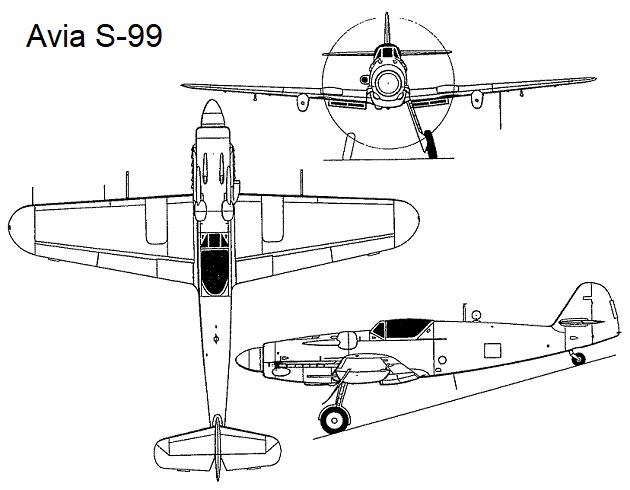
Despite all these drawbacks, around 550 S-199s were built. The first flight took place in March 1947 and production ended in 1949. The last S-199s were withdrawn from Czechoslovak service in 1957.
Israeli agents negotiated the purchase of Avia S-199s from the Czechoslovak government in defiance of the arm embargoes that Israel faced at the time. Twenty-five S-199s were obtained and all but two were eventually delivered un-assembled. The first four examples arrived on 20 May 1948, six days after Israel’s declaration of independence and five days after the commencement of hostilities by Egypt. After forming the No. 101 squadron, the four S-199s were assembled and became operational.
The Czechoslovak pilots nicknamed the Avia S-199 the Mezek (“Mule”), while in Israeli service, it was officially known as the Sakeen (“knife” in Hebrew). It was more often called the Messerschmitt or Messer (which also means “knife”, in German and Yiddish).
Video: Avia S-199 in Israeli Service – The Plane That Saved Israel
Israeli mechanics pose for the camera during work on a newly arrived S-199 at Tel Nof. Note the arrow painted on the fuselage of the S-199 pointing down from the cockpit to the foot step.
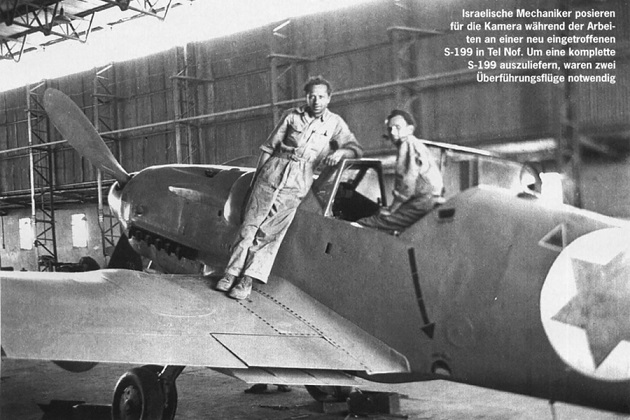
Tel Nof Airbase was founded in July 1939 during the British Mandate as RAF Aqir and served as the main RAF station located 5 km (3.1 miles) south of Rehovot, Israel. After the British withdrew in 1948, it was initially named Ekron Airfield and, from 1950, Tel Nof Airbase.
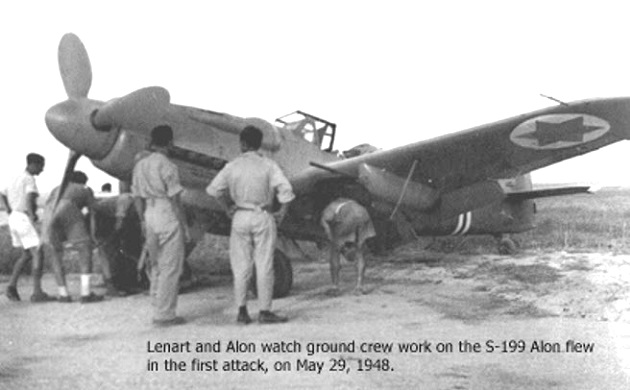
On 29 May 1948, a formation of four Avia S-199s went into combat for the first time during Operation Pleshet. Led by Lou Lenart (Hungarian-born American), with Mordechai “Modi” Alon (Israeli), Ezer Weizman (Israeli) and Eddie Cohen (South African), attacked and halted an Egyptian armoured column between Isdud (Ashdod) and the Ad Halom bridge, 30 km (18.6 miles) south of Tel Aviv. Cohen was killed when his plane was hit by ground fire and crashed.
On May 30th, Milton Rubenfeld (American) and Ezer Weizman attacked an Iraqi column which was approaching Kfar Yona. Rubenfeld’s S-199 was hit by ground fire and it started to smoke. He flew out to sea close to the shore and baled out. After landing, Moshavniks from Kfar Vitkin thought he was an enemy pilot and fired at him. In order to identify himself as a Jew, Rubenfeld ran towards them with his hands raised above his head, as he did not spoke any Hebrew, he kept yelling “Shabbes, Gefilte Fish; Shabbes, Gefilte Fish”.
A makeshift air strip located around the current Herzliya Airport was the main operating base of the 101 Squadron between June and October 1948, and the squadron moved there after unassembled planes were strafed on the ground on May 30th. The airfield was some distance behind the front lines, and was clandestine. It was a purpose built strip that was constructed after the beginning of hostilities in between the orange orchards around Herzliya, and it did not appear on any published maps. The 101 Squadron operated with a few planes in the face of the Arab forces and the airplanes were dispersed between the orange trees (Jaffa oranges) when parked.
A few days later, on June 3rd, taking off from Herzliya airfield, the S-199 scored the Israeli Air Force’s first aerial victories when Modi Alon shot down two C-47s. Alon was on a twilight patrol over Tel Aviv when he spotted a formation of four Egyptian aircraft approaching the city, two Spitfires escorting two Dakota C-47s. Alon approached them from the sea with the setting sun behind him and closed in on the bombers. The Spitfire escorts fled, and Alon made two passes and scored hits on both bombers. One bomber crashed into the sand dunes south of Bat Yam, and the second bomber crashed just south of Tel Nof Airfield.
S-199 D.123 parked near trees with its cockpit covered and a mechanic standing on its wing. Behind it are two fuel drums. To the right of the “123.” on the tail is the Hebrew letter “D” (Daled). Pilot Rudy Augarten (American) is sitting in a post war Willys-Overland civilian CJ-2A Jeep with large headlights and a seven slot front grill. Note the three shadows on the ground on the left. The one on the right was probably the photographer.

A pilot is climbing out of S-199 D.108.

A mechanic or a ground crewman is sitting in the cockpit of S-199 D.120. Note the loop antenna behind the cockpit.

S-199 D.120 engine is revving up for take off. Note the red and white stripped rudder and fuselage tail band.
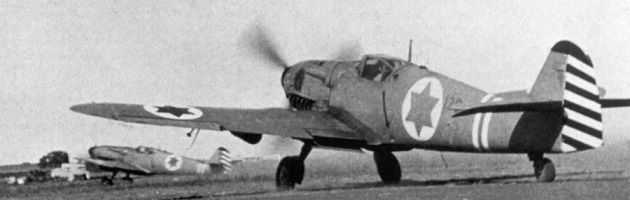
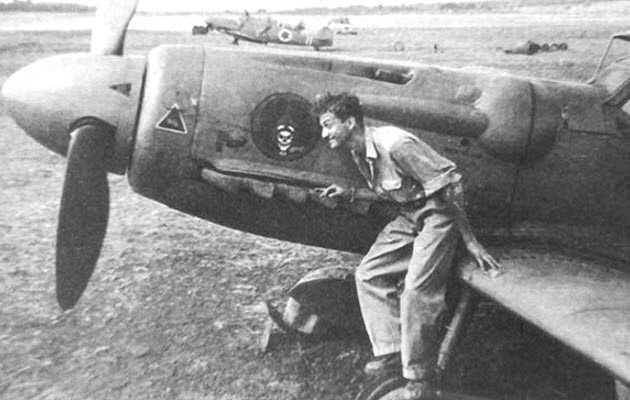
Ezer Weizmann standing on the wheel of the landing gear of a S-199 admiring the 101 Squadron’s logo on the engine cowling.
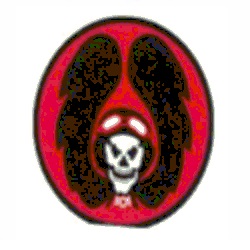
The 101 Squadron’s logo, the “Winged Skull in a Flight Helmet”, was designed by two American volunteer pilots, Stan Andrews and Bob Vickman, both of whom had been art students in Los Angeles, California.
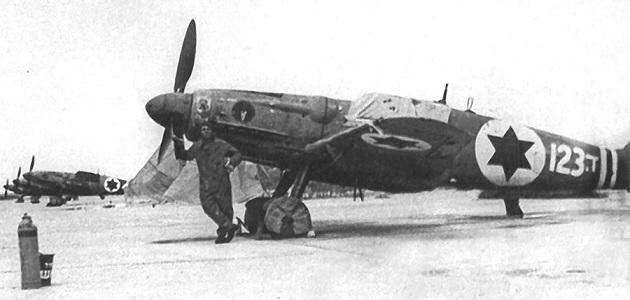
This appears to another S-199 D.123 (probably a replacement plane) on the flight line. Note the landing gear tire also has a cover.
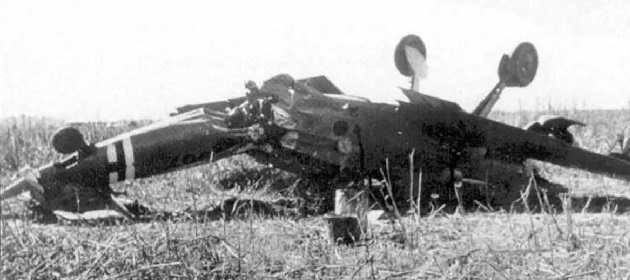
S-199 D.107 was one of the unlucky ones seen here overturned beside the airstrip. If it was written off, it became a source of spare parts.
In October, the 101 Squadron was moved to Hatzor Airbase (RAF Qastina) located in central Israel near kibbutz Hatzor after which it is named. The move was due to Herzliya’s unsuitability in rainy conditions, probable loss of clandestine status, fluidity of the front lines which made former British bases safe for use, or a shift in the balance of air superiority towards the Israelis.
The Czech built Messerschmitt proved to be unreliable and performed poorly in combat. Furthermore, maintenance problems continued where no more than five were flying at any one time. The S-199s were mostly withheld from service by the end of October with only six remained operational. They continued making sporadic sorties until mid-December 1948.
Spitfire Mk IX
Two of the first Spitfires were hurriedly assembled with parts from derelict Spitfires abandoned by the British RAF and from downed Egyptian Spitfires. They were called the Frankenstein Spitfires.
On 15 May 1948, the day after Israel’s declaration of independence, an Egyptian Spitfire while making a low-level attack on Sde Dov airport in Tel Aviv was hit by a 20mm gun manned by Sam Rose, a British Machalnik. The Spitfire crash landed on the beach at Herzlia, Herzliya Pituah, Tel Aviv. The enemy pilot was badly shocked and became a POW. The plane was recovered and cannibalized for parts.
Haganah soldiers examining the crash landed Egyptian Spitfire LF Mk IX on Herzliya Pituah beach. Note the port (left) wing is missing.
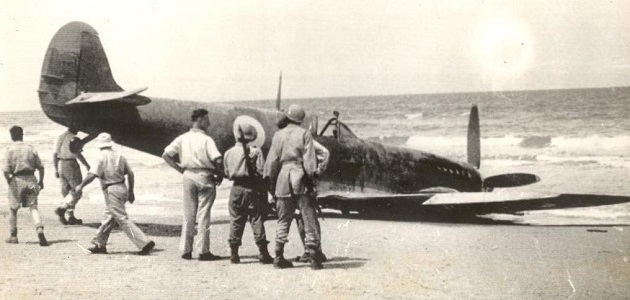
Soldiers around the Spitfire while the tide is coming in. In front of the Spitfire there appears to be a telegraph pole lying on the beach.
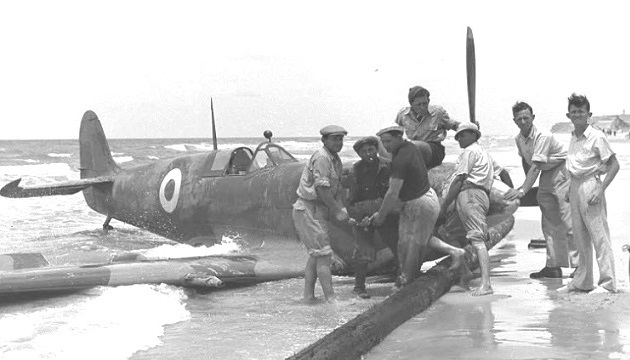
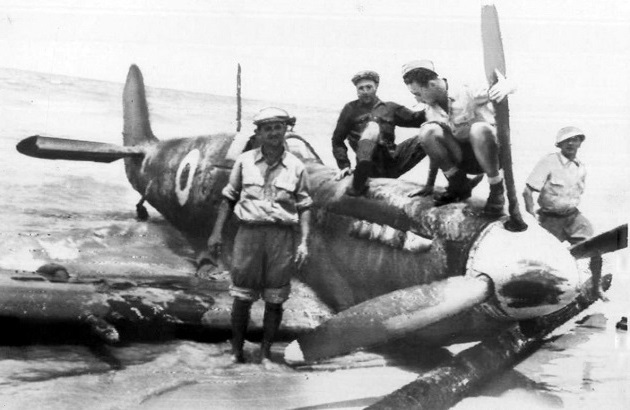
This photo shows the starboard (right) side of the Spitfire missing the wing. It is possible that upon landing the plane hit the pole severing off the wing and knocking down the pole. The soldier in the foreground is holding up a piece of wreckage probably from the severed wing. Behind the soldier in the background is a tractor with a tow cable behind it.
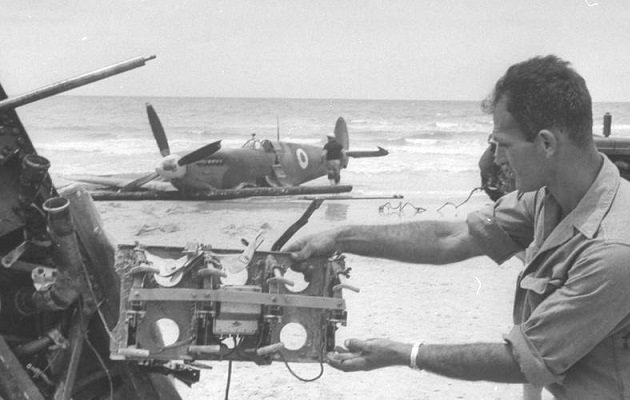
Spitfire Mk IX D.130, Israel’s first assembled Spitfire, on the morning of 23 July 1948 for its first flight. Canadian engineer David Panar is standing on the port wing briefing pilot Boris Senior in the cockpit while Ezer Weizman is standing just to the starboard of the cockpit. As not all of the instruments were available some spots on the instrument panel were left empty.
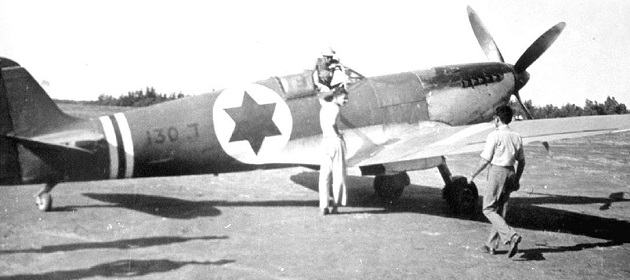
This is the port side of Spitfire D.130.
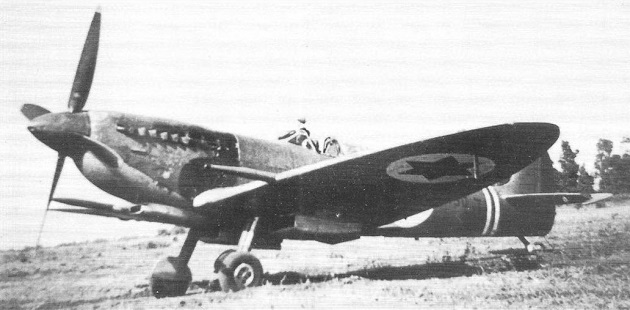
Spitfire D.130 under Eucalyptus trees at Ma’abarot which is a kibbutz in Emek Hefer in central Israel, located about 11 km (6.8 miles) northeast of Netanya.
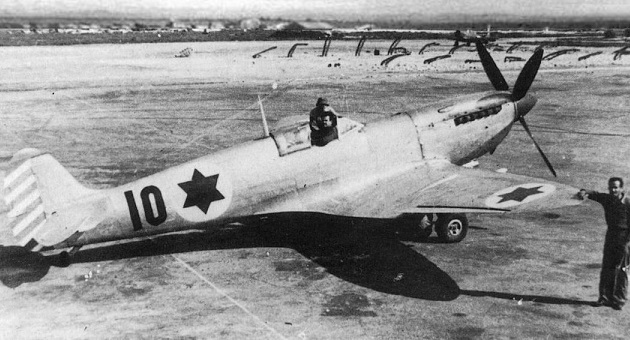
Spitfire D.130 became number “10” and later number “2001”. It was probably photographed at Hatzor airbase in late 1948 or early 1949.
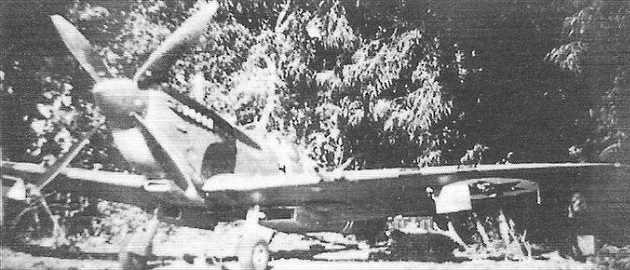
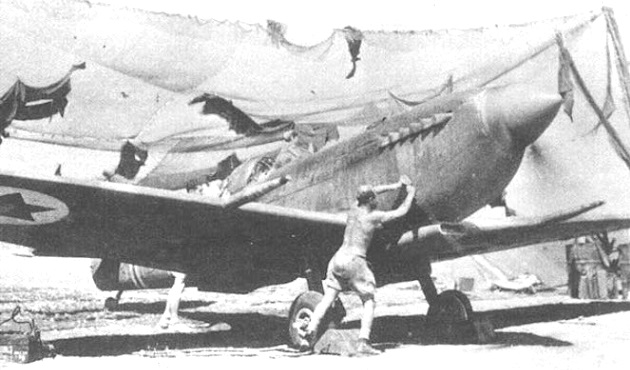
One of the first Israeli Spitfires having an engine run under camouflage netting at Hertzeliya.
Video: The first Israeli Spitfires – 1948
Operation Velvetta I and II
The main influx of Spitfires reached the IAF from Czechoslovakia. The Czechs needed money to buy newer Soviet built aircraft and offered the Israelis a deal for 60 reconditioned Spitfire LF Mk IX aircraft which were originally flown by the Czech No. 310 Squadron. Arrangements were made with the Yugoslavian leader Josip Broz Tito to use the city of Nikšić (an abandoned Luftwaffe airbase) as a way station for the purchased Spitfires. The first of the two legs of the journey was from Kunovice, Czechoslovakia to Nikšić. The second leg was more difficult, crossing 2250 km (1398 miles) of open water from Nikšić to Israel.
The operation, also known as Operation Alabama, was top secret, as it was opposed by both Britain and the USSR. For secrecy, the Israelis were not allowed to talk with Yugoslavian soldiers or citizens. They were given permission to use the base at Nikšić and repaint their aircraft markings with Yugoslav roundels for the flight to Israel so that the shipment would not rise any suspicions. After landing in Israel, the roundels were removed to uncover the concealed Israeli roundels.
Velvetta I
On September 24th, flight of 6 Spitfires few the first leg from Czechoslovakia to Yugoslavia. It took an hour and a half and went well for the most part. One of the Spitfires landing gear failed to deploy, and although the pilot was fine, the aircraft was severely damaged on landing.
The second leg, from Yugoslavia to Israel was much more difficult. It was a non-stop, five hour long flight over open water which was quite a feat for the Spitfire. Sam Pomerance, the mechanic-in-chief in Czechoslovakia, suggested to make the planes as light as possible. The Spitfires were stripped of their guns, cannons, armour plating, oxygen cylinders, cameras, and radios, and then fitted with additional fuel tanks under the belly and wings of the airplane and behind the pilot in the plane, which increased the fuel capacity from 85 to 379 gallons (600 liters). Walkie talkies were used for communications during the flight. If they forced to land in Albania or Greece on the flight, the pilots decided to say that they were flying to Israel. The flight was successful. On September 27th, 5 Spitfires left for Israel. Alon and Senior ran out of fuel and had to make an emergency landing in Rhodes. They were arrested and interrogated, but did not reveal the flight path. On October 3rd, Israel sent an envoyto Greece and the pilots were returned but the two Spitfires were impounded by the Greeks. The remaining 3 Spitfires successfully landed at Ramat David airbase in Israel.
Velvetta II
Sam Pomerance returned to Czechoslovakia and made 15 more flights to Israel, dividing the pilots into two formations. The Spitfires left on December 15th and then again on the December 18th, but both times they were forced to return due to rain and other poor weather conditions. William (Bill) and Sam Pomerance were lost in flight, and it was later found out that Bill made an emergency landing 160 miles (257.5 km) north of the Yoram airfield and Sam was killed when his plane crashed in the mountains. On December 19th, 12 more Spitfires were flown to Israel. One Spitfire was disabled due to technical issues. On December 22nd, the first formation of 5 Spitfires flew to Israel; one Spitfire turned back due to an engine problem. On December 26th, the second 6 Spitfire flight successfully arrived in Israel. A cargo plane flew with each flight carrying the guns and other parts that had been stripped from the Spitfires and provided navigation support. The Spitfires were clipped wing LF Mk IXs, mostly E-wings with two Hispano 20mm cannons and two .50 caliber machine guns.
Spitfire SL632 was flown by ‘Dani’ Shapira (Israeli) during Operation Velveta II. It is seen here in Yugoslavia wearing Yugoslav Air Force markings with wing fuel tanks.
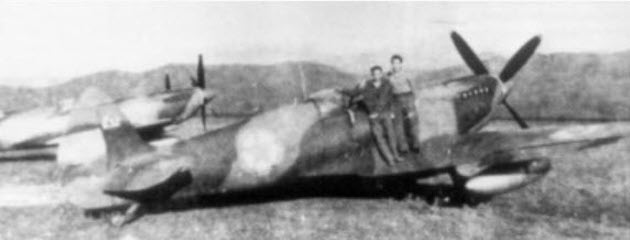
Velvetta Spitfires on the flight line being serviced by ground crews.
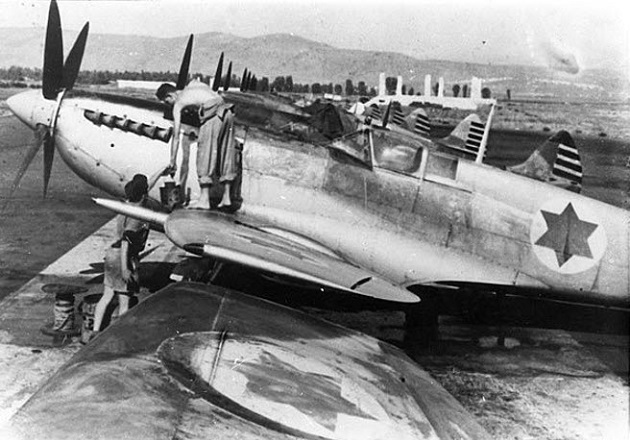
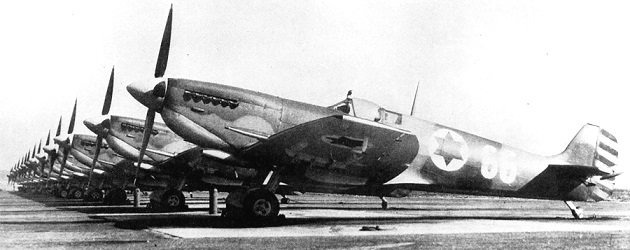
The flight line of 101 Squadron Spitfires at Hatzor Airbase. The closest Spitfire is number white 66.
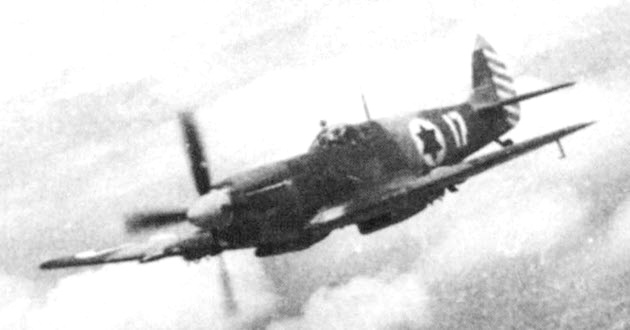
Spitfire number 17 in flight.
Egyptian Spitfire IX 622 made a forced landing near Al-Majdal and the pilot managed to get back to the Egyptian lines. The last recorded mission by 622 was on October 18th. The lack of identification stripes on the rear fuselage and wings also indicate a date earlier than November 1948.
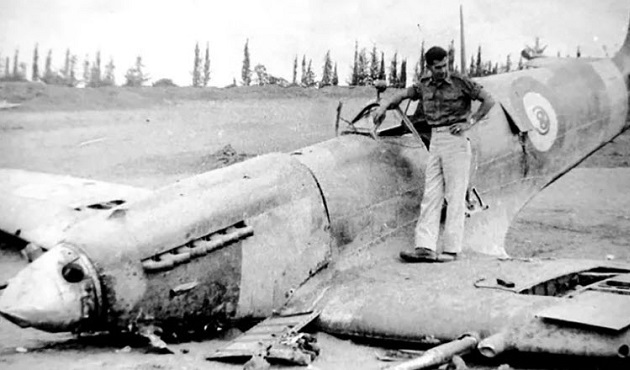
Al-Majdal (today Ashkelon) is located on the Mediterranean coast, 50 km (30 miles) south of Tel Aviv, and 13 km (8 miles) north of the border with the Gaza Strip. As early as 1 November 1948, the Egyptians left Al-Majdal. On November 4th, Operation Contact was started with the purpose of checking the area around Al-Majdal. Soldiers from the Givati Brigade were sent to verify that the Egyptians had indeed left and then they held Al-Majdal until November 5th, when Israeli forces arrived to relieve them.
Israeli soldiers stripping the plane for spare parts.
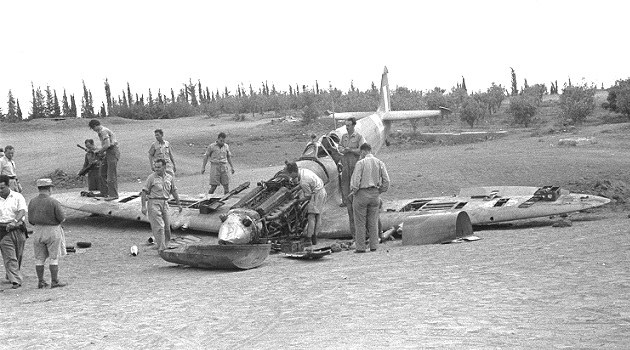
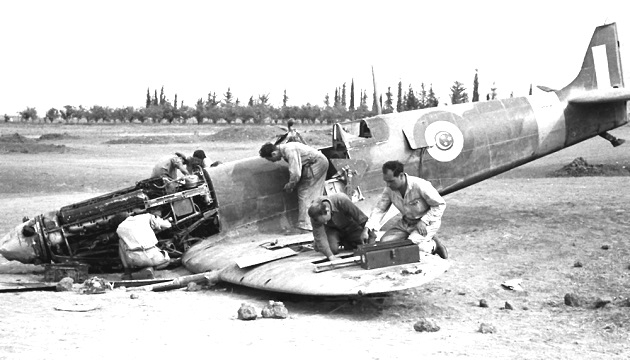
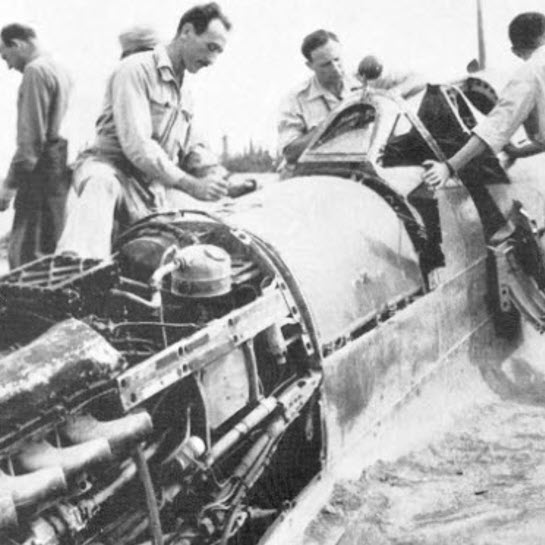
At 1500 hours on December 29th, the Israeli 9th Battalion captured the airfield at Bir Lahfan in the Sinai without encountering resistance. In the evening, Bir Lahfan, about 13 km (8 miles) south of Al-Arish, was taken by the 82nd Battalion, which defeated the Egyptian battalion stationed there. They captured the battalion commander, the highest ranking Egyptian officer to be captured by the Israelis during the war and four Egyptian aircraft. The Israeli forces did not capture Al-Arish. Due to international pressure, they withdrew from the Sinai on December 30th.
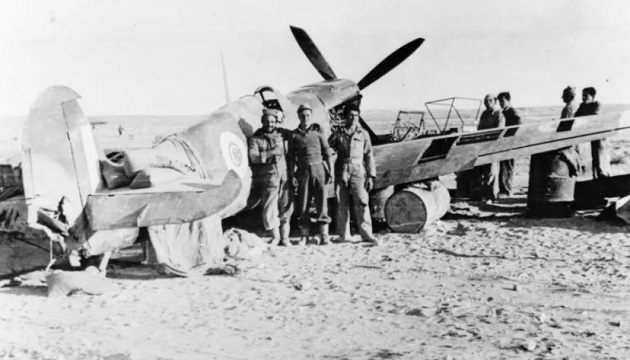
A captured Egyptian Spitfire dummy with serial number 608. It probably was abandoned by the British and the Egyptians repainted it. Note the twisted wings and tail.
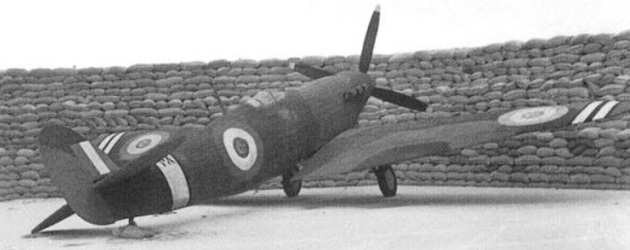
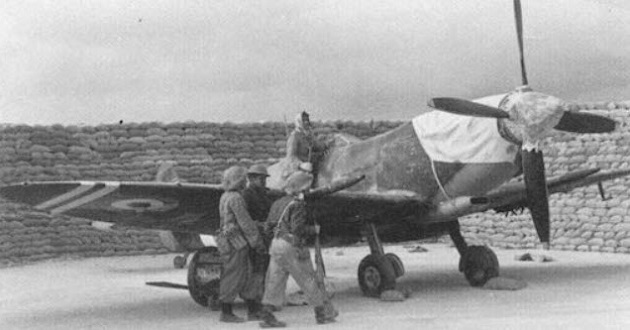
Egyptian Spitfire Mk IX number 664 was captured intact in its revetment.
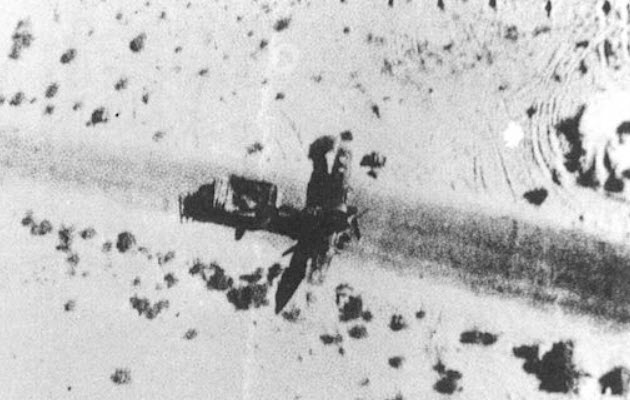
An aerial photograph of Egyptian Spitfire 664 being towed along the Abu Ageila-Nitzana road by its Israeli captors. This photo was probably taken by a RAF Spitfire FR Mk XVIII on 1 January 1949.
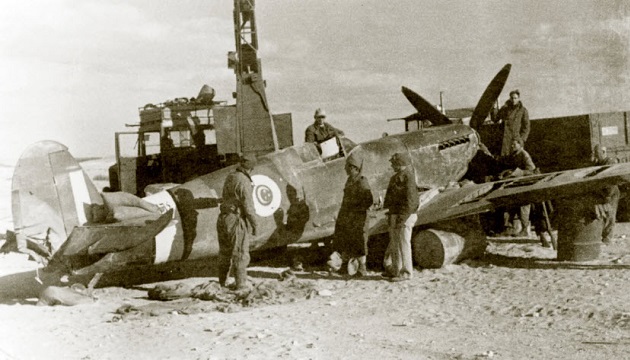
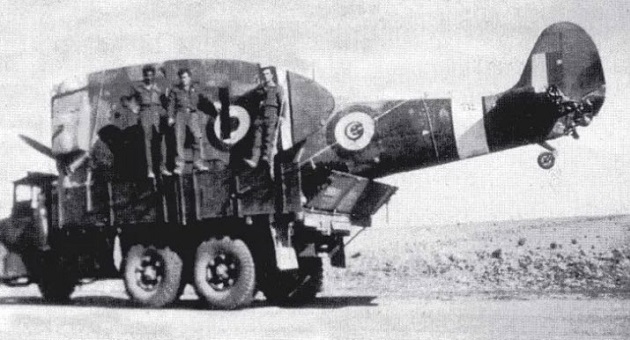
Spitfire 664 after its undercarriage was retracted by mistake en route to Israel. While being towed to Israel by a truck it began to close the distance on the towing truck. Supposedly, the horrified air cadet riding in the cockpit pulled the retraction lever which he mistook for a hand brake.
A wrecker lifted the collapsed Spitfire. The wings were removed and it was loaded into the lorry. Note the damage to the lower section of the rudder.
Al Schwimmer
Adolph “Al” William Schwimmer (10 June 1917 to 10 June 2011) during WWII worked for Trans World Airlines (TWA) and assisted the US Air Transport Command as a flight engineer. He used his WWII experience and his contacts to illegally smuggle surplus rifles, machine guns, bullets and surplus war planes to Israel. These supplies mainly came from Czechoslovakia, where many of the arms had been used by the Nazis. He quietly rounded up a bunch of aircraft, managing to stay just one step ahead of FBI and Customs agents. In a succession of daring getaways, volunteer airmen flew out of the US with Schwimmer’s collection of airplanes, including 10 Curtiss C-46 Commando cargo planes, a Constellation airliner, and four B-17 bombers. Many of the pilots who flown the planes out had went on to fight with the Israelis.
2015 PBS documentary: “A Wing and a Prayer”
P-51D Mustang
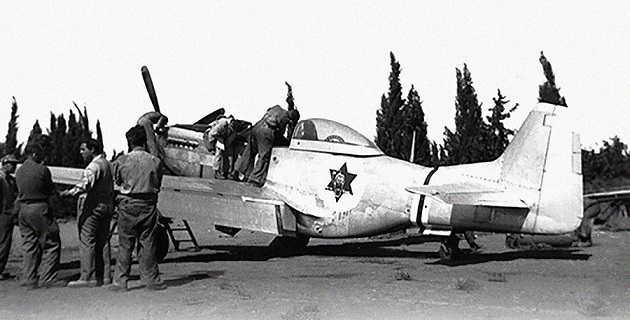
During the summer of 1948, Al Schwimmer managed to acquire four surplus demilitarized P-51D Mustangs from an arms dealer. The planes were disassembled and packed in crates labeled as “agricultural equipment” (some sources state they were unmarked) in order to bypass the US embargo on weapon sales to the Middle East and they were shipped to Israel. The first two (D.190, D.191) arrived in Israel in September 1948 and it took weeks of hard work to re-assemble the planes. The Mustangs had home built oxygen systems installed and a set of either six Czech machine guns or Browning .50 caliber machine guns. The USAAF/USAF gun sights were removed when the planes were demilitarized, so the Israelis fitted Czech made Revi gun sights which came from wrecked S-199s. The second pair of P-51Ds arrived in Israel in October and were not assembled in time to see combat during the War of Independence due to a lack of spare parts.
They were initially in second place, behind the Spitfire, as they were less agile and lacked the fire power of the two 20mm Hispano cannons. Gradually, this was seen as a superficial discrimination, and the P-51’s peculiarly great autonomy enabled it to carry out missions beyond the range of the other fighter types.
One of the two P-51D Mustangs soon after it was re-assembled in late 1948.
The Shufti Kite
For many weeks on Saturdays around noon, a plane flew over Israel at an altitude of over 30,000 feet (9144 meters). The Israelis were not able to identify the plane and its purpose. The Israelis assumed it was a reconnaissance aircraft taking photos of the Israel forces and dubbed it the named the “Shufti Kite”. The name was derived from an old military slang term from the Arabic word for “look” and the British slang for airplane which is a “kite”. It was also called “Noon Charlie”. At the time none of the Israeli planes were capable of reaching the fast high flying aircraft but that changed when they received the P-51 Mustang. Pilot Wayne Peake from North Carolina, USA, was selected to fly the Mustang to intercept the high flying Shufti Kite since he had the most time flying Mustangs during WWII.
On 20 November 1948, RAF No. 13 Squadron Mosquito PR Mk 34, call sign “Graphic III”, took off from RAF Habbaniyah Airfield in Iraq on a standard overflight of Israel as they had done for months prior. The reconnaissance mission was two 48 hour flights with stops for refueling, crew rest, and offloading of the photographs in Egypt and Iraq. The Israelis had spotted the plane entering Israel from the north. Peake took off in Mustang number 40 from Hatzor airbase to intercept it. After climbing up to around 30,000 feet (9144 m), Peake was guided towards the plane by South African volunteer pilot, Sid Cohen, who tracked the aircraft with a pair of binoculars. Because of a faulty oxygen system in the P-51, Peake had difficulty seeing clearly. After struggling to find the aircraft, Peake eventually descended and intercepted the plane, at 28,000 feet (8534.4 m) over Israel and apparently miss-identified the aircraft as a Hawker Halifax bomber. Peake got within range and opened fire, pouring 45 rounds into it. He observed strikes on the aircraft as well as a fire on the port engine. After a short second burst, the guns on his P-51 jammed. Initially, the fire from the six .50 Brownings appeared to have little effect and the Mosquito continued on its course. Then the Mosquito turned out to sea, losing altitude to around 20,000 feet (6096 m) probably in an attempt to escape or avoid crashing in Israel, when it suddenly exploded and crashed off Ashdod. The Israeli Navy searched the area and found some floating wreckage identifying it as a “RAF Mosquito.”
In 1949, the second pair of P-51Ds became operational. In the early 1950s, 36 other P-51s were purchased from the US, and in June 1952, 25 Mustangs were purchased from Sweden. In 1955, another batch of 30 was purchased from Italy and shipped to Israel. However, not all of them were assembled and flown, probably were used as spare parts. One of the reasons for this might be that the Italian P-51s were already war-weary aircraft, purchased from surplus depots in Germany.
Bombers
No. 1 Squadron was based at Sde Dov airfield, Tel Aviv. At peak strength, the squadron had 22 light and medium civil aircraft – Austers, Piper Cubs, Norsemans, Bonanzas, Miles Aerovan, and Dragon Rapides. They flew various types of missions: Communications, Transport, Bombing, Reconnaissance, and Air Ambulance. As “Bombers”, dropping 25 and 50 pound (11.3 – 22.7 kg) bombs and incendiaries on targets mainly in the area surrounding Jerusalem. The “Bomb-chuckers” as they were called, carried the bombs on their laps, and reaching the target the safety pins were pulled and the bombs were manually dropped on the target.
There were two women pilots who had flown with the No. 1 Squadron, Sara Makleff (nee Guberman) and Zahara Levitov. Zahara Levitov was killed on 3 August 1948. Click HERE to read her tragic story.
B-17 Bombers
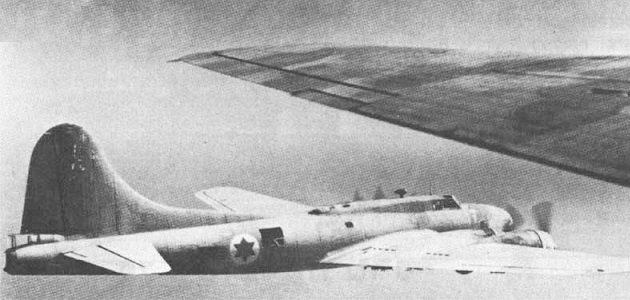
The B-17 Flying Fortress bombers were acquired thanks to Al Schwimmer. Schwimmer found the B-17s among aircraft already flying with the numerous start-up airlines formed after the end of WWII. The first two de-militarized B-17s were acquired from Charles Winters of Aerodex Inc. in Miami who used them in his air freight business between Florida and Puerto Rico. They were sold unknowingly to a front company that said they would be used in the Caribbean. Two more planes were purchased from Donald H. Roberts of Tulsa, OK.
Four Douglas/Long Beach B-17G-95-DL Fortresses
| Serial Number | Civil Registration | Israeli Number |
|---|---|---|
| 44-83811 | N5014N | 1601 |
| 44-83753 | N5024N | 1602 |
| 44-83851 | N1098M | 1603 |
| 44-83842 | N1212N |
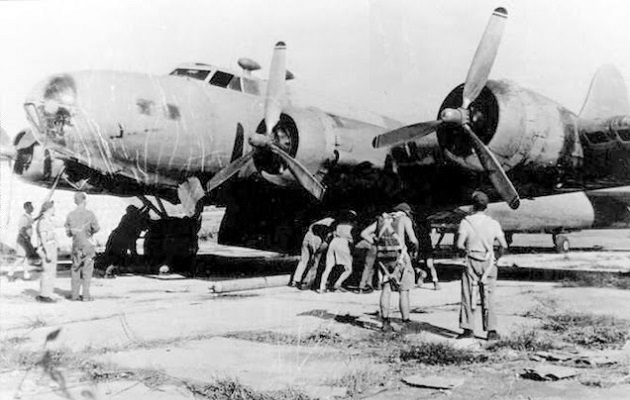
The four B-17s were legally-registered, commercially-modified and above all had airworthy air frames which meant they could be flown all the way from the US to Israel non-stop. The planned route was Miami to San Juan, Puerto Rico; San Juan to Santa Maria, Azores; and Azores to Zatec Czechoslovakia, for an epic 6586.5 miles (10600 km) flight of at least 38 hours duration over the Atlantic Ocean and across the Iron Curtain.
The first three B-17s took off on 11 June 1948. After reaching Santa Maria, Azores, the three B-17s were planned to fly to Zatec, Czechoslovakia, but since the US authorities were not far behind, the B-17s had to move on quickly. With the prior consent of French officials, the crews filed a flight plan for Ajaccio, Corse, but instead they landed at Zatec on June 17th, where the Israeli airlift was going on in earnest.
The US press had uncovered the affair on June 16th, when news circulated that several US surplus warplanes had departed from Ajaccio to Palestine. Despite arrangements, the French would not confirm the arrival of the aircraft at Ajaccio and they were declared missing. The public exposure of the three B-17s’ flight made the delivery of the last B-17 difficult. The fourth B-17 (44-83842) was re-registered with a bogus serial N7712M and flown via USA and Canada but it was not delivered because while under pressure from the US Government, the Portuguese officials impounded the aircraft at the Azores. However, the first three B-17s were delivered to Zatec.
At Zatec, the three B-17s were fitted with bomb racks, bomb sights (not the Norden bombsight), machine guns and were bombed-up for action. It was decided that on the flight from Czechoslovakia to Israel on July 14th the B-17s would carry out attacks on three targets in Egypt – the Royal Palace in Cairo, the Egyptian airbase at El-Arish, and Gaza. Cairo was bombed, but due to difficulties in locating the El-Arish and Gaza targets, the other two aircraft bombed Rafah. Each bomber dropped twenty 500 lb (226.8 kg) bombs.
The rearmed B-17s were assigned to the newly formed No. 69 Squadron known as “Hapatishim” (“The Hammers”), and were based at Ramat David Airbase. The 69th was the only IAF squadron made up exclusively of dedicated bombers. On July 16th, their first day in Israel, the new bombers went into action, and during operations “Yoav” and “Horev” each bomber flew up to three sorties per day.
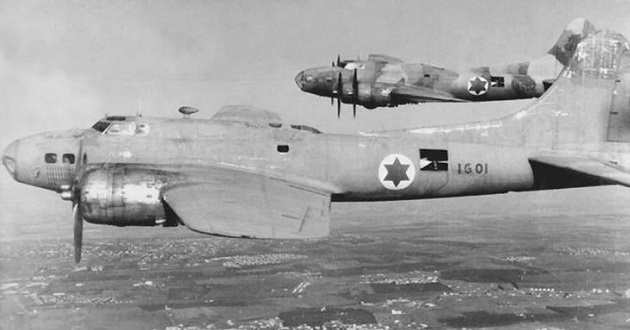
B-17 number 1601 and 1602 flying in formation.
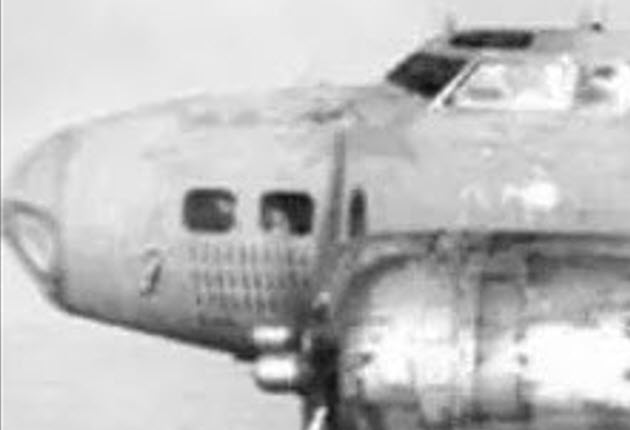
This is my close up of the nose of 1601 which has 33 bombing mission marks.
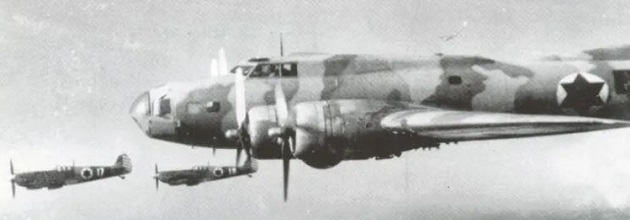
Spitfires number 17 and 18 are escorting the two bombers.
This is the starboard side of B-17 number 1601.
Video: The Incredible Story of the B-17 Joining the Israeli Air Force
Beaufighter
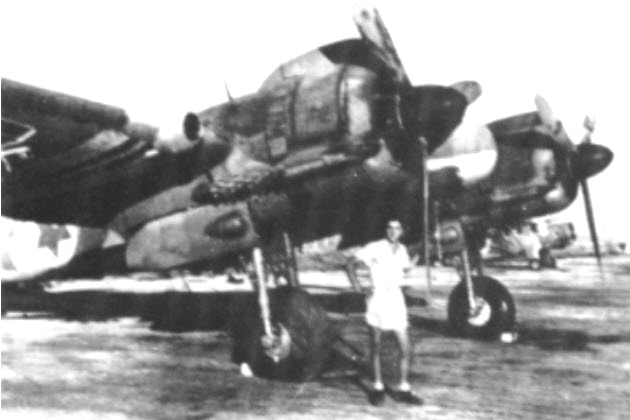
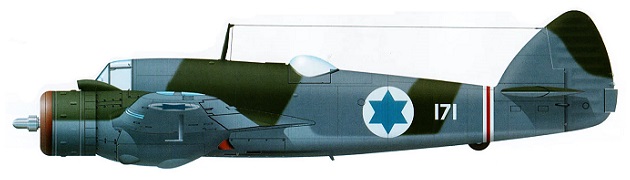
The Haganah, the underground militia that would become the Israeli Defense Force played similar cat-and-mouse games in Britain. An agent named Emmanuel Zur managed to acquire five war surplus Bristol Beaufighter attack aircraft, but he was blocked from flying them out of Britain. Zur came up with a creative solution. He created a bogus movie production company for the purpose of making a film about a WWII squadron. While the cameras were rolling, a crowd gathered, including suspicious inspectors from the Ministry of Civil Aviation. Zur’s four Beaufighters took off (one crashed on the third day of filming). But instead of flying back over the movie site according to the script, the Beaufighters turned south and disappeared. Not until the next day, the inspectors learn the truth – the four Beaufighters were in Israel. On arrival in Israel, the four were allocated Israeli serials D.170 (RD448), D.171 (RD135), D.172 (RD427), and D.173 (LZ185), and were immediately pressed into service. One was relegated as a ‘Hangar Queen’ for spare parts in order to keep the other three flying.
On the morning of October 19th, Beaufighter D.171 piloted by Len Fitchett was on a sortie to help the Israeli Navy attack the Egyptian flagship “The Emir Farouk” when he encountered an Egyptian Hawker Sea Fury Mk II flown by Abd Al-Hamid Abu Zayd, commander of the Egyptian 2nd squadron. Aware that the Beaufighter stood very little chance in a dogfight, Fitchett jettisoned his bomb load and put his bomber into a shadow dive low over the water. With the Fury on his tail, Fitchett abruptly pulled up, just in time to see the Fury crash into the sea behind him. Unfortunately, Fitchett was KIA the next day, bombing an enemy stronghold on the southern front. The remaining Beaufighters were removed from service shortly after the war ended.
IAF versus RAF
The final cease-fire of the war was to go into effect at 1400 hours on 7 January 1949. Just before 1200 hours, four Spitfire FR Mk XVIIIs from the RAF No. 208 Squadron RAF were on a reconnaissance mission in the Deir al-Balah area flew over an Israeli convoy that had been attacked by five Egyptian Spitfires fifteen minutes earlier. The British pilots spotted the smoking vehicles, and were drawn to the scene. Two of the planes dived to below 500 feet (152.4 m) altitude to take pictures of the convoy, while the over two covered them from 1500 feet (457.2) altitude.
Israeli soldiers on the ground, alerted by the sound of the approaching Spitfires and fearing another air attack, opened fire at the planes. One Spitfire was shot down by a tank mounted machine gun, while the other was lightly damaged and rapidly pulled up. The remaining RAF Spitfires were then attacked by two patrolling IAF Spitfires flown by Slick Goodlin (American) and John McElroy (Canadian) who mistaken them for Egyptian aircraft. McElroy shot down two RAF Spitfires and Goodwin shot down the fourth. One RAF pilot was killed and the other two pilots were captured by Israeli soldiers and taken to Tel Aviv for interrogation, and were later released. Another was rescued by Bedouins and handed over to the Egyptian Army, who then turned him over to the RAF. A little later, a patrol by Denny Wilson and Arnie Ruch encountered eight Egyptian Macchis. Wilson engaged five of the Egyptian fighters, and although his plane was damaged he managed to return to Hatzor airbase.
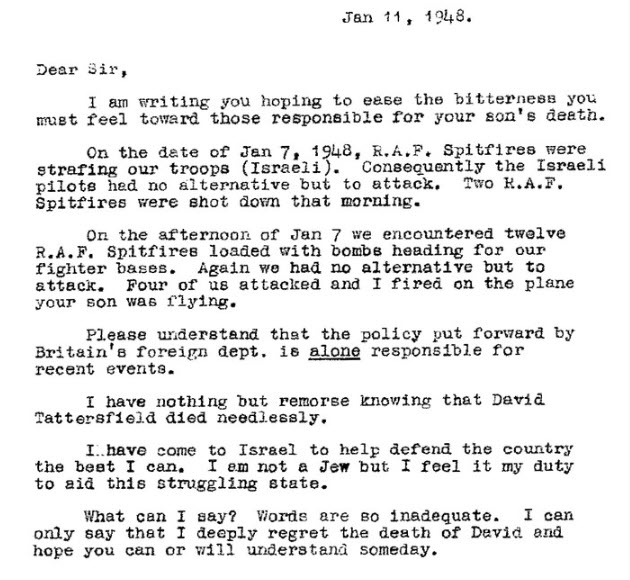
Later that day, four RAF 208 squadron Spitfires escorted by seven RAF No. 213 Squadron and eight No. 6 Squadron Hawker Tempests, were dispatched from the Suez Canal zone to search for the four missing RAF Spitfires. At about 1300 hours, a formation of four 101 Squadron Spitfires led by Ezer Weizman engaged the RAF formation. Flying the other three IAF planes were Weizman’s wingman Alex ‘Sandy’ Jacobs and two Americans Bill Schroeder and Caesar Dangott, both of whom had flown with the US Navy in WWII. The Tempests were not able to jettison their drop tanks, and some had non-functioning guns. Schroeder shot down one Tempest, killing pilot David Tattersfield. Weizmann severely damaged a RAF plane flown by Douglas Liquorish, but his own plane was lightly damaged by RAF pilot Brian Spragg. Two other RAF aircraft were lightly damaged during the engagement. The air battle ended when the British wiggled their wings to be more clearly identified, and the Israelis eventually realized the situation and disengaged, returning to Hatzor airbase.
Israel Prime Minister David Ben-Gurion ordered the wrecks of the shot down RAF fighters to found and be dragged into Israeli territory. Israeli troops visited the crash sites, removed various parts, and buried the other aircraft. However, the Israelis did not manage to conceal the wrecks in time to prevent British reconnaissance planes from photographing them.
An RAF salvage team was deployed to recover the wrecks, entering Israeli territory during their search. Two wrecks were discovered inside Egypt, while Tattersfield’s Tempest was found north of Nirim, 4 miles (6.4 km) inside Israel. Interviews with local Arabs confirmed that the Israelis had visited the crash sites to remove and bury the wrecks. Tattersfield was initially buried near the wreckage, but his body was later removed and reburied at the British War Cemetery in Ramla.
Two Spitfires FR Mk XVIIIs of RAF No. 208 Squadron flying over the Mediterranean.

David Tattersfield’s parents received this anonymous letter about their son. In the heat of battle when the two RAF Spitfires dived on the column to take photos they could have been mistakenly thought to be strafing the column. From a distance, the Tempests still carrying their drop tanks could have been mistakenly thought to be carrying bombs.
Video: When Israelis fought the British (Spitfire vs Spitfire, 1949)
Aerial Victories
| Date | Pilot | Aircraft | Kill | Country | Notes |
|---|---|---|---|---|---|
| 03 Jun 1948 | Modi Allon | Avia S-199 | C-47 | Egypt | near Herzliya airfield |
| 03 Jun 1948 | Modi Allon | Avia S-199 | C-47 | Egypt | |
| 08 Jun 1948 | Gideon Lichtaman | Avia S-199 | Spitfire | Egypt | |
| 10 Jul 1948 | Morris Mann | Avia S-199 | AT-6 | Syria | |
| 18 Jul 1948 | Modi Allon | Avia S-199 | Spitfire | Egypt | ‘Afifi al Janzuri |
| 23 Sep 1948 | Gideon Lichtaman | Avia S-199 | Rapide | Jordan | |
| 16 Oct 1948 | Rudi Augarten | Avia S-199 | Spitfire | Egypt | |
| 19 Oct 1948 | Len Fitchett | Beaufighter | Fury | Egypt | Abu Zaid, crashed into the sea |
| 21 Oct 1948 | Rudi Augarten | Spitfire IX | Spitfire | Egypt | |
| 21 Oct 1948 | John Doyle | Spitfire IX | Spitfire | Egypt | Mukhtar Mahmud Sa’id |
| 04 Nov 1948 | Boris Senior | Spitfire IX | C-47 | Egypt | Shared Claim, Amr Shakib |
| 04 Nov 1948 | Rudi Augarten | P-51D | Shared Claim, Amr Shakib | ||
| 17 Nov 1948 | Rudi Augarten | Spitfire IX | Spitfire | Egypt | Probable Claim |
| 20 Nov 1948 | Wayne Peake | P-51D | Mosquito | Britain | Eric Reynolds / Angus Love RAF 13 Squadron |
| 22 Dec 1948 | Rudi Augarten | Spitfire IX | MC.205V | Egypt | Shalabi al Hinnawi |
| 28 Dec 1948 | John Doyle | Spitfire IX | MC.205V | Egypt | Abd al Fatah Sa’id |
| 28 Dec 1948 | Gordon Levett | Spitfire IX | MC.205V | Egypt | |
| 28 Dec 1948 | Gordon Levett | Spitfire IX | Spitfire | Egypt | Probable Claim |
| 30 Dec 1948 | John Doyle | Spitfire IX | Fiat G.55 | Egypt | Mustafa Kamal Abd al Wahab |
| 30 Dec 1948 | John McElroy | Spitfire IX | Fiat G.55 | Egypt | Khalif al Arusi |
| 31 Dec 1948 | Denny Wilson | Spitfire IX | MC.205V | Egypt | |
| 31 Dec 1948 | Denny Wilson | Spitfire IX | Spitfire | Egypt | |
| 05 Jan 1949 | Simon Feldman | Spitfire IX | MC.205V | Egypt | |
| 05 Jan 1949 | Boris Senior | P-51D | MC.205V | Egypt | Probable Claim |
| 07 Jan 1949 | Chalmers Goodlin | Spitfire IX | Spitfire Mk18 | Britain | Geoff Cooper, RAF 208 Squadron |
| 07 Jan 1949 | John McElroy | Spitfire IX | Spitfire Mk18 | Britain | Ron Sayers, RAF 208 Squadron |
| 07 Jan 1949 | John McElroy | Spitfire IX | Spitfire Mk18 | Britain | Tim McElhaw, RAF 208 Squadron |
| 07 Jan 1949 | John Doyle | P-51D | MC.205V | Egypt | |
| 07 Jan 1949 | Boris Senior | P-51D | MC.205V | Egypt | Probable Claim |
| 07 Jan 1949 | Bill Schroeder | Spitfire IX | Tempest | Britain | David Tattersfield, RAF 213 Squadron |
Planes
North American Aviation AT-6 (the Harvard) was a US single engine advanced trainer.
de Havilland DH.89 Dragon Rapide was a British 1930s short-haul biplane airliner.
Bristol Type 156 Beaufighter was a British WWII twin engine fighter-bomber.
Hawker Sea Fury Mk II was a British post WWII naval fighter.
de Havilland DH.98 Mosquito was a British WWII twin engine fighter-bomber.
Macchi C.205 Veltro (Italian: “Greyhound”) was an Italian WWII fighter.
Fiat G.55 Centauro (Italian: “Centaur”) was an Italian WWII fighter.
Hawker Tempest was a British WWII fighter which was an derivative of the Hawker Typhoon.
Ezer Weizman (15 June 1924 to 24 April 2005) later became the commander of the Israeli Air Force 1958-66, served as deputy Chief of the General Staff and was the President of Israel 1993–2000.
Today
Rent or Buy Film: Above and Beyond 2015 Documentary
Model Kits
1/48
Hobbycraft HC1540 Avia S-199 “Israeli Knife” – 1995
Hasegawa 09506 Spitfire Mk.IX `Israeli Defense Force´ – 2003
ICM 48002 War of Independence of Israel, 1948-1949 P-51D Mustang & Spitfire Mk.IX – 2003
Academy 2202 Avia S-199 – 2010
Airfix A73007 Spitfire Mk.IX (Egyptian or Israeli) Airfix Club Limited Edition – 2013
Eduard 8283 Spitfire Mk.IXe ProfiPack – 2014
Eduard Avia S-199 – 2024 future
1/72
Hasegawa 00617 P-51D Mustang `IDF´ – 2003
Sword SW 72050 Spitfire LF Mk. IXe – 2011
AZmodel AZ7393 Supermarine Spitfire Mk.IXc “IDF/AF & REAF” – 2012
Kovozávody Prostějov (KP) KPM0063 Supermarine Spitfire LF Mk.IXe – 2016
Kovozávody Prostějov (KP) KPM0217 Avia S-199 “Sakin” Israeli Service – 2021
Eduard 70152 Avia S-199 ERLA canopy ProfiPACK edition – 2022
Eduard 7472 Avia S-199 ERLA canopy WEEKEND edition – 2023

 Mike's Research