As in all wars, the holidays are hard on soldiers far away from home fighting for their country. Even on the front lines in the desert, British, Free French and New Zealand soldiers celebrated Christmas whenever they get the chance with what was available.
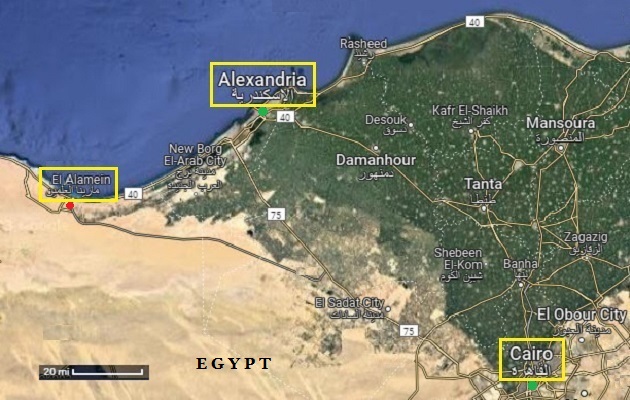
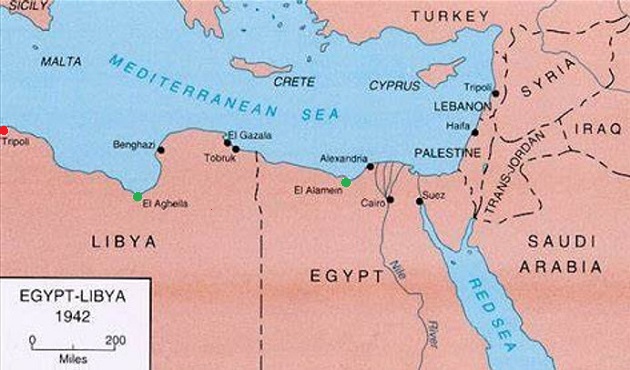
After the Allies were defeated at El Gazala in June 1942, the British 8th Army made a “strategic withdrawal” (a British euphemism for “headlong retreat”) all the way back to Egypt and formed a defensive line at El Alamein. After the first battle of El Alamein between July 1-27, the Allies halted the Afrika Korps advance towards Cairo and the Seuz Canal. During the battle both sides took heavy losses and the tactical situation became a stalemate.
El Alamein is Located in Egypt along the Arab’s Gulf of the Mediterranean Sea, 106 km (66 miles) west of Alexandria and 300 km (186 miles) northwest of Cairo.
In August 1942, British General Auchinleck was relieved as Commander-in-Chief of Middle East Command and his successor, Lieutenant General William Gott was killed when his plane was shot down while on his way to replace him as commander of the British 8th Army. Lieutenant General Bernard Montgomery was then appointed the commander of the 8th Army. The 8th Army prepared for their next assault on the El Alamein line. It received new divisions, replacements, supplies and armour including new Sherman tanks from the US.
Film: 1942 Battle at El Alamein
20 September 1942
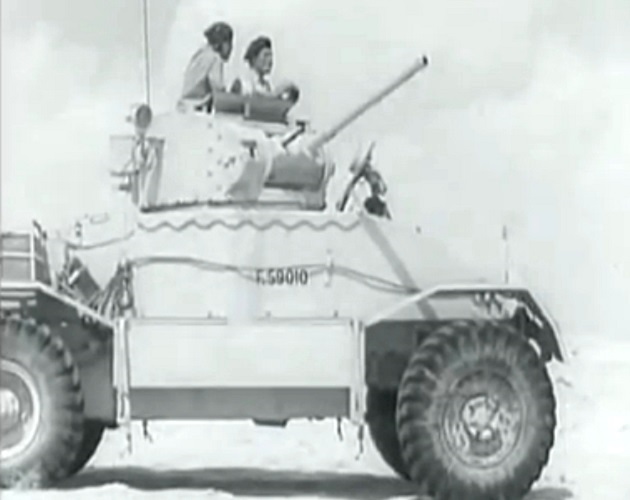
A new British armoured car had arrived in the Egyptian desert. It is the AEC Mk I armoured car, the same make as the London’s buses. Note the census number F.59010 on the hull side and it has no unit markings.
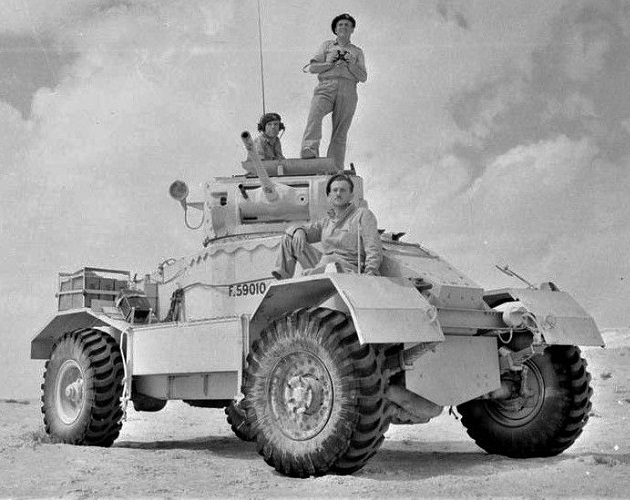
The turret was electrically driven with a manual traverse option. It is the same turret used on the British Valentine Tank.
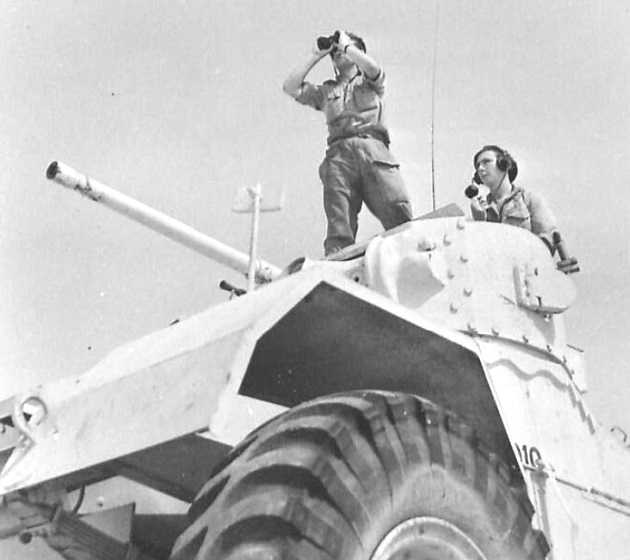
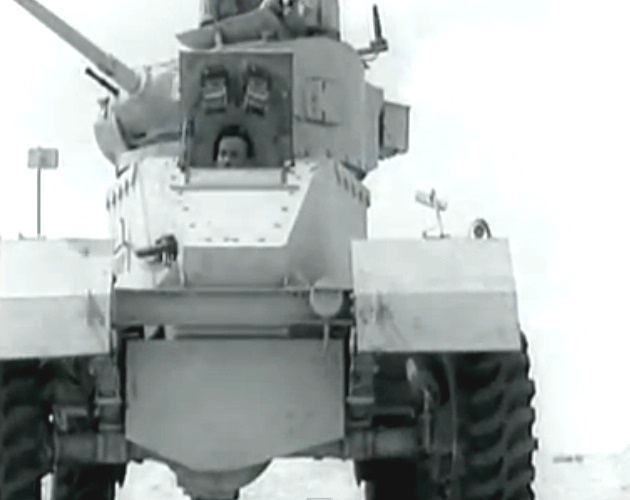
This is the front view of the AEC Mk I. The driver’s hatch is open showing the two periscopes for use when buttoned up. Note how narrow the hull is and what appears to be a machine gun on the front right hull for the driver.
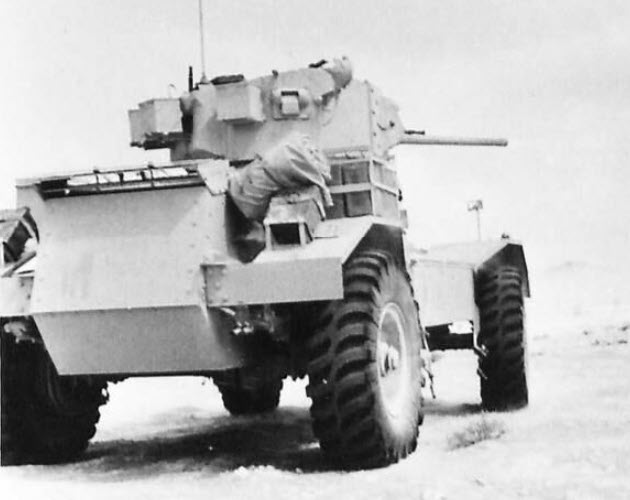
This is the rear view of the AEC Mk I. This photo shows the rear of the turret.
This is another right side view of the AEC Mk I. Note the towing cable on the side of the hull.
The Associated Equipment Company (AEC) of Southall, England was a British vehicle manufacturer that built buses, motor coaches and trucks. One of their designs was the Matador artillery tractor which towed medium field and heavy anti-aircraft guns. AEC built the armoured car based on the Matador chassis and was developed as a private venture. It had the fire power and protection comparable to the British cruiser tanks at the time. Only 129 AEC Mk Is were built.
AEC Mk I Specifications
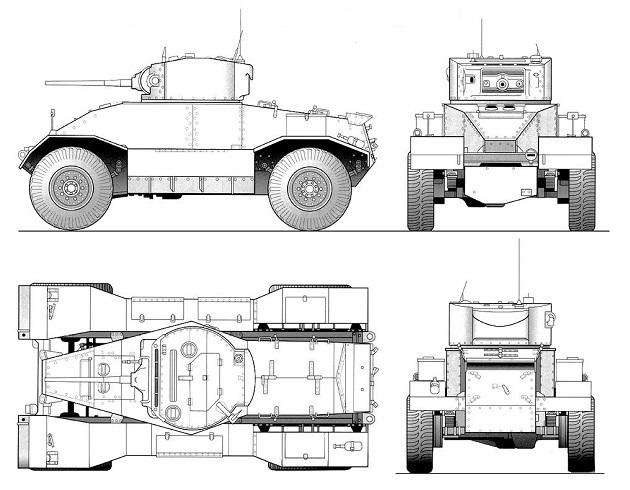
| Crew | 3 (Driver, Gunner, Loader/Commander) |
| Weight | 11 long tons (12 short tons, 11 tons) |
| Length | 17 feet (5.2 meters) |
| Width | 9 feet (2.7 meters) |
| Height | 8 feet 4 inches (2.54 meters) |
| Armour Thickness | 16 – 65 mm (0.63 – 2.56 inches) |
| Main Armament | QF 2-Pounder 40mm (1.575 inch) gun |
| Secondary Armament | One Besa machine gun, one Bren light machine gun |
| Engine | AEC 195 diesel 105/158 bhp (78/118 kW) |
| Power/Weight Ratio | 9.5 hp/tonne |
| Suspension | 4×4 wheel drive |
| Operational Range | 250 miles (400 km) |
| Maximum Speed | 36 – 41 mph (58 – 66 km/h) |
About 500 AEC Mk II (6-pounder gun) and Mk III (75mm gun “Close Support”) armoured cars were deployed in Europe with British and British Indian Army units, often together with US built Staghound armored cars. The Mk III replaced the US M3 half-track 75mm self-propelled guns in some armoured car regiments.
AEC armoured cars remained in service after the end of the war until replaced by the Alvis Saladin. The Lebanese Army used the armoured car at least until 1976.
Desert Victory
During the following months, the tide of the war in North Africa had turned in flavor of the Allies. The second battle of El Alamein (23 October to 11 November 1942) was a victory for the Allies. Meanwhile, US forces had landed in Morocco and Algeria (Operation Torch) creating a second front in North Africa. USAAF units in Cairo provided air support to the Allied ground troops in Libya and secured sea and air communications in the Mediterranean. In Libya, Rommel’s supply lines were over extended. Very little supplies were arriving by sea and the Allied air forces were constantly attacking his long supply columns. Low on supplies, fuel and equipment, the Africa Korps retreated west towards Tripoli (the closest port which the Axis forces were receiving supplies) with the British 8th Army in hot pursuit.
Film: Tank Parade At El Alamein (1942)
Film: Rommel On The Run (1942)
17 December 1942
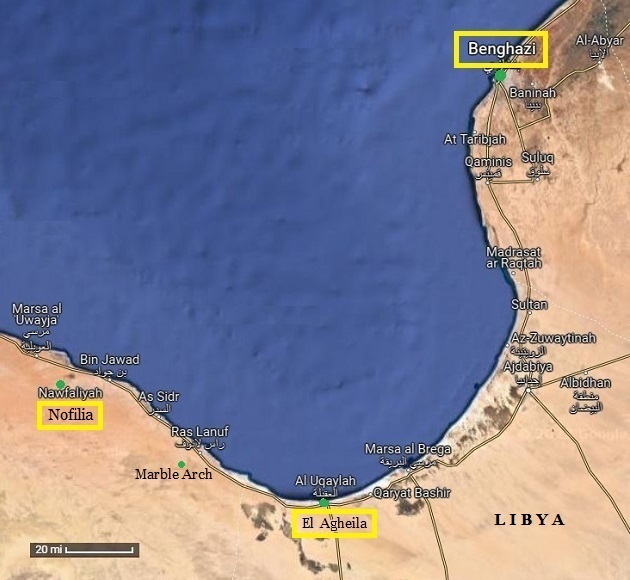
The western desert was not the best place in the world to spend Christmas or was the best place to find Christmas supplies. The soldiers in the desert would not be denied their Christmas celebration and they made do with what they had. Most of the following IWM photos were probably taken somewhere around El Agheila (today Al Uqaylah), Libya.
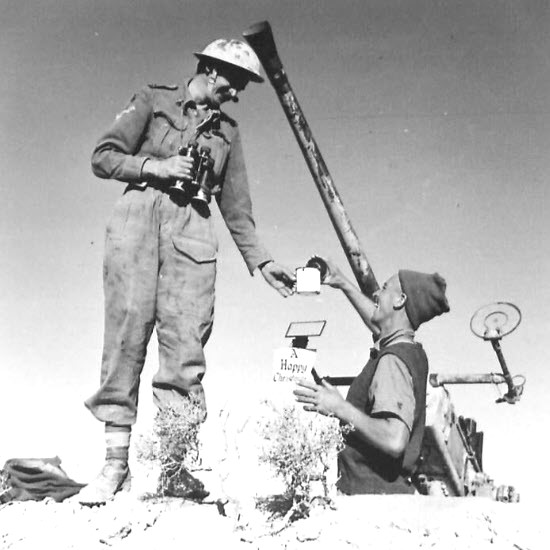
The Christmas spirit is kindled for this Bofors 40mm anti-aircraft gun crew by tying a simple holiday card on their gun.

The spotter must remain at his post even during times such as this, so he gets a tot (shot) of whiskey to cheer him up.
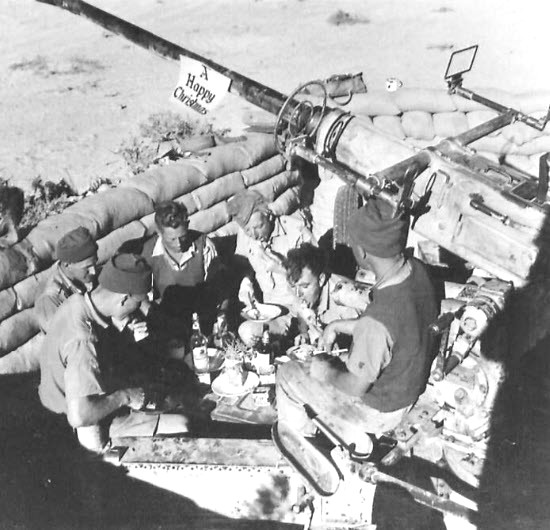
Turkeys, Ham, Goose and other luxuries were out of the question, so bully (corned beef), suitably dressed with camel thorn (shrubs native to northern Africa), was the main course for the Christmas dinner.
Jerry (the Germans) interrupted their Christmas dinner by appearing overhead. The gun was swung into action to attend to the uninvited guests.
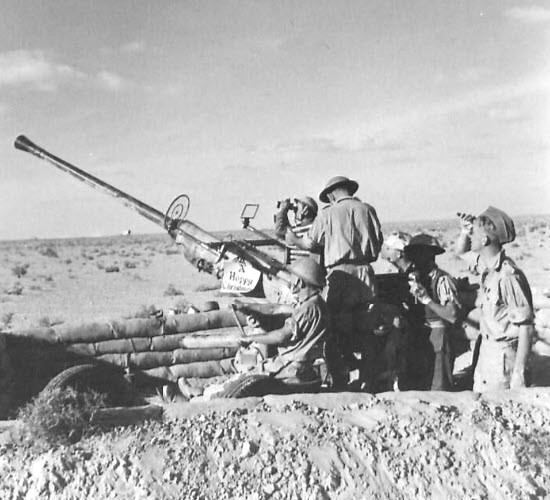
The Bofors 40mm gun normally had a crew of seven:
- Elevation trainer & firer (left side of the gun)
- Azimuth (in degrees) trainer (right side of the gun)
- Two breech loaders (stand on the gun platform to reload)
- Two loaders fed the loaders with ammo (4 shells per clip)
- Gun commander, who would also “spot” for the targets
After the interruption, the gun crew continued with their dinner as if nothing has happened. They would not let Jerry spoil their Christmas.
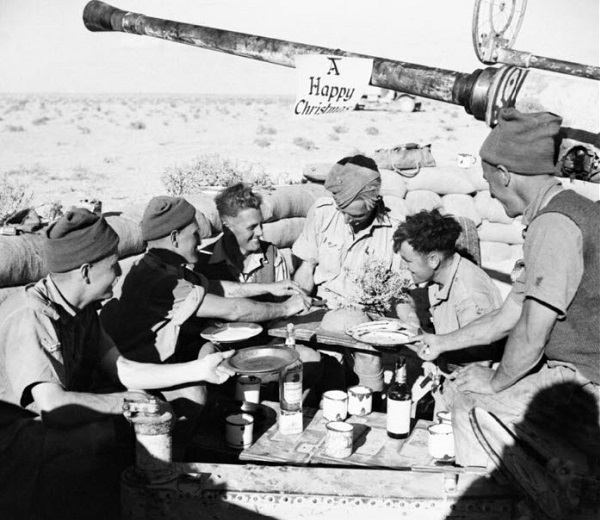
A spot of precious whiskey is poured to light over the Christmas pudding, but one of the gun crew takes no chances. He stands over the flames with a fire extinguisher at the ready. Christmas pudding is a sweet, dried fruit pudding traditionally served as part of Christmas dinner in Britain.

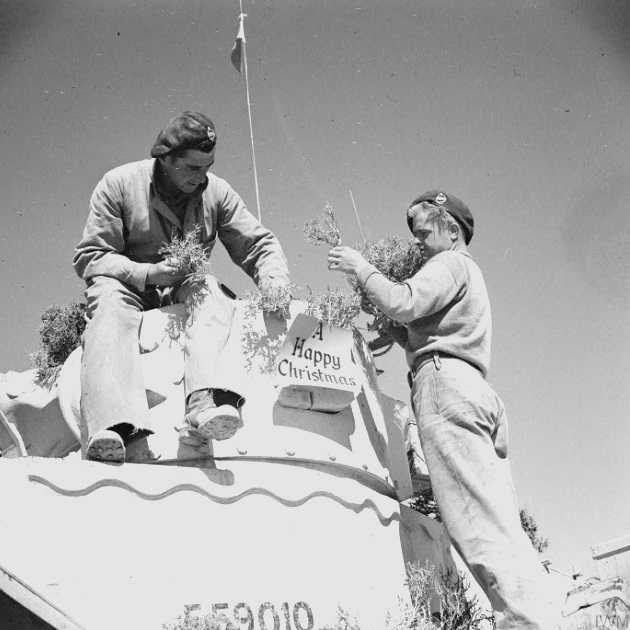
The crew of an armoured car decorate their vehicle with camel thorn in place of holly, and also hung a Christmas card. Note the census number on the hull.
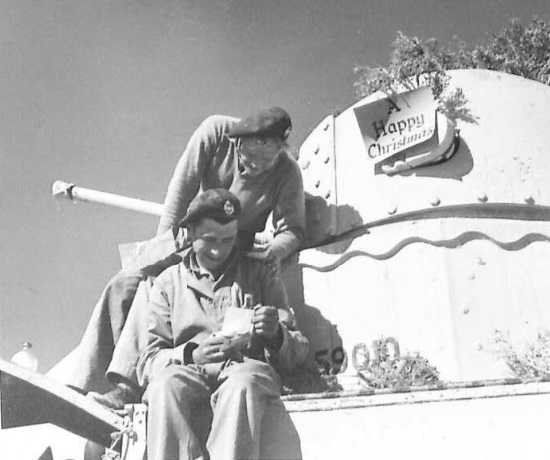
With their armoured car suitably decorated, the crew began reading (or re-reading?) their Christmas mail.
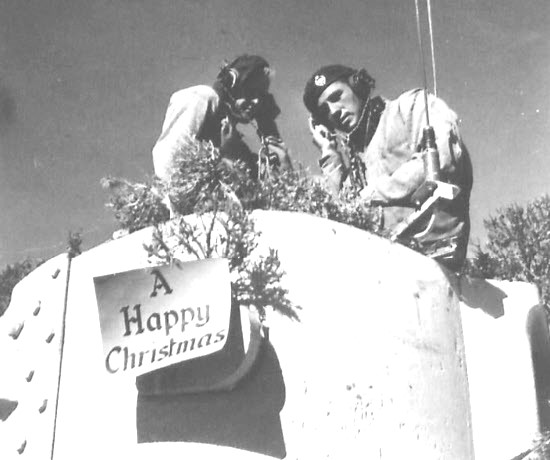
During the afternoon, the crew of the armoured car listen to the radio (No. 19 radio set) for the Christmas broadcast.
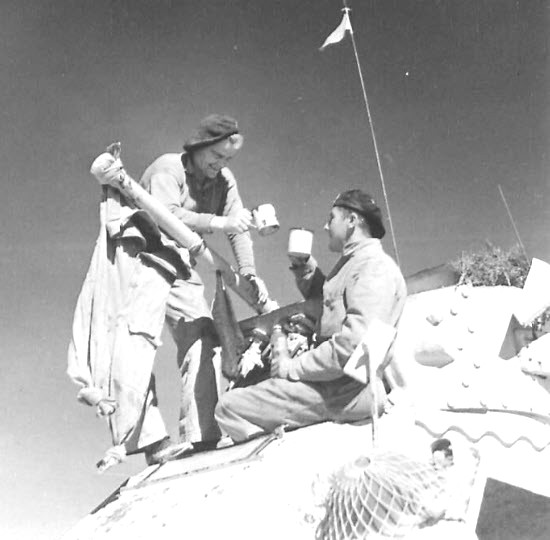
They decided that Santa Claus might visit them, even in the Desert, so one of them hangs up a sock on the gun barrel but he is outdone by his crew mate who hangs up a pair of overalls with the legs tied up.

Afterwards, they drink a toast to “A Happy Christmas and a Blighty New Year”.
Scones
Scones for Christmas dinner sounded pretty good to the crew of the armoured car, so they proceeded to mix the ingredients. Note the census number on the hull.
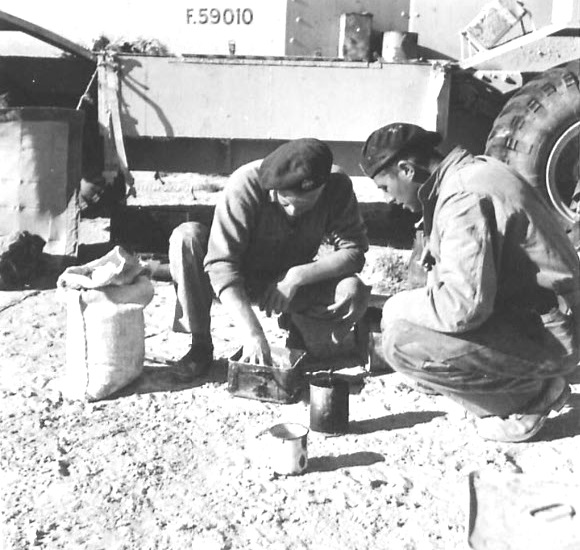
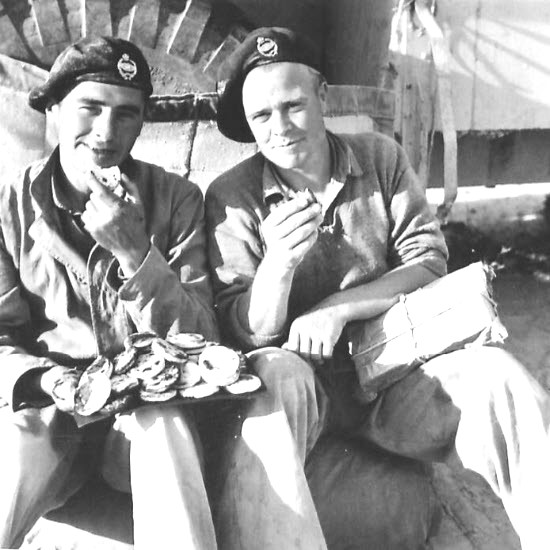
Scones are a traditional British baked good, popular in the UK and Ireland. It is usually made of either wheat or oatmeal with baking powder as a leavening agent, and baked on a sheet pan. British scones are often lightly sweetened, but may also be savory. They frequently include raisins, currants, cheese or dates.
With a pastry board made from a petrol tin (on a Jerry can) and a bottle used for a roller, the dough is rolled out.
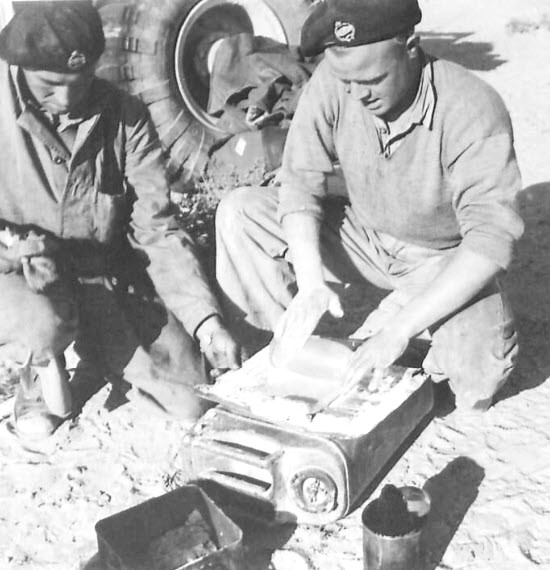
For making scones in the desert, a tin lid cuts them out just as well as any expensive equipment.
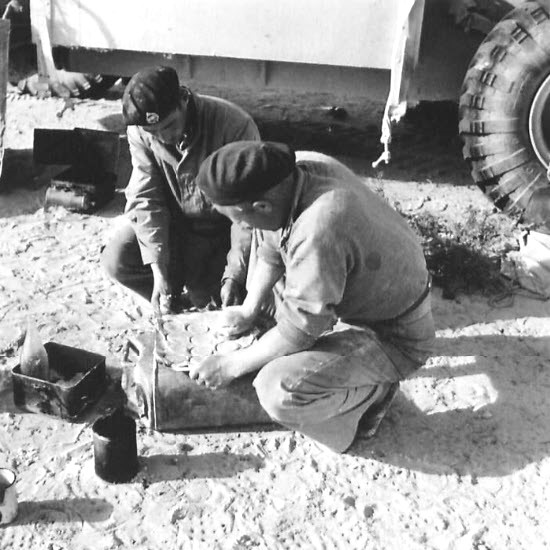
The oven is made out of petrol tins suitably buried which bakes very well. The scones are carefully placed inside the oven.
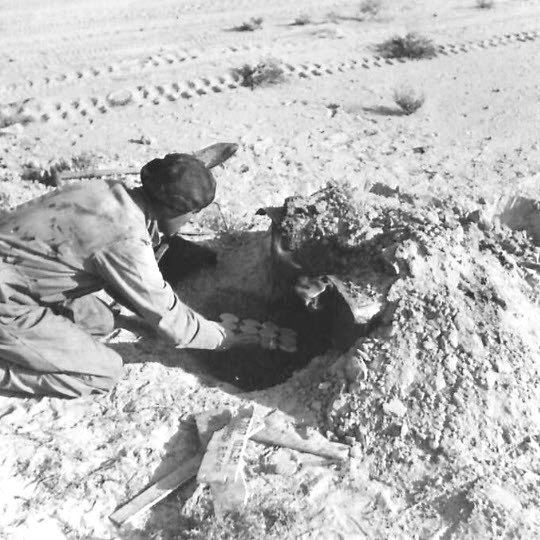
After a suitable amount of time, the scones came out of the oven, perfectly done. They appear to be satisfied with their efforts.

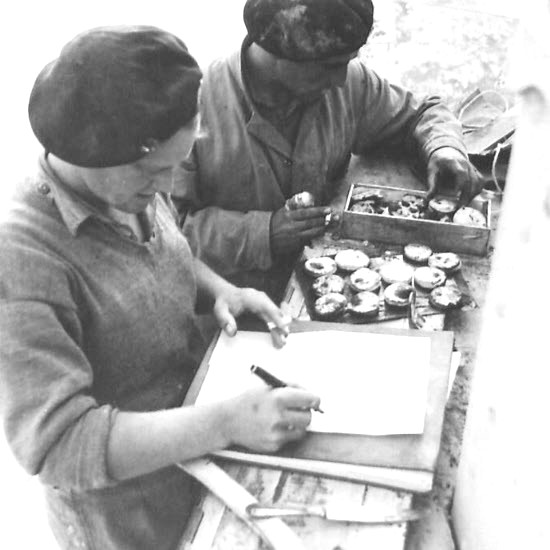
They decided to send some of the scones home to mother. One of them make up a parcel while the other writes the letter to go with it. They are working on one of the armoured car’s fenders.
Afterward, they sat down and ate their scones with satisfaction.
Artillery XMAS shell
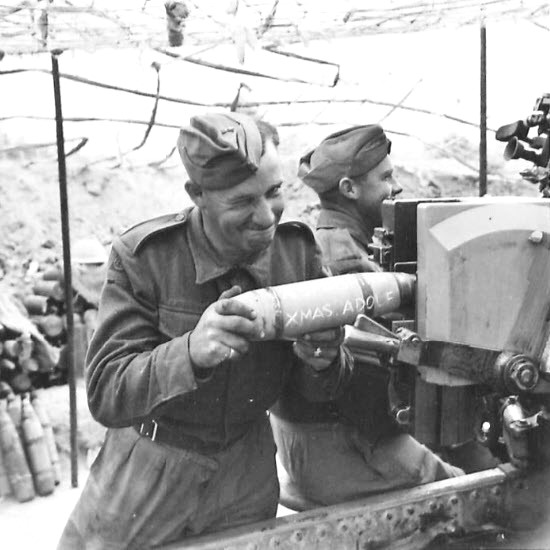
The crew of a 25-pounder gun decided to send the Germans a present for Christmas. One of them wrote on a shell “A smashing XMAS Adolf”.
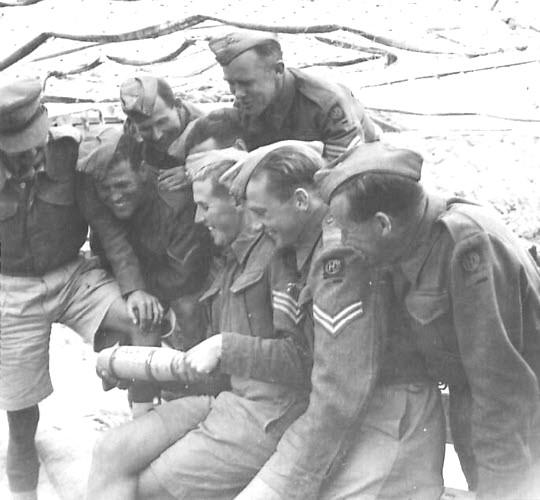
The corporal (two stripes) on the right wears the shoulder patch of the British 51st (Highland) Division which fought at El Alamein in October – November 1942.
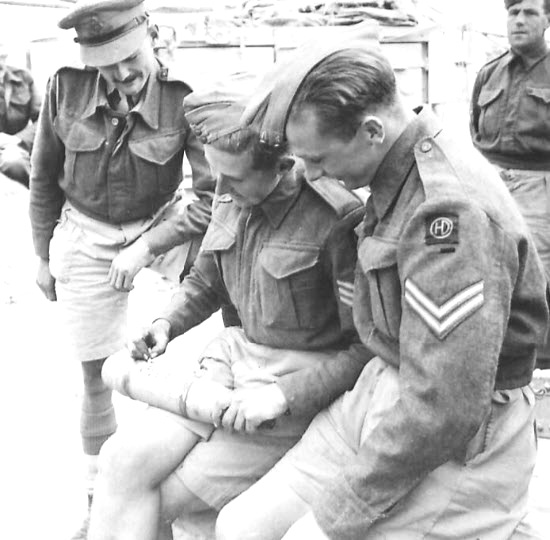
In June 1940, the 51st Division was attached to French 10th Army and after a fighting retreat from the Somme River the greater part of the division was forced to surrender, having been cut off at St Valery-en-Caux, France on the Channel coast. The reconstituted 51st Highland Division arrived in Egypt in August 1942. In North Africa, the division was nicknamed the “Highway Decorators” in reference to the “HD” insignia that were on road signs along their axis of advance.
Into the breech of the howitzer the Christmas shell went, to land in the enemy lines a few seconds later with, it was hoped, suitable effects.
French Allies
French troops from Tahiti celebrate Christmas with song and dancing in true Tahitian fashion.
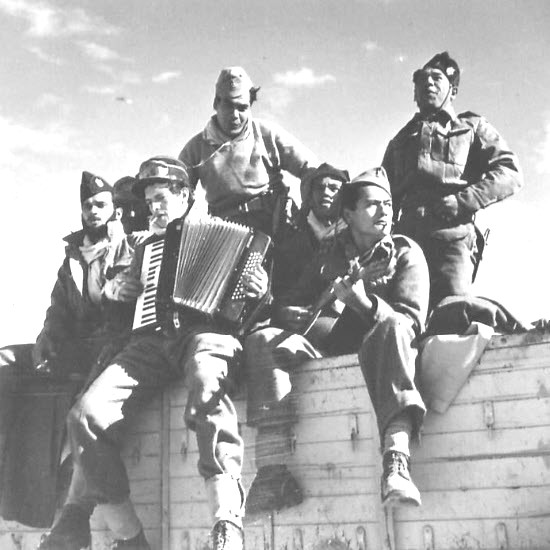
Note the Tahitian soldier playing the accordion.
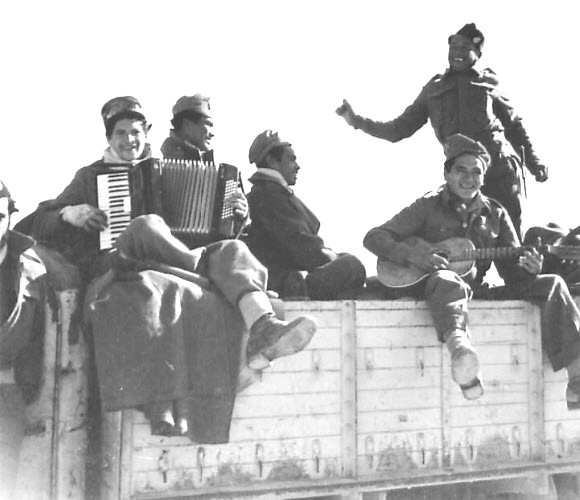
Tahiti is the largest island of the Windward group of the Society Islands in French Polynesia. It is located in the central part of the Pacific Ocean and the nearest major landmass is Australia. Tahiti (before French control) was the location of the historic 28 April 1789 mutiny on the HMS Bounty under the command of Captain William Bligh.
These Tahitian soldiers belonged to the 1st Bataillon du Pacifique (Pacific Battalion or BP1) of the 1st Free French Brigade attached to XXX Corps, British 8th Army. The British nicknamed them “the guitarists battalion”, as they had left Tahiti without any equipment but only their guitars.
Christmas Mail
What keeps the soldier’s morale up, especially around Christmas, was the letters, photographs and packages mailed to them from family and friends at home. The mail was transported along the North African coast to the front lines by sea, rail and vehicles. As soon as a unit is pulled out of battle, there was the mail waiting for them.
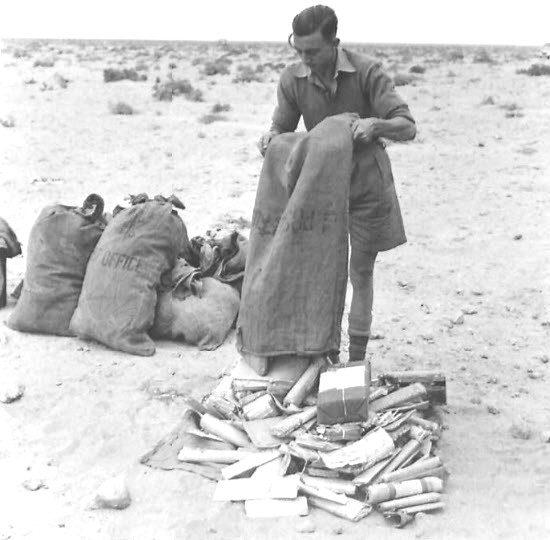
The mail has arrived at a repair depot in the desert and the mail bags are emptied.
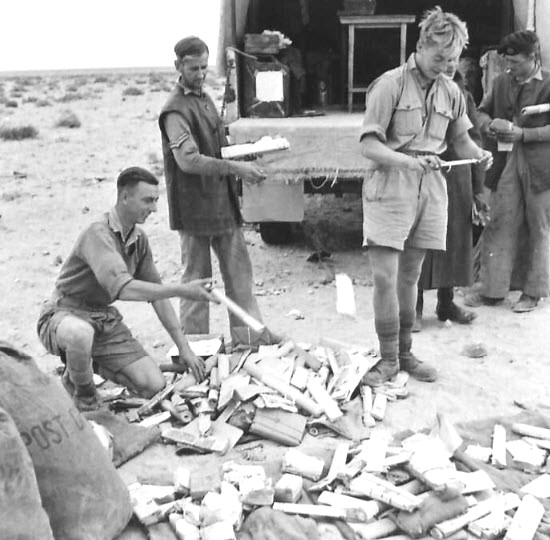
Soldiers sorted the mail for the various units.
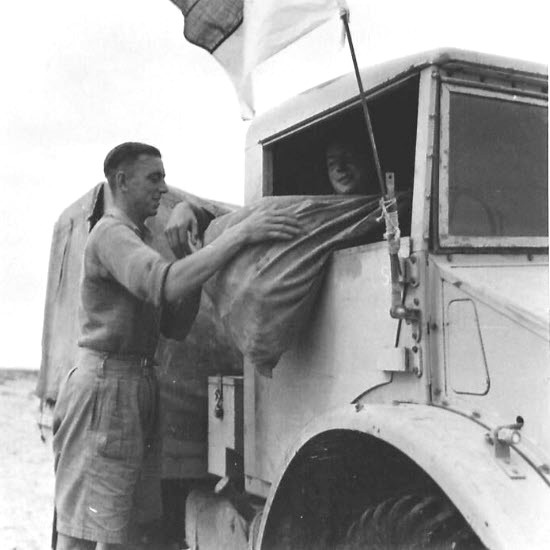
A bag of mail, after resorting, is handed to a driver to be taken over to one of the units. The truck appears to be a Canadian Military Pattern (CMP) 15cwt (¾-ton) truck. Above the truck cab a flag is waving.
A sapper (combat engineer) opens his Christmas parcel from home. His mate sitting beside him admires the new cigarette case that he got for Christmas.
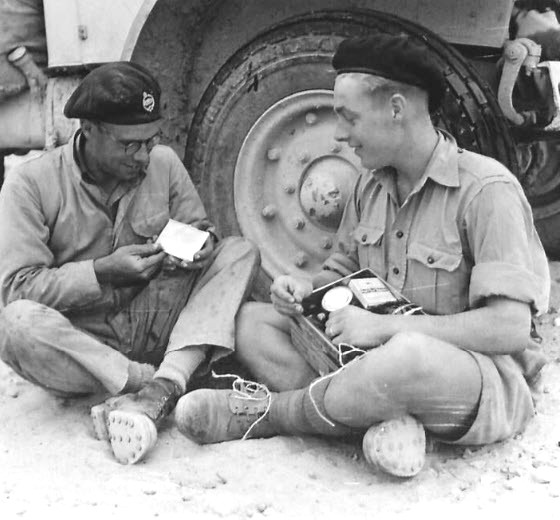
A tommy, after reading his Christmas mail lies back and thinks of home and family. Tommy Atkins or just Tommy was a term for a common soldier in the British Army.

22 December 1942
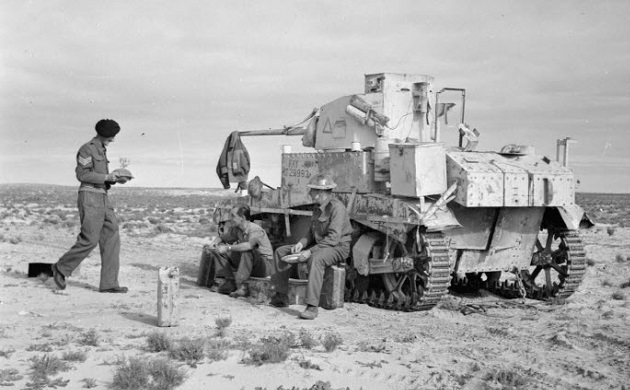
A tank commander brings Christmas pudding to his crew. The tank is an early M3 Stuart Mk. I (37mm gun) with octagonal shaped turret and hexagonal commanders cupola. The British also often called it the “Honey” because of its reliability, high speed and a smooth ride.
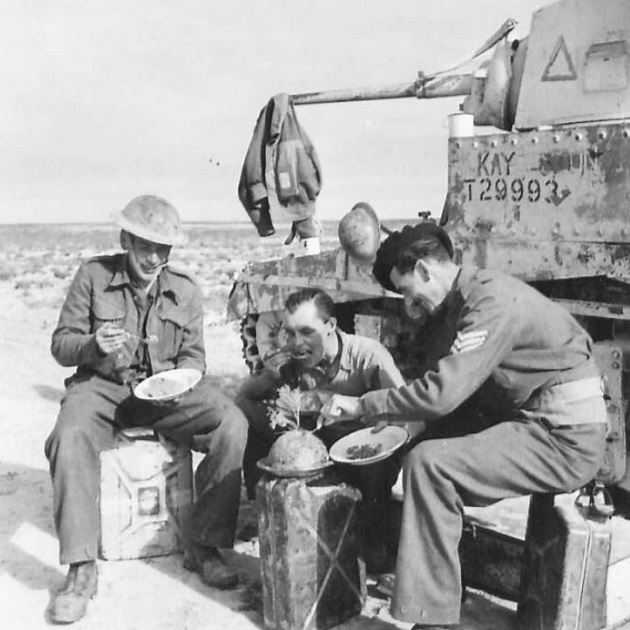
The pudding appears to been extremely good from the expressions on their faces. This close up shows the tank’s census number T29993 and the triangle on the turret indicates squadron A, the unit is unknown. The name “KAY” means “Keeper of the keys” and it is also an abbreviation of Katherine.
West of the Marble Arch, around the town of Nofilía (Today, Nofaliya or Nawfaliyah) was the site of a brief skirmish in December 1942 when some of Rommel’s retreating forces ran out of fuel. At that time, Nofilía was a small fort with a few Italian buildings in addition to a mosque, some shops and a school.
New Zealand Allies
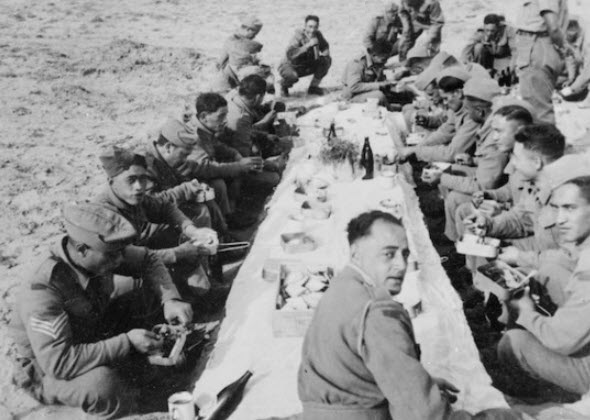
Soldiers of the 28th (Māori) Battalion are getting their Christmas Dinner at Nofilía on Christmas Day 1942. This battalion belonged to the 2nd New Zealand Infantry Division attached to XXX Corps, British 8th Army. The Māori are the indigenous Polynesian people of mainland New Zealand.
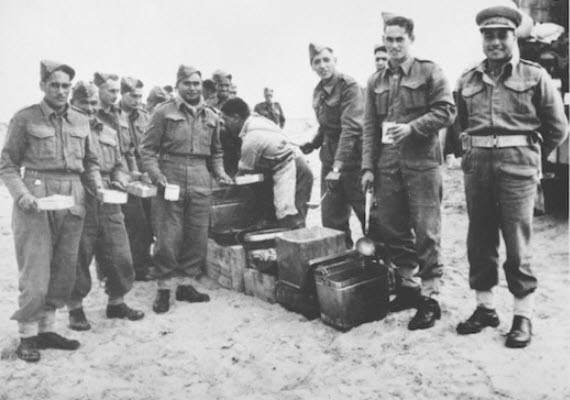
The Māori soldiers are sitting cross-legged on the sand around a make shift table, drinking beer and eating their food from tins.
26 December 1942
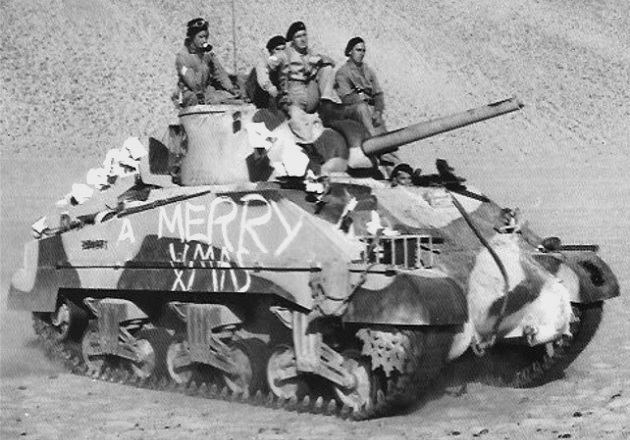
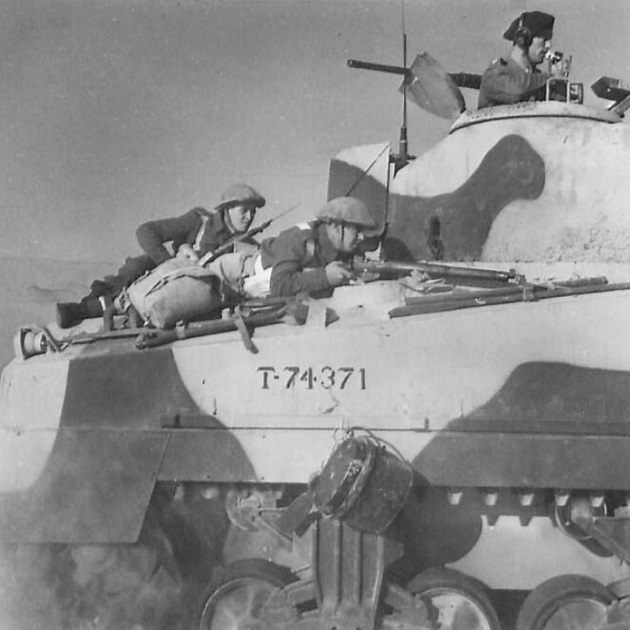
In the morning, a British Sherman tank sets off in pursuit of the fleeing enemy somewhere somewhere near Nofilia carrying infantry on the engine deck. The disruptive camouflage was typical of that used by the British 2nd Armoured Brigade at that time. Note the census number T-74371 on the hull.
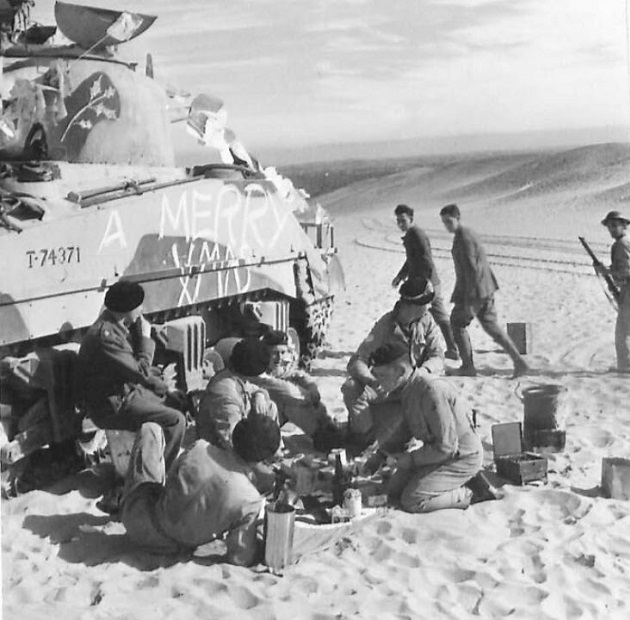
The crew of Sherman T-74371 decorated their tank for their Christmas dinner. They chalk drawn holly and berries (mistletoe) on the turret and added a large “A MERRY XMAS” on the hull side. It is not known if they added the same message on the other side. For the final touch, they draped over the tank bunting made of torn newspaper.
As they enjoy their dinner two German prisoners are marched away into captivity. The crew of the Sherman tank is 5 but there are 6 soldiers sitting beside the tank. The soldier with the goggles is obviously the driver.
The tank is a Sherman III (M4A2) but it has a mix of early and later features. It has the early direct vision slots in front of the driver and co-driver hatches and the early M34 gun mount. It also has the later cast transmission cover instead of the early three bolted sections and the bogies are the later M4 type with with a moveable roller bracket and a skid.
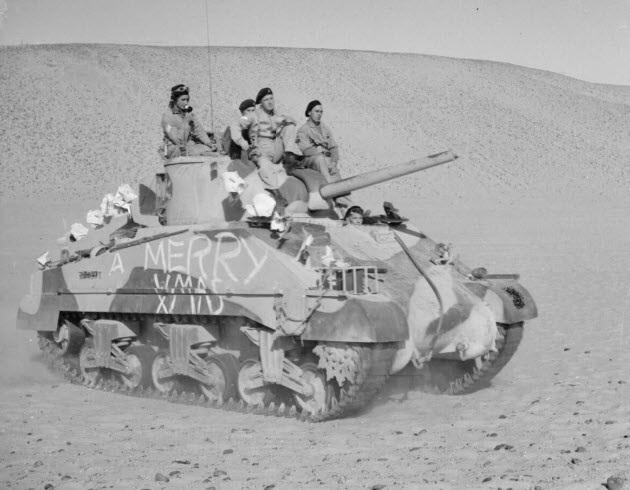
It is believed that this Sherman tank belonged to the 2nd troop, B Squadron (square tactical sign) of the 9th Queen´s Royal Lancers (Squadron colour yellow), 2nd Armoured Brigade, British 1st Armoured Division. On the front left fender, the AoS sign had been painted out by a censor which would been white 86 over a red square. The formation sign would been a white rhinoceros on the front right fender.
The soldiers are gathered around a camp fire beside a tank signing Christmas carols to the accompaniment of an accordion. One of the French Tahitian soldiers is probably playing the accordion.
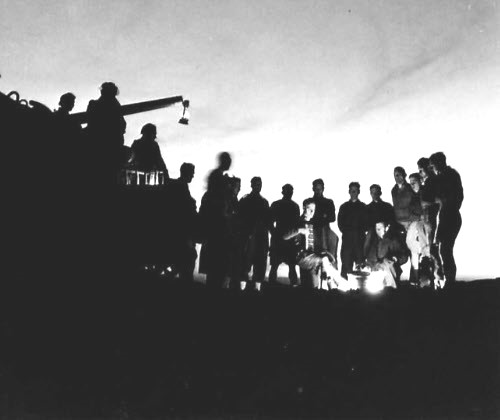
Although most of these photographs were probably staged and taken for propaganda purposes, the soldiers spending Christmas away from their family and friends is real.
Model Kits
1/35
Academy 13270 M3 STUART “HONEY” – 2010
MiniArt 35152 AEC Mk.I Armoured Car – 2013
Airfix A1358 M3 Stuart Honey (British) – 2019
There are no kits available for the XMAS Sherman tank with its mix of early and late features. If one wants to build an accurate model, they would have to “kit bash” parts from multiple kits and add/change a lot of details which would be expensive and a lot of work. The XMAS markings would probably have to be hand drawn.
Tasca 35-017 British Army Sherman III direct vision type – 2009
Dragon 6048 M4A1 75mm Early Version – 1996
ASUKA Model 35-025Y M4A1 Sherman (Direct Vision Type) – 2018
1/48
Gaso.line GAS50197K British light tank Stuart Honey (Resin kit)
Wespe Models WES 48024 Armoured Car AEC (Resin kit)
And all have a Merry Christmas and a Happy New Year!

 Mike's Research