
The Lockheed F-104 Starfighter was the US first Mach 2 jet fighter but despite its high performance it was not given much of a chance in the event of a “shooting war” due to its limited range and armament. Yet during the Vietnam conflict in 1965-67, the USAF Starfighters performed admirably in air battles. The capabilities of the Starfighter was so impressive it gave rise to the title “the missile with a man in it.” It was licensed built by six NATO countries and was used by 14 Air Forces – Belgium, Canada, Denmark, Germany, Greece, Italy, Japan, Jordan, Netherlands, Norway, Pakistan, Spain, Taiwan (Republic of China), and Turkey.
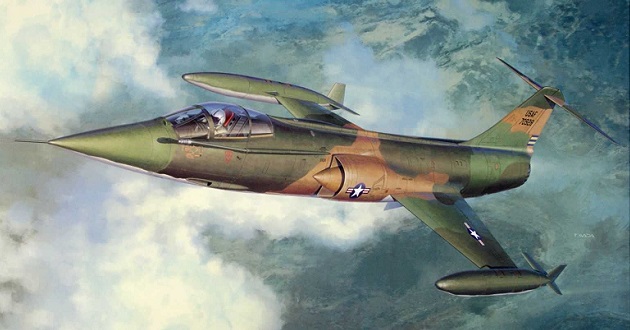
The Starfighter was the brain child of Lockheed’s aeronautical and systems engineer Clarence Leonard “Kelly” Johnson (27 February 1910 to 21 December 1990). At Lockheed, Johnson worked on a number of aircraft, the Model 10 Electra (flown by Amelia Earhart), PV-1 Ventura, P-38 Lightning, Constellation Airliners, F-80 Shooting Star, P2V Neptune, and the F-94 Starfire. After interviews with Korean War fighter pilots in 1951, Johnson, then the lead designer at Lockheed, produced a simple, lightweight aircraft with maximum altitude and climb performance. The Lockheed XF-104 first flight was on 4 March 1954. On 26 February 1958, the first unit to become operational with the F-104A was the 83rd Fighter Interceptor Squadron (FIS) at Hamilton Air Force Base, California.
The newly operational aircraft experienced problems after three months of service and the unit was grounded following a series of engine-related accidents. The aircraft were then fitted with a new engine and three more units were equipped with the F-104A. During that time, the US Air Force’s interest in the Starfighter was waning due to a shift in strategy toward fighters with longer ranges and heavier ordnance loads. As a result, the USAF reduced their orders for the F-104Bs and the F-104As of the the Air Defense Command (ADC) squadrons were handed over to the Air National Guard (ANG) squadrons after less than a year of service with the ADC.
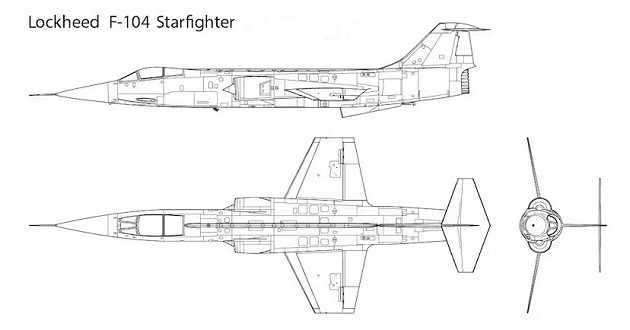
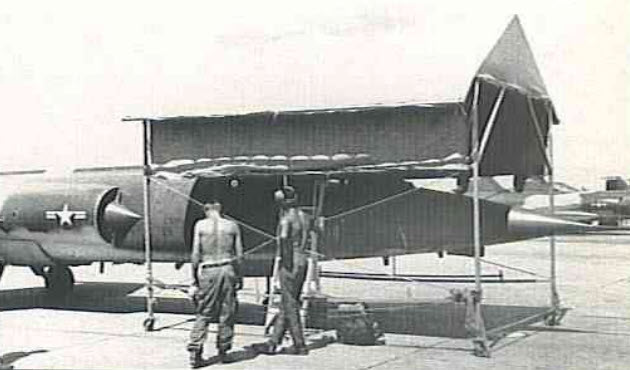
The razor like short wings were streamlined for supersonic flight with a super thin leading edge only 0.016 inches (0.40 mm) thick. When on the ground, shields were placed on the sharp wing edges to protect the ground crew.
In September 1958, the F-104C entered service with USAF Tactical Air Command (TAC) as a multi-role fighter and fighter-bomber. The 479th Tactical Fighter Wing (TFW) at George Air Force Base, California, was the first unit to be equipped with this variant. The wing consisted of the 434th, 435th, 436th, and 476th Tactical Fighter Squadrons (TFS).
| Aircraft Variant | Serial Number Range | Number Built |
|---|---|---|
| F-104C-5-LO | 56-0883 to 56-0938 | 56 |
| F-104C-10-LO | 57-0910 to 57-0930 | 21 |
| Total Built | 77 |
The cockpit of the F-104C Starfighter.
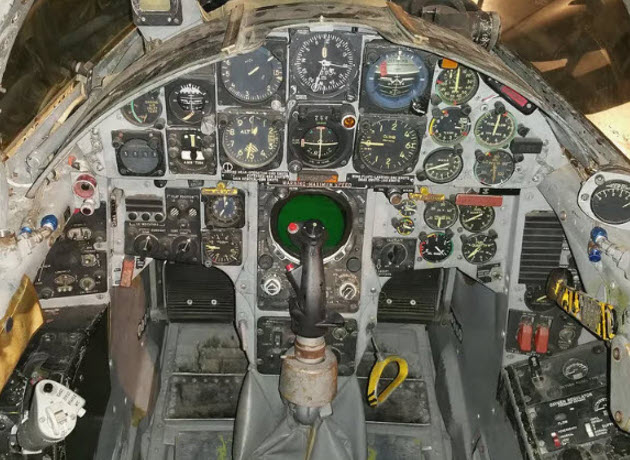
General Specifications
Length: 54 ft 8 in (16.66 m)
Wingspan: 21 ft 9 in (6.63 m)
Height: 13 ft 6 in (4.11 m)
Wing area: 196.1 sq ft (18.22 m2)
Airfoil: Biconvex 3.36% root and tip
Empty weight: 14,000 lb (6,350 kg)
Max takeoff weight: 29,027 lb (13,166 kg)
Power plant: 1 × General Electric J79-GE-7 after burning turbojet
10,000 lbf (44 kN) thrust dry, 15,600 lbf (69 kN) with afterburner
Performance
Maximum speed: Mach 2.2, 1,630 mph (2,623 km/h)
Combat range: 420 mi (680 km, 360 nmi)
Ferry range: 1,630 mi (2,620 km)
Service ceiling: 73,000 ft (22,000 m)
Rate of climb: 48,000 ft/min (240 m/s) Initially
Lift-to-drag: 9.2
Wing loading: 105 lb/sq ft (510 kg/m2)
Thrust/weight: 0.54 with max. takeoff weight (0.76 loaded)
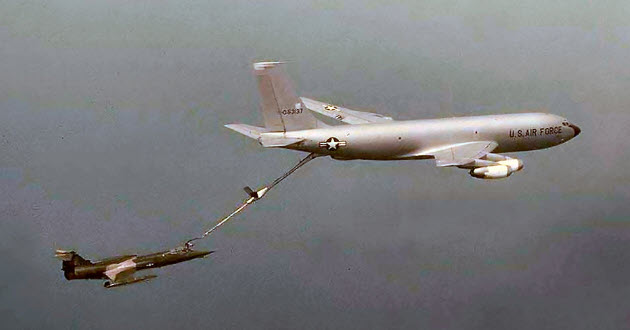
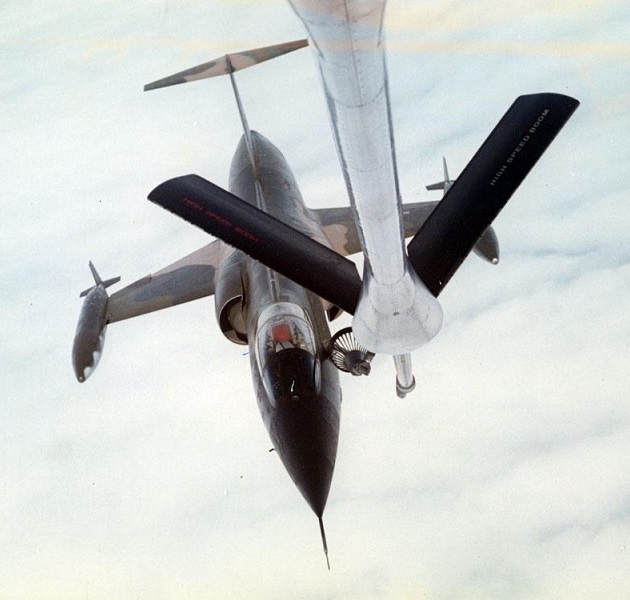
The F-104C had an inflight refueling capability. The refueling nozzle was mounted conveniently on the pilot’s left side, making connecting to and refueling from a trailing basket of a Boeing KC-97 Stratofreighter or KC-135 Stratotanker a simple 5 minute operation.
Armament
Gun: one 20mm (0.787 in) M61A1 Vulcan 6-barreled rotary cannon. The F-104 was the first US aircraft armed with the Vulcan cannon. The cannon, mounted in the lower part of the port fuselage, was fed by a 725-round drum behind the pilot’s seat. With its firing rate of 6,000 rounds per minute, the cannon emptied the drum after just over seven seconds of continuous fire.
The F-104C had an improved fire-control radar (AN/ASG-14T-2) with a centerline, two wing and two wingtip pylons (for a total of five) to carry ordnance.
Ordnance
- 195 gallons (738.15 Liters) fuel tanks
- AIM-9 Sidewinder missiles
- LAU-3 rocket pods
- Mark 81 250-pound (110 kg) bombs
- Mark 82 500-pound (230 kg) bombs
- M117 750-pounds (340 kg) bombs
- BLU-1 napalm tanks
The F-104C also had the ability to carry a Mk43 air-dropped variable yield thermonuclear bomb on the center line pylon. Its high speed in a low altitude Bombing System (LABS) “toss bomb” attack with a nuclear weapon increased it chances of a safe escape from the blast.
Video: F-104 Starfighter | Behind the Wings
On 14 December 1959, USAF Air Force test pilot Captain Joe Bailey Jordan, flying F-104C 56–0885 (the 3rd production aircraft) at Edwards AFB in California established a Fédération Aéronautique Internationale (FAI) World Record for Altitude in a Turbojet Aircraft at 103,389 feet (19.58 miles, 31.51 km). On 9 May 1961 during a flight from Moron Air Base, Spain, F-104C 56–0885 had a control failure where the stick moved full aft and the pilot was unable to move it forward, resulting in an initial zoom climb followed by an unrecoverable tumble. The pilot ejected safely.
Film: Joe Jordan’s F-104 Record Altitude Flight (1959)
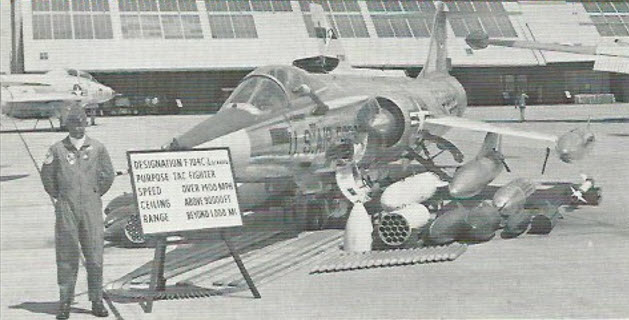
On 4 May 1962, this 479th TFW F-104C-5-LO is on display with ordnance at Eglin Air Force base in Florida for US President Kennedy’s inspection. The range and Ceiling numbers on the poster reflect optimum figures, would not be achieved in combat.
Like most USAF aircraft the F-104 acquired nicknames. US pilots initially called the F-104 the “Oh-Four”, but when the North American F-100 Super Sabre began to be referred to as the “Zip-Zilch” (for “Zero-Zero”), the Starfighter acquired the similar nickname “Zip-Four”; this was eventually shortened to “Zipper” or “Zip”. Over time this nickname came to be associated with the aircraft’s impressive speed and acceleration. It was also called the “Manned Missile”.
William Tell Meet 1962
USAF Captain Charles “Chuck” Ehnstrom Tofferi of the 479th TFW was chosen primary pilot and became the Air Force Top Gun winning the William Tell Gunnery Meet at Nellis Air Base, Las Vegas, Nevada between 15 – 20 September 1962. Flying F-104-10-LO 57-0914 (Buzz Number FG-914), his lone Starfighter competed against 10 F-100D Super Sabres and 3 F-105D Thunderchiefs of other wings. He scored 19,018 points out of a possible 24,000 by getting perfect scores in air-to-air gunnery (he destroyed the tow target dart in only 63 seconds using 86 rounds); air-to-ground rocket, strafing and napalm attacks.
TOP GUN
| Pilot | Unit/Location | Branch | Aircraft |
|---|---|---|---|
| Capt. C.E. Tofferi | 479 TFW, George AFB, CA | TAC | F-104C |
| Capt. J.D. Salvucci | 474 TFW, Cannon AFB, NM | TAC | F-100D |
| Capt. R.D. Tucker | 48 TFW, RAF Lakenheath | USAFE | F-100D |
| LT. C. M. Summers | 50 TFW, Hahn AB | USAFE | F-100D |
| Capt. R. E. Bishop | 405 TFW, Clark AB | PACAF | F-100D |
| Capt. M. S. Muskat | 49 TFW, Spangdahlem AB | USAFE | F-105D |
Film: William Tell 1962 TAC F-104C
Double Attack
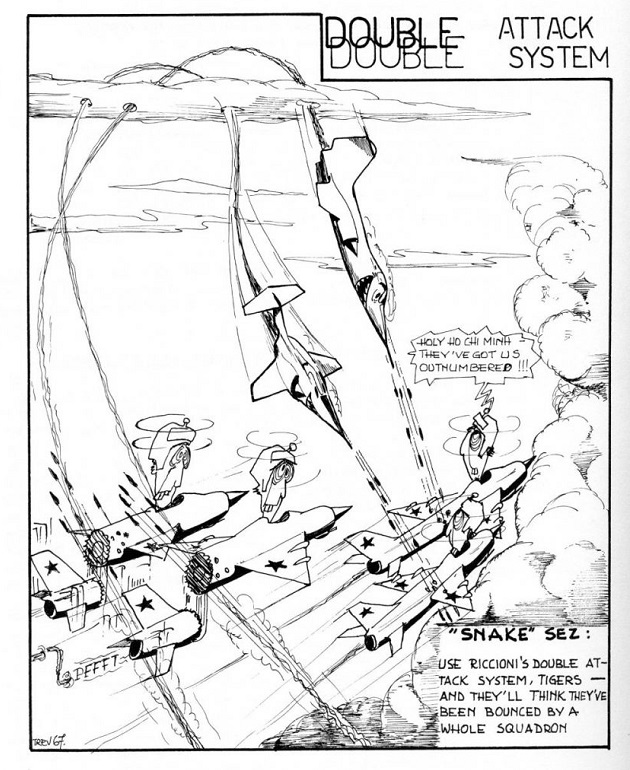
In the early 1960s, USAF test pilot and engineer, Lieutenant Colonel Everest Ernesto “Rich” Riccioni, Jr. developed the double attack system for the F-104. The Starfighters flew in pairs as a mutually supporting team, swapping roles as “shooter” in order to deny the enemy aircraft the chance of escape or the opportunity to turn and engage their attackers. They also concentrated on vertical maneuvering, using the F-104’s superior rate of climb to attack from below and then reversing for a second attack from above. This tactic went against the then standard USAF “fluid four” fighter formation which used four planes, divided into a lead element and a second element of two planes each, operating together. The two pairs supported each other, but the flight leader usually made all the decisions for all four planes and was the primary shooter. Regardless, the 497th TFW was the first USAF wing to adopt the “double attack” tactics.
Lockheed SURE Program
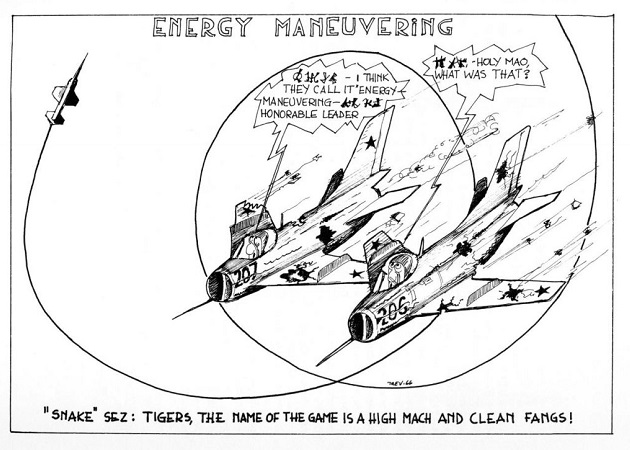
In 1961, Lockheed Director of Flying Operations, Tony LeVier, realized the need for more direct support for F-104 pilots, just as they provided support for P-38 pilots in WWII. The Starfighter Utilization and Reliability Effort (SURE) project, managed by Lockheed test pilot Glen L. “Snake” Reaves, wrote manuals which taught F-104 pilots the refinement of flying the Starfighter. They were illustrated with cartoons by FIAT test pilot P.P. “Pete” Trevisan and were published by the Lockheed California Company, June 1966 and December 1969. These manuals filled in the gaps in the Pilot’s basic knowledge which tells the pilot what to do, not the “why for” or “how come”.
Glenn Reaves called the F-104 the “Silver Sliver” because of the long shiny fuselage and stubby wings. This nickname was also used by the Belgian Demonstration pilots and they decided to use the “Slivers” as their team name.
Click HERE for more SURE cartoons.
Vietnam
The Vietnam Air War was best known for the endless sorties flown by USAF McDonnell Douglas F-4 Phantoms and the Republic F-105 Thunderchiefs. During Operation Rolling Thunder, another aircraft type was flown, but one whose service over Vietnam was virtually overseen. Operating an “orphan” aircraft type, the pilots who flew the Starfighter in Vietnam performed a variety of missions, yet their operations were vastly overshadowed by the Air Force’s more numerous Phantoms and Thunderchiefs.
Film: Lockheed F-104C Starfighter in-air-refueling (George AFB)
Film: F-104 Jets from the 479th Tactical Fighter Wing were sent to Vietnam
Da Nang
The 476th TFS’s F-104Cs, commanded by USAF Colonel Darrell Cramer, arrived at the crowded Na Dang Airbase to share escort duties and provide a more credible MiG deterrent, especially after the confirmation that MiG-21s were delivered to the Vietnamese People’s Air Force (VPAF). Before deploying to Vietnam, the 435th TFS pilots had flown most of the Project Feather Duster sorties which pitted F-86H Mustangs in the role of MiG-17s and F-5As and F-106As in the role of MiG-21s against all USAF fighters for the purpose of evaluating relative performance and tactics development in dissimilar air combat.
| Squadron | Arrival Date | Departure Date |
|---|---|---|
| 476th TFS | 19 April 1965 | 11 July 1965 |
| 436th TFS | 12 July 1965 | 12 October 1965 |
| 435th TFS | 12 October 1965 | 20 December 1965 |
Da Nang was a frequent target for Viet Cong (VC) sapper and rocket attacks. On 1 July 1965, three F-102A Delta Daggers were destroyed by VC sapper throwing hand grenades into their open cockpits and firing guns up their tailpipes. All the F-104Cs were not harmed. However, a few days after its arrival the squadron sustained it first hits from ground fire when a F-104C returned from a strike with substantial wing damage.
Ground Control Radar
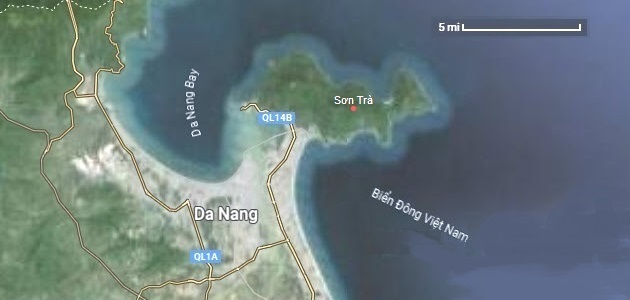
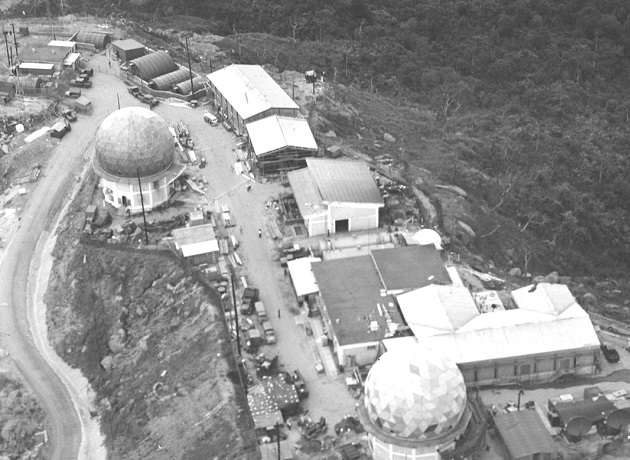
The Monkey Mountain Facility (also known as Monkey Mountain SIGINT, Hill 621 or Panama) was a USAF/USMC base located on Sơn Trà Mountain east of Da Nang on the coast. In 1964, the USAF 620th Tactical Control Squadron established a Control and Reporting Center, call sign “Panama”, on the mountain to control US fighters operating in I Corps. Most of the US fighters it controlled were based at Da Nang and Phu Cat.
F-104C-5-LO, serial number 56-0886, of the 479th TFW was one of the first Starfighters at Da Nang in April 1965. The sand bag wall between the planes provided some protection from VC rocket attacks.
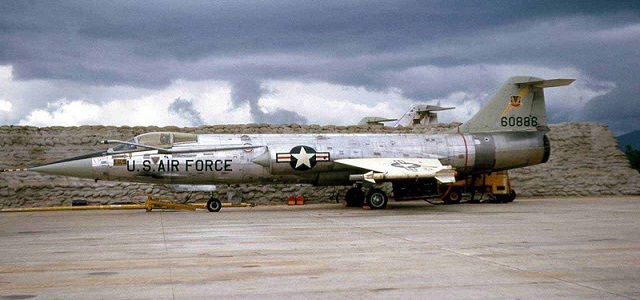
This is one of the few Starfighters at Da Nang which had a name. The name “Fannie” can be seen just forward of the cockpit windscreen to the left of the Rescue arrow. Note the smoke stains around the gun port beneath the “U.S. AIR FORCE”.

Film: F-104C Starfighter taxi towards runway and at Da Nang Air Base in Vietnam.
One of the unit’s first missions foreshadowed many that the 479th TFW would fly in Southeast Asia. Four F-104Cs were each loaded with two M117 bombs to support a South Vietnamese Air Force (VNAF) attack by Douglas A-1 Skyraiders in the II Corps area. Led by the flamboyant VNAF commander Nguyễn Cao Kỳ, twelve A-1s attacked a suspected VC barracks area near Dong Hoi. All the VNAF bombs fell on Dong Hoi, missing their target. This left the F-104Cs with the task of destroying the target with a series of direct hits in dives from 14000 feet (4267.2 meters).
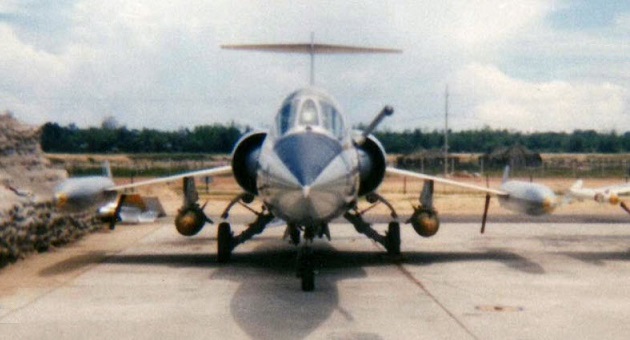
A F-104C with two M117 bombs mounted and wingtip fuel tanks. The wingtip fuel tanks on the F-104C were not jettison-able in flight.
Big Eye Protectors
A primary role for the F-104 Starfighter in Southeast Asia was the protection of the Lockheed EC-121D Warning Star aircraft that patrolled off the coast of North Vietnam, providing MiG warnings to US pilots via their radar and monitoring equipment. The EC-121D also warn US Pilots when they were about to enter the buffer area separating China and North Vietnam.
The EC-121D was a military version of the Lockheed L-1049 Super Constellation “Connie” civilian airliner which initially was fitted with a dorsal AN/APS-45 height finder and a ventral AN/APS-20 search radar. These were later upgraded to AN/APS-103 and AN/APS-95 radars, although not simultaneously. The crew usually was 18, six officers (two pilots, two navigators, and two weapons controllers) and 12 enlisted men (two flight engineers, one radio operator, two crew chiefs, five radar operators, and two radar technicians). In the cramped, poorly air-conditioned interior of the EC-121D, the crew worked in temperatures above 120 degrees Fahrenhiet (48.88 degrees Celsius) that was elevated by all the vacuum tube driven electronic equipment in the aircraft. Flight surgeons often came along to deal with cases of heat exhaustion.
In April 1965, the USAF established its Project Big Eye Task Force in Southeast Asia three days before the arrival of the first F-104Cs. Four EC-121Ds were transferred from Tainan Air Station, Taiwan to Tan Son Nhut Airbase in South Vietnam, and two EC-121Ds began radar orbits along the coast of Vietnam on 16 April 1965.
Escorting the slow EC-121Ds was a challenge for the F-104 pilots. Flying at low altitudes in poor weather or at night was difficult for the Big Eye crews, flying at speeds below 250 mph (402.34 km/h). Close escort by the much faster F-104Cs was impossible, so separate barrier combat air patrol (BARCAP) orbits by up to three flights of Starfighters and their KC-135A tankers at altitudes between 15000 and 20000 feet (4572 to 6096 meters) were established to keep the MiGs from two Big Eye patrol tracks. Ethan Alpha track was flown by one EC-121D at low altitude, close to the coast, while Ethan Bravo track was some 50 to 60 miles (80.47 to 96.56 km) long, and at an altitude of 10000 feet (3048 meters), was flown by a second EC-121D (also acting as an airborne spare and provided radar cover for the Alpha EC-121D) further out to sea. The Bravo track was replaced in October 1966 by an Ethan Charlie orbit over Laos which had the secondary task of identifying US planes who pursued MiGs across the Chinese border.
Usually four F-104Cs (two flights) covered each EC-121D, with a third flight cycling to a tanker before moving in to relieve the escorting Bravo track fighters, which would in turn move to relieve the Alpha Track escort flight, freeing them to refuel. Each mission required 12 F-104Cs and two tankers. Starfighter cover occasionally were reduced to two-aircraft flights if not enough jets were available. F-104C pilots could expect sorties up to five hours, with 40 to 90 minutes on station before having to refuel, and a transit flight of around 250 miles (402.34 km) from Da Nang. For these long flights, the F-104C pilots carried plenty of food, drink and “piddle packs” in the cockpit.
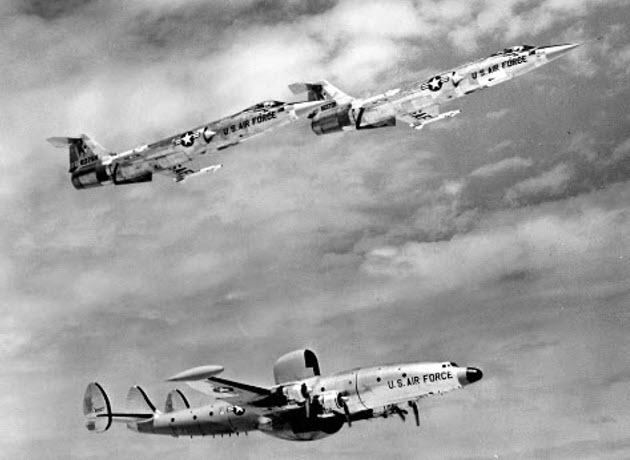
Two F-104As fly pass EC-121D 53-0128 during training in 1958.
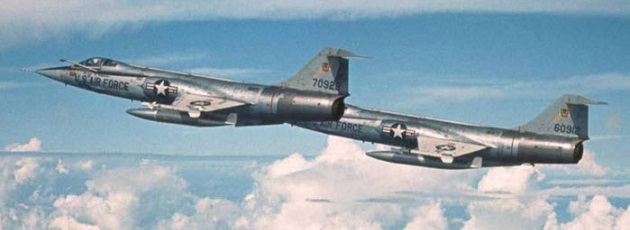
F-104C 57-0928 and F-104C 56-0912 on a Big Eye mission. The F-104 was too fast for the slow flying EC-121D so the F-104 pilots used a “weave” maneuver flying near Mach 0.9.
The presence of the F-104Cs were extremely effective in deferring North Vietnamese MiGs from attacking these invaluable but vulnerable aircraft. If the escorting F-104 fighters were unavailable for any reason (weather or mechanical problems), both the Big Eye fight and the day’s air strikes over North Vietnam were usually canceled.
Big Eye aircraft were usually left alone as North Vietnamese controllers kept their fighters away from the EC-121Ds and their escorts. Any North Vietnamese pilot that ventured out over the Gulf of Tonkin in search of USAF patrol or tanker aircraft knew that he would face US Navy fighters as well as the F-104Cs. Also if they were shot down over the water they had a slim chance of rescue.
F-104C vs J-6
MiG activity increased following the combat introduction of the MiG-21 and more aggressive tactics used by VPAF pilots resulted in more MiGCAP and escort missions to be scheduled. Escort duties for the 497th TFW included protection for the 6091st Reconnaissance Squadron (RS) EC-130E-II Silver Dawn “comint” aircraft which flew electronic and communication monitoring missions just offshore of North Vietnam and China.
One of these missions on Monday 20 September 1965 had terrible consequences for the F-104C pilots of the 436th TFS. Captain Phillip Eldon “Smitty” Smith, the 497th TFW Wing Weapons Officer, took off from Da Nang as “Venus 5” flight’s “ground spare”. He replaced Captain Harvey E. Quackenbush, whose F-104C had aborted ten minutes into the flight to the escort orbit area due to a damaged in-flight refueling probe that prevented him from taking fuel from a USAF KC-135A tanker.
F-104C-5-LO 56-0883 was Smith’s plane. It was the first production F-104C.

This is the KC-135A boom operator’s view of a F-104C refueling in flight. The fuel tanks under the wings were jettison-able in flight.

After Smith disconnected from the tanker, he received a series of incorrect and confusing directional instructions from Panama ground control, indicating that either the Panama radar or his “parrot” IFF unit were not functioning correctly. Calculating that he was about to approach Hainan Island (under China control) at around 540 knots, Smith turned south and spotted another aircraft, high and behind him. Smith reported this to Panama and turned to face the unidentified aircraft. After a short pursuit at 540 knots, he had to give up the chase as he was approaching China again, although solid cloud cover prevented him seeing the sea or any terrain.
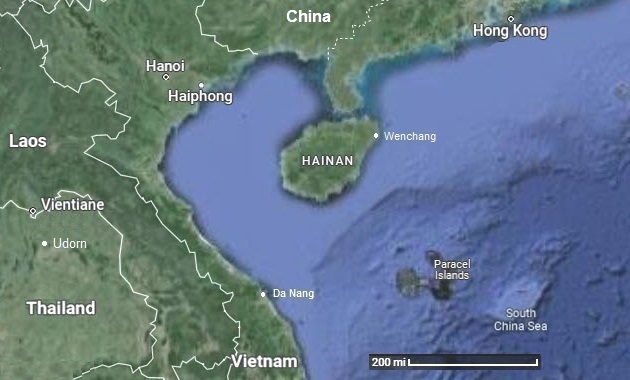
Panama made repeated attempts to find him on their radar, but Smith then discovered that both his heading indicator and standby compass were inoperative. His request to the tanker for a fix on his position produced inconclusive results. After dropping his underwing tanks, he became concerned about his fuel state, which had fallen to 3000 lbs (359.47 gallons). Smith declared an emergency and hoped that Da Nang’s “alert pad” F-102A Delta Daggers with their long range radars would be launched to find him in time. Desperate to determine his position, Smith tried using a pencil as a rudimentary sundial, but with the midday sun directly overhead made it impossible. He spotted a coastline through a gap in the cloud base and descended to 9000 feet (2743.2 meters) to investigate but nothing looked familiar.
Suddenly, Smith was intercepted by a pair of Chinese Shenyang J-6s (licensed copy of MiG-19S Farmer), with the lead jet flown by Gao Xiang followed by his wing man Huang Fengsheng. Gao Xiang was captain of the 2nd Brigade, 10th Regiment, Fourth Naval Aviation Division and vice captain Huang Fengsheng. This engagement was also the first time Gao Xiang participated in aerial combat. Gao Xiang’s total flying hours was only a few hundred hours, while US pilots at the time had more than 2000 hours of flying time.
The two J-6s dived on Smith from the clouds above him and hit him with 37mm cannon fire at a range of 250 meters (273.4 yards). Smith’s right wing was hit, blowing the AIM-9B missile/launcher away and his right arm was hit by 37mm shell fragments. As many warning lights lit up in the cockpit, Smith saw the leading MiG zoom ahead of him in afterburner. He focused on gaining enough speed to get on the J-6’s tail, but his engine stalled. As he re-started his engine, he heard the growl of the remaining AIM-9B, indicating that it had acquired the target. Smith then began a turn to get on the MiG’s tail again to launch the missile but at that moment his control column suddenly failed to respond. His hydraulic systems had failed. With his aircraft in a steep dive towards the sea several miles off the coast of Hainan, Smith ejected close to a Chinese fishing fleet.
After ejecting, Smith’s F-104C Starfighter exploded in the air and went down trailing black smoke.
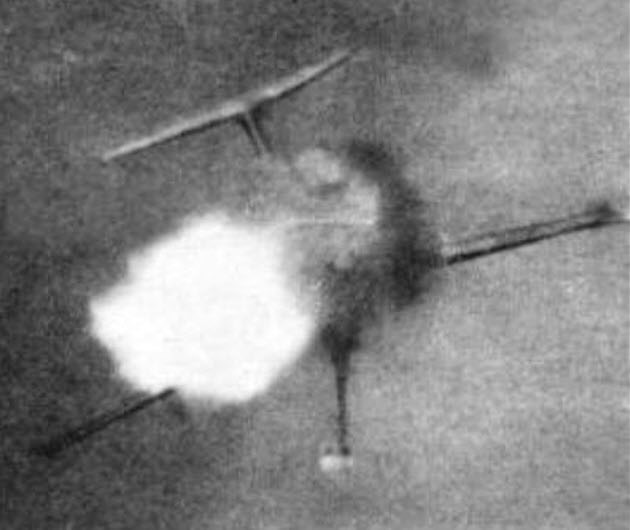
Gao Xiang’s J-6 number 3007 was close to Smith’s exploding F-104C and was damaged by flying fragments in as many as 13 places, and the right engine was damaged (the J-6 had two tubrojet engines), and the fuselage began to shake violently. He nursed the other engine, piloted the damaged plane, and returned back to base with Huang Fengsheng. Gao Xiang became the first pilot in the world to shot down a F-104 Starfighter, and he also set the record for the shortest firing distance of a supersonic fighter in the history of aerial combat.
Smith landed in the sea of seven continents east of Wenchang and was captured by an old militiaman Fu Qihe, a member of the former Qiongya Column. Smith then spent the next seven-and-a-half years in a Peking prison, mostly in solitary confinement. He was one of two US pilots to be held in captivity by Communist China during the Vietnam War. Smith was release on 15 March 1973, due to improved US-China relations following US President Richard Nixon’s visit to China in late February 1972.
This shoot down resulted indirectly to the loss of two more 436th TFS F-104Cs. Captain “Q-Bush” Quackenbush and Captain Dayle W. Carlson took off to look for “Smitty” Smith, escorting a pair of Grumman SA-16 amphibious rescue aircraft and supported by a USMC KC-130F tanker. As darkness approached, they made a low altitude search of much of Hainan’s coast but eventually had to return to base.
In the twilight, they realized that both their aircrafts’ three sets of external navigation lights and Carlson’s interior cockpit illumination were not functioning. The squadron had flown exclusively in daylight until then, and these lighting systems had not been required or prioritized in maintenance routines. Unable to see his instruments for landing, Carlson had to follow Quackenbush for a formation landing. As they began a left turn on approach Carlson lost sight of his leader in thick cloud cover and requested a burst of afterburner flame to locate the other F-104C. Seconds later the two F-104Cs (56-0911 and 56-0921) collided in midair and both pilots ejected as their aircraft disintegrated, landing close to each other in the sea just off Da Nang. Both pilots were rescued.
Udorn
An increase in MiG activity over North Vietnam in early 1966 initiated a second 435th TFS wartime deployment to reinforce the USAF’s ability to escort it valuable unarmed Douglas EB-66C electronic countermeasure (ECM) aircraft, its scarce F-105F Wild Weasel anti-SAM strikers and their hard pressed F-105 fighter bombers. Back in the US, the 479th TFW had already began to transition to the F-4D Phantom, with its 476th and 436th TFSs having relinquished their F-104Cs a few months after returning from Da Nang.
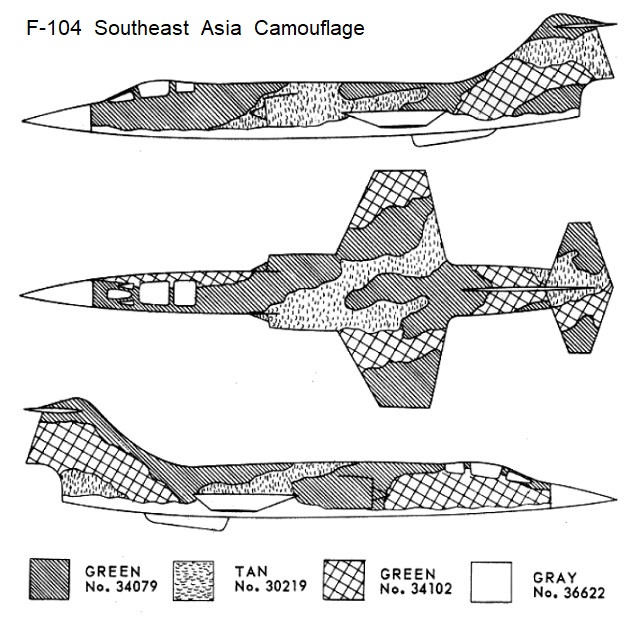
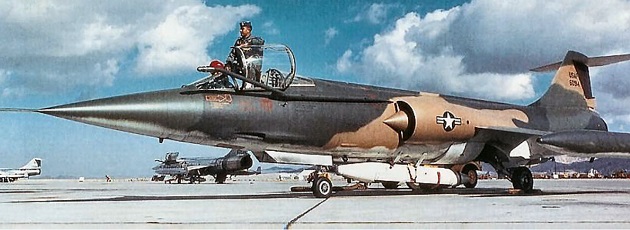
Before deploying to Vietnam again, the F-104Cs of the 435th TFS were repainted with Southeast Asia (SEA) Camouflage.
F-104C-5-LO 56-0914 was one of the first Starfighters to be camouflaged. Captain Mike A. Korte, who flew the squadron’s 1000th combat mission on 30 September 1966, is standing in the cockpit of the aircraft at George AFB. Mounted on the center line pylon is a SUU-21 practice bomb dispenser.
Film: F-104C George + Udorn Thailand Vietnam war operation 1966
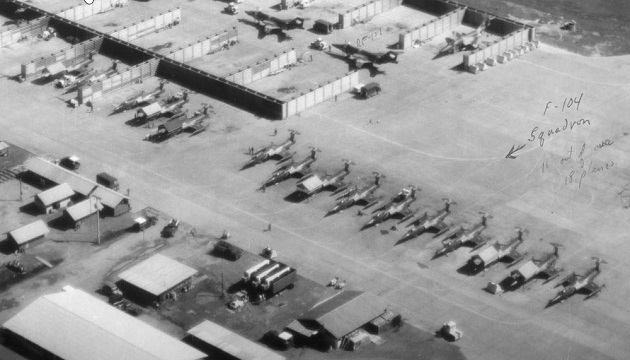
The 435th TFS’s first eight F-104Cs arrived at Udorn Airbase in Thailand on 6 June 1966 and were duly attached to the 8th TFW “Wolfpack”. Udorn was the most northerly Thai base, placing it closer to northern Laos and North Vietnam and reducing the tanking requirements for the F-104Cs. After initial successes in the escort role, the first eight were joined by 12 more from the 435th TFS on July 22nd.
Aerial view of the F-104C flight line at Udorn.
Mobile shelters provided the ground crew cover from the hot sun and rain while they serviced the F-104Cs.
The “Wolfpack” devised tactics which made the best use of the F-104C’s high speed and the F-4C Phantom’s longer ranging search radar under the Rules of Engagement that the required pilots to acquire visual identification of potentially hostile aircraft, rather than being allowed to use their long range radar-guided AIM-7 Sparrow missiles to destroy them beyond visual range. If bogies were picked up by the Phantom’s radars, often at more than 40 miles (64.37 km), the Starfighters would accelerate forward to make a visual identification and then turn away. The Phantom pilots would then attempt a long-range missile launch and then the Starfighters could then return for a Sidewinder or gun attack from the rear quarter. However, the MiGs never put themselves in the position to be attacked this way.
Also pairs of F-104Cs would fly over North Vietnam ahead of a strike formation as weather reconnaissance aircraft. Their high speed enabled weather information over the target area to be available to a strike formation ahead of the day’s strike.
Iron Hand Stars
Iron Hand was the term for US missions to destroy enemy surface-to-air defenses in Vietnam. Arriving in Thailand in May 1966 was the first five two seat F-105F Wild Weasel SAM (Surface-to-Air Missile) killers based on the Thunderchief fighter-bomber. Paired with F-105D fighter-bombers, they go on some of the most hazardous missions of the war. They deliberately fly over the enemy’s heaviest defenses as bait to make the SA-2 “Guideline” Surface-to-Air Missiles (SAM) and AAA radars to them track thereby revealing their locations and opening them up for an attack. Then the F-105Fs would try to take out the enemy missile/gun radars with anti-radiation AGM-45 Shrike missiles while the enemy is launching SAMs and firing AAA at them. This made the Wild Weasels primary targets for the Vietnam People’s Air Force (VPAF) MiGs.
The North Vietnamese SAMs and radar equipment were supplied by the USSR, but they were also manned by Russian-Soviet technicians.
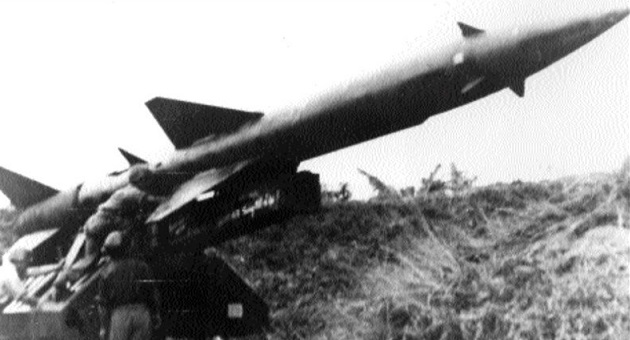
The F-104C’s high speed enabled it to keep pace with the F-105s which were the fastest US strike fighters at low altitude until the arrival of the General Dynamics F-111A Aardvark in 1968. The F-4C Phantom was less able to keep up with the F-105s which relied on their speed for survival. With the Starfighters ready to intercept any MiGs, the Wild Weasels were able to concentrate more on locating and taking out SAM sites.
Starfighters at Udorn
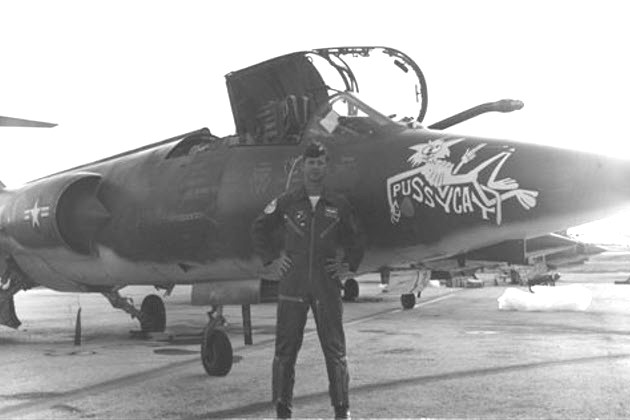
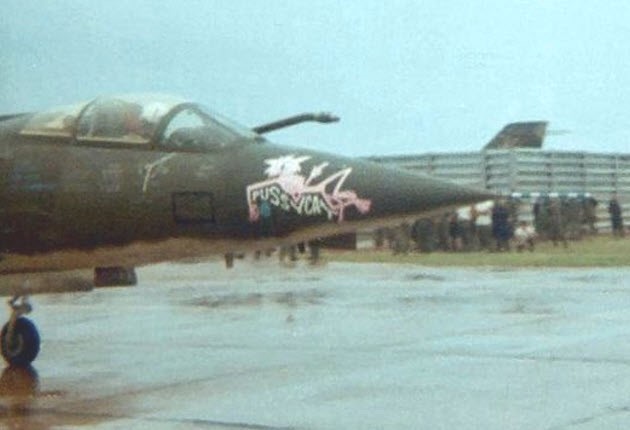
F-104C-5-LO 56-0910 was one of the first 104s which were delivered on 6 June 1966. It received an overhaul a couple of times, including one from 21 to 26 November 1966. It was flown by Captain James “Jim” B. Trice who added a nose-art painting “Pussycat” on his Starfighter. Originally, the name was not applied and the nose art just showed the cat cartoon only.
Jim Trice posing beside his “Pussycat”.
F-104C-10-LO 57-0925 arrived at Udorn on 22 July 1966 and soon was named “Smoke II”. The name reflected the large amount of smoke the J79 engine normally produced but it is not known why the “II” was added behind it. It lasted a little more than a week in country when on August 1st, it was hit by a SAM while escorting a F-105G Wild Weasel flight during an attack near Thái Nguyên (north of Hanoi). The pilot, Lieutenant Colonel Arthur Thomas “Al” Finney was KIA.
This is F-104C 57-0925 with “Smoke II” painted on the nose. Note the Crew Chief’s name is painted on the fuselage forward of the engine intake.


F-104C-5-LO 56-0918 arrived at Udorn on 24 September 1966. It was seen there wearing the nickname “Hog Wild” in October 1966. That same month, on the 20th, it was lost when it was shot down by AAA fire while dive bombing over the Plain of Jars in northern Laos. Sadly, pilot Captain Charles Tofferi (the 1962 William Tell Meet winner) was KIA. Unfortunately, no photos of this aircraft have been found.
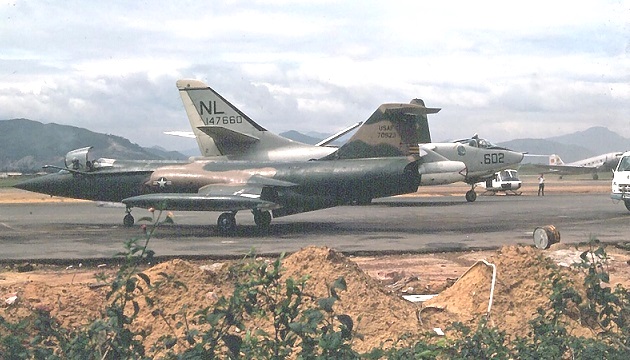
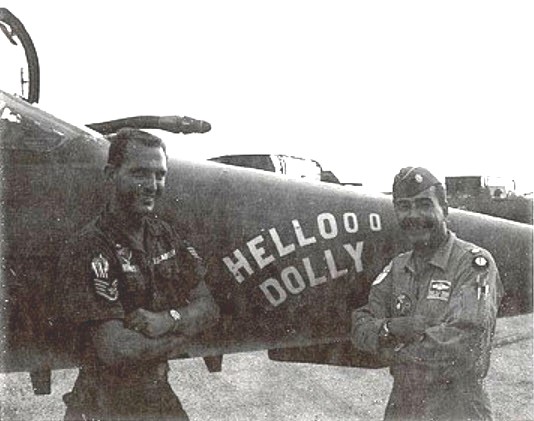
F-104C-10-LO 57-0923 was at Udorn from 19 September 1966 to 15 November 1966. For some unknown reason, it was flown back to the USA and returned back to Udorn in February 1967. In 1967, it was flown by Lieutenant Colonel Robert Preciado (the 435th TFS last commander) who named the aircraft “Hellooo Dolly”, painted on the aircraft’s nose. It was named for his wife “Dolly” and the long “Hellooo” was chosen because of the famous 1964 Broadway musical “Hello, Dolly!”.
F-104C 57-0923 at Da Nang Air Base in late November 1966 on it way back to the USA. Behind it is a Douglas A-3B Skywarrior Bomber/Tanker of CVW-15 VAH-8 off the USS Constellation (CVA-64).
Crew Chief Sergeant Bennet and Preciado pose next to “Hellooo Dolly”, July 1967.
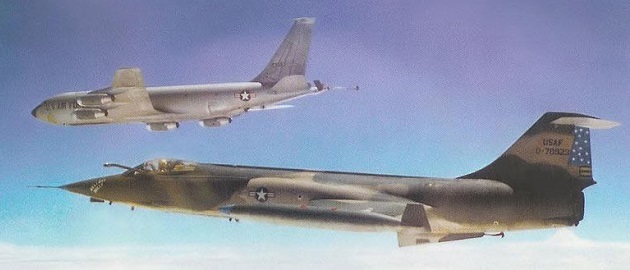
F-104C 57-0923 flying beside a KC-135A tanker. Note the colored rudder, blue tips on wingtip tanks and its nose art.
Tail numbers
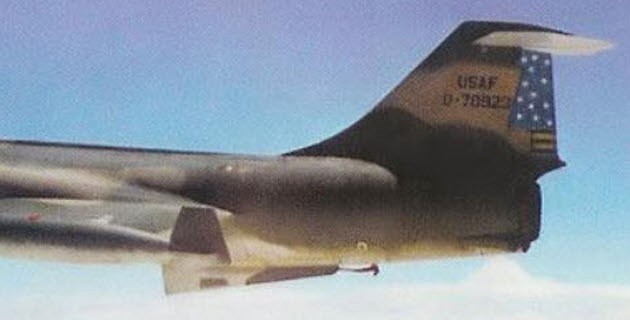
The number on the tail is officially called the radio call number, but almost universally known as the tail number. Since US military aircraft were not expected to be in service more than ten years, the first digit of the fiscal year number the aircraft was built was omitted in the tail number as was the hyphen. For example, F-104C serial number 57-0923 had the tail number 70923 painted on its tail fin. But a problem arise where aircraft at least 10 years old and new aircraft could have the same tail number. For example, serial numbers 57-0923 and 67-0923 would have the same tail number 70923 with this system. To avoid possible duplication of tail numbers, the symbols “0-” would precede the tail number on all aircraft that were 10 years or older. Some sources state it was the letter “O” meaning “obsolete” or “old” but that is incorrect.
This is my close up of F-104C 57-0923 tail in the photo above. Note the “0-” prefix added to the tail number.
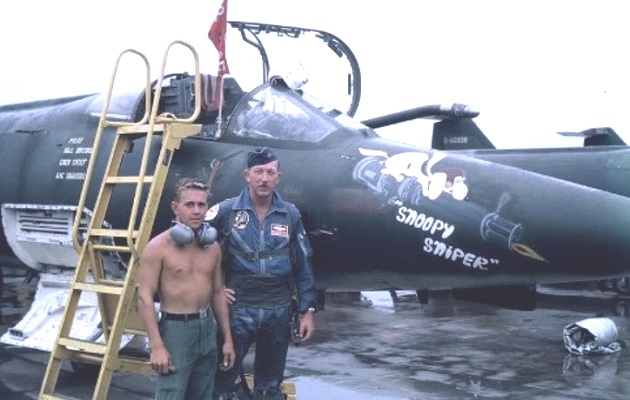
F-104C-5-LO 56-0891 arrived at Udorn in January 1967. Later in 1967 this aircraft, piloted by Major Herb Drisko, received a nice nose art painting on both sides of its nose. On the starboard (right) side, the Peanuts cartoon character Snoopy was painted wearing a brown WWI leather helmet and a yellow scarf, riding and firing a 20mm Vulcan Gatling Gun. Beneath Snoopy and the gun was the name “SNOOPY SNIPER”. By that time, Herb Drisko was “F-troop” flight commander.
Herb Drisko and his crew chief Sergeant Joel Swanson standing beside “Snoopy Sniper”.
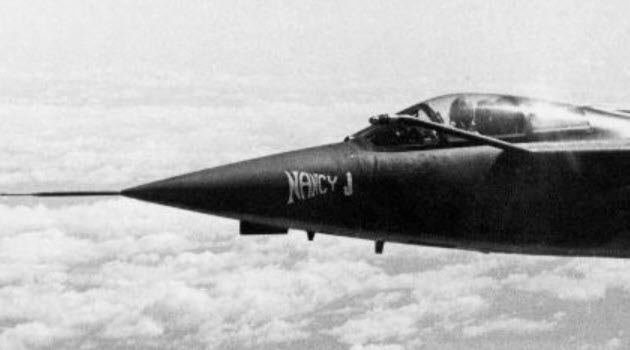
On the left side of the nose, the name of Herb’s wife was painted “Nancy J”.
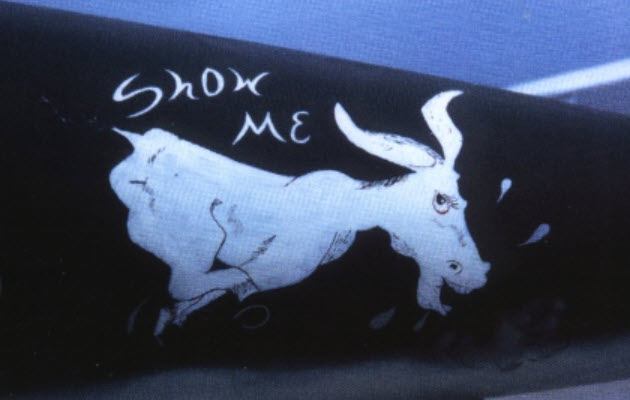
F-104C-5-LO 56-0938 was one of the first eight Starfighters delivered to Udorn on 6 June 1966. The pilot was Major Bobby Dee Bedsworth who came from Missouri, known as the “Show Me” State.
The Missouri mule was painted on his aircraft nose with the name “Show Me”.
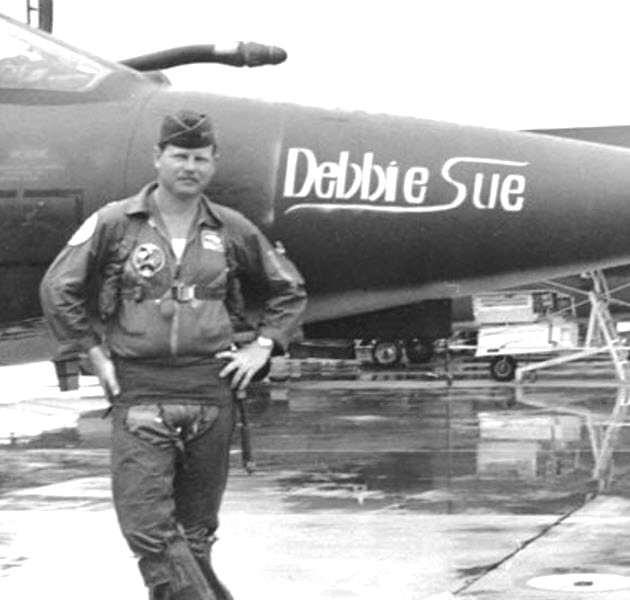
F-104C-10-LO 57-0927 was one of the 12 Starfighters which arrived at Udorn on 22 July 1966. It was flown by Captain Rodney Trimble.
The nickname “Debbie Sue” was after Trimble’s daughter.
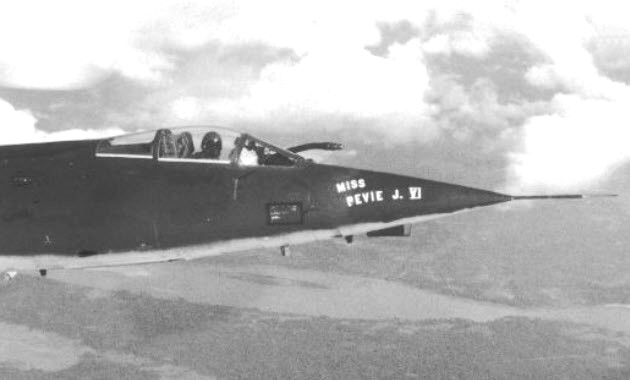
F-104C-5-LO 56-0892 arrived at Udorn in February 1967. It was flown by Major Floyd Totten who decided to put the name of his first girlfriend on the nose of his Starfighter and it was the sixth aircraft which Floyd had named “Miss Bevie J”.
After awhile the paint began to wear off where the letter “B” started to look like a “P”.
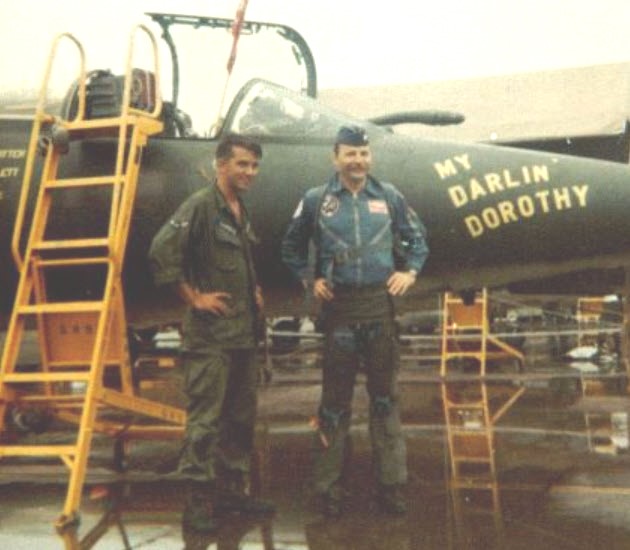
Floyd then decided to change the name to his wife Dorothy and it was repainted as “My Darlin Dorothy”.
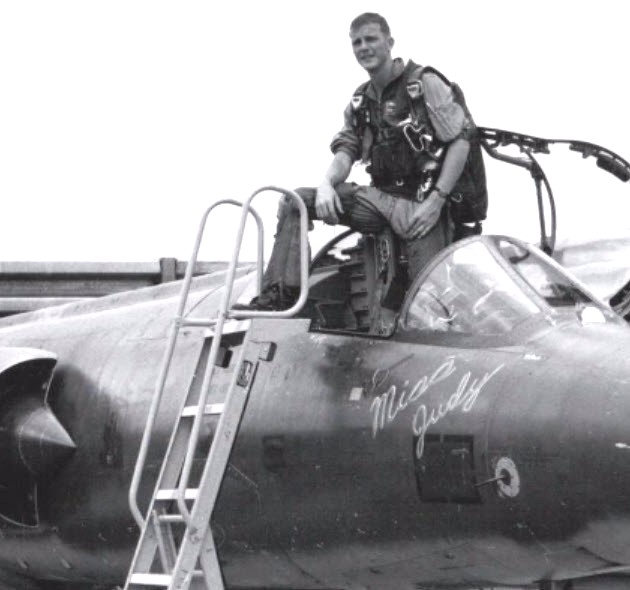
F-104C-5-LO 56-0902 was first noted at Udorn in November 1966. It was flown by Captain Addison “Ace” Rawlins who gave the aircraft the nickname “Miss Judy”, after his wife, which was painted on both sides of the aircraft.
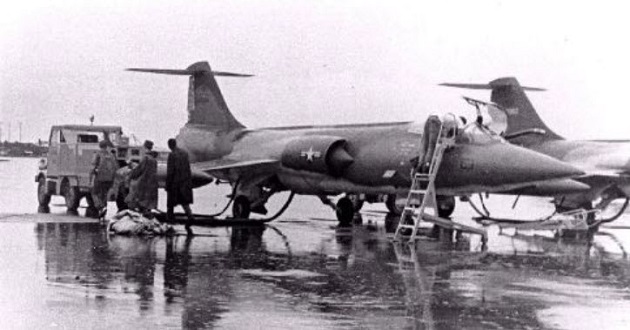
F-104C-5-LO 56-0898 one of the twelve aircraft which arrived at Udorn on 22 July 1966. On 11 November 1966, it received an overhaul at Udorn and returned to the squadron on the 17th.
F-104C 56-0898 on a very wet rainy day at Udorn next to 56-0902 “Miss Judy”.
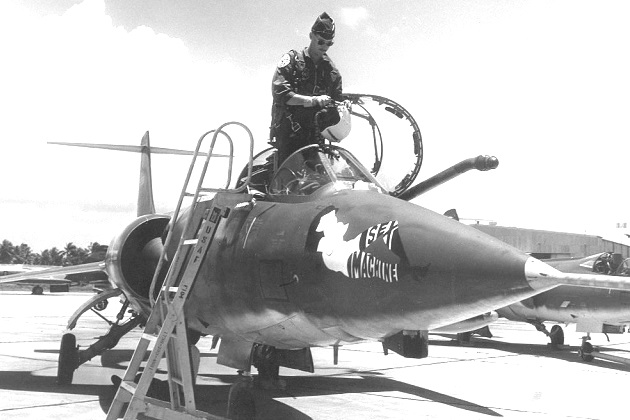
In March 1967, it received the risqué nose art “Sex Machine”, seen here with pilot Major Hugh B. Spencer.
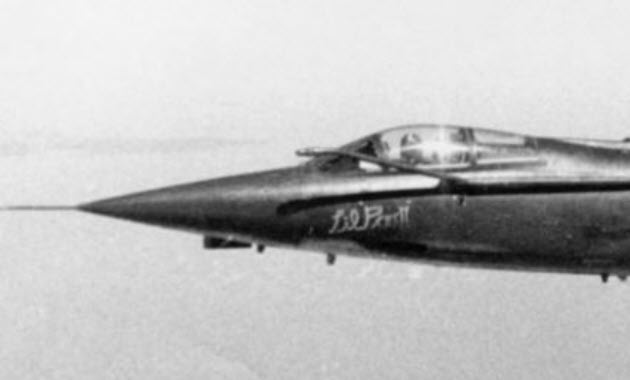
F-104C-5-LO 56-0936 arrived at Udorn on 21 November 1966. It was flown by 1st Lieutenant Thomas “Tom” P. Mahan Jr. and it had the nickname “Lil Poo II” painted on its nose (left side only).
Poo was the pet name used during his courtship of this wife, Shirley. The “II” meant his plane is the second love of his life but Shirley was the first.
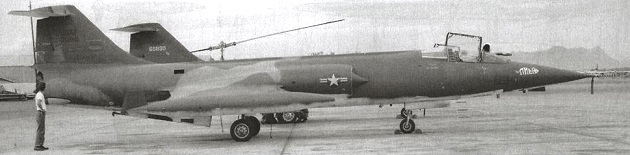
F-104C-10-LO 57-0916 was one of the 12 Starfighters which arrived at Udorn on 22 July 1966. It was flown by Tommy L. Wilson. On a request from a crewchief he decided to give the aircraft the nickname “Time Hog”. After he left Thailand, the aircraft was given to Major Joe Nevers who had lost his F-104C 57-0910 in January 1967. He changed a bit the font of the nickname which stayed the same. After Joe Nevers, the aircraft was assigned to Colonel Dennis Mangum.
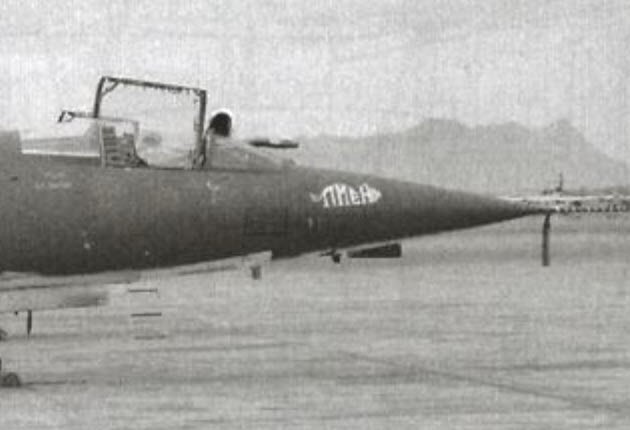
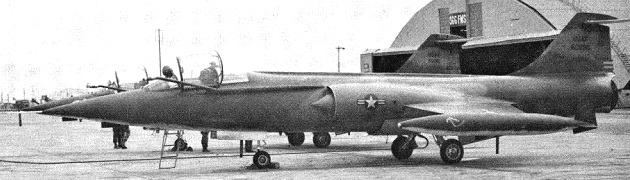
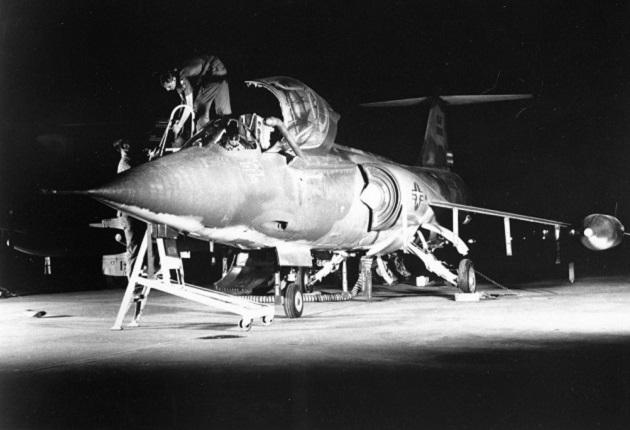
F-104C-5-LO 56-0890 arrived at Udorn in September 1966. After some work, it was declared combat ready on October 1st. It received an overhaul and there were squadron-return-dates on October 25th and December 4th.
F-104C 56-0890 is parked next to 57-0910 “Time Hog” in 1967. Note the strange marking on the wingtip tank.
This is 56-0890 being worked on at night.
A Starfighter refueling in flight from a KC-135A tanker.
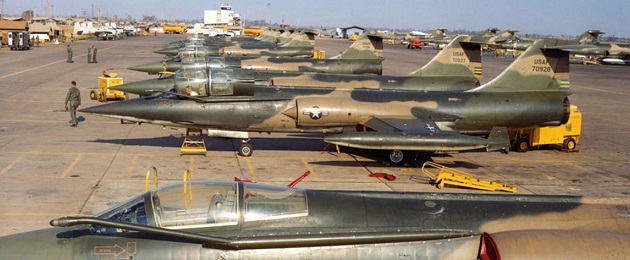
The finanical advantages of operating a single aircraft type (the F-4 Phantom) for fighter, bomber, reconnaissance and escort duties was increasingly becoming apparent by late 1966. However, there were concerns about the modest success of the F-4C during its early MiG encounters and the low reliability of the AIM-7 Sparrow missiles. It was decided to keep the small number of F-104Cs with the proven accuracy of their 20mm gun as a reserve at Udorn in case the MiG threat increased again before the delivery of the first gun-armed F-4E Phantoms (20mm gun mounted in the nose).
The second aircraft in this 1967 photo is F-104C-10-LO 57-0928. On 30 September 1966, Captain Harold R. Alston flew 57-0928 on his 100th mission and was the first pilot to achieve this milestone.
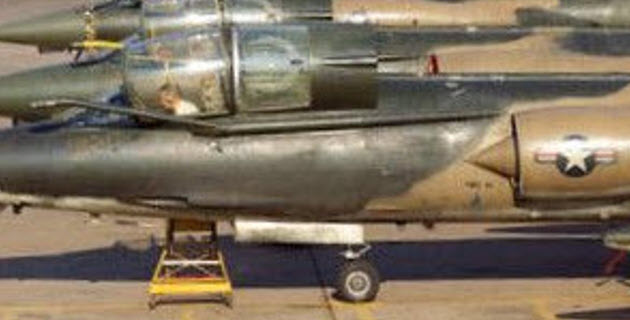
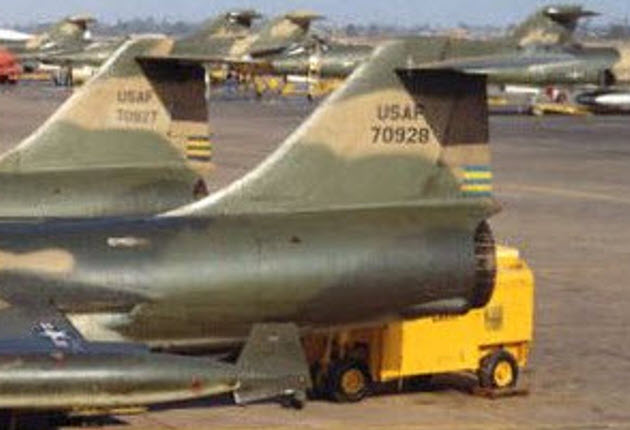
These are my close ups of the cockpit and tail in the above photo. Note a ground crewman sitting in the cockpit.
Star Trek F-104
“Tomorrow Is Yesterday” is the 19th episode of the first season of the US science fiction television series “Star Trek” which first aired on 26 January 1967. The opening sequence of the episode show film shot during the 1962 USAF William Tell meet where the winner Captain Charles Tofferi flew F-104C 57-0914.
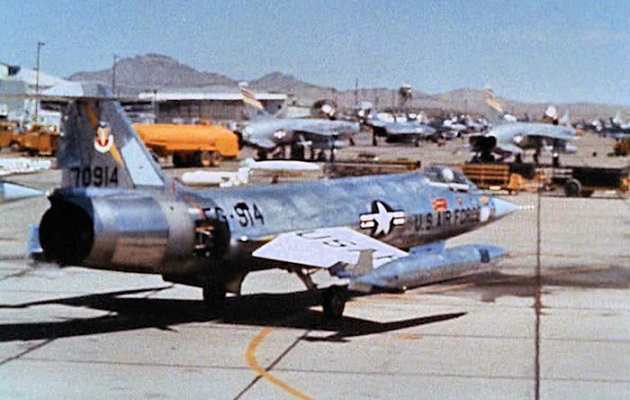
Video: Jet Fighters Attack UFO in the 1960’s
As mentioned before, Captain Tofferi was KIA on 20 October 1966 when he was shot down by AAA fire while flying F-104C 56-0918. This is 57-0914 with the 435 TFS at Udorn after returning from a mission on 22 December 1966. On 16 January 1967 (10 days before the Star Trek episode aired), it crashed in Thailand due to engine failure forcing pilot Major Hugh B. Spencer to eject.
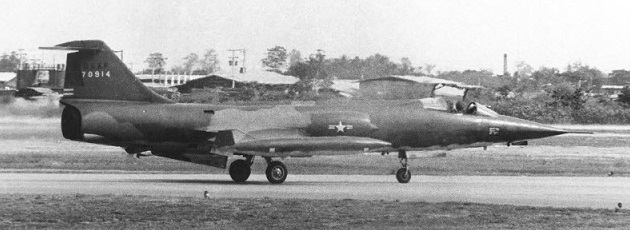
The F-104 Starfighter losses in Vietnam was 14 total with 9 in combat. In Vietnam, the F-104 never did not get into air-to-air combat. It was always ordered to fly high and provide protection from MiGs. But the MiGs avoided them and went after the F-4 Phantoms and F-105 Thunderchiefs which were bombing their country. Although the pilots who flew it in Vietnam thought very highly of it, there were many pressures in the US to get a new fighter started, in particular the F-15.
With the ending of F-104 operations at George AFB in July 1967, the returning 435th TFS Starfighters needed a new home base. They flew to San Juan in Puerto Rico, via the Philippines, Guam and Hawaii for service with the Puerto Rico Air National Guard (PRANG) and it was the only ANG unit which flew the F-104C.
Puerto Rico
In 1898, following the Spanish–American War, Puerto Rico became a territory of the United States. Muñiz Air Base, the home of the PRANG, is located within the grounds of the Luis Muñoz Marín International Airport in Carolina, 14 km (9 miles) east of San Juan.
Based at Muñiz was the 156th Tactical Fighter Group (TFG) which consisted the 198th TFS “Bucaneros” (English: Buccaneers). After their deployment in Vietnam, the F-104C Starfighters were reassigned to the 198th, upgrading the squadron to Mach-2 supersonic tactical fighter-bombers which replaced their elderly F-86H Sabre fighter-bombers.
PRANG 198th TFS F-104Cs
| F-104C Serial Number | Arrived in Puerto Rico | Name(s) |
|---|---|---|
| 56-0886 | August 1967 | |
| 56-0890 | October 1967 | |
| 56-0891 | July 1967 | Snoopy Sniper / Nancy J. |
| 56-0892 | October 1967 | My Darlin Dorothy |
| 56-0898 | August 1967 | Sex Machine |
| 56-0902 | August 1967 | Miss Judy |
| 56-0910 | July 1967 | Pussycat |
| 56-0914 | July 1967 | |
| 56-0926 | October 1967 | |
| 56-0929 | 1967 | MARGARET |
| 56-0932 | August 1967 | |
| 56-0936 | August 1967 | Lill poo II |
| 56-0938 | August 1967 | Show Me |
| 57-0916 | July 1967 | Time Hog |
| 57-0923 | July 1967 | Hellooo Dolly |
| 57-0927 | July 1967 | Debbie Sue |
| 57-0928 | June 1967 | |
| 57-0929 | 1967 |
For the reminder of the Vietnam War, particularly during Linebacker I and II in 1971-72, it was planned that many of the PRANG F-104Cs could be quickly recalled to combat if required, as enough were kept at operational readiness with the continuation training of 23 pilots.
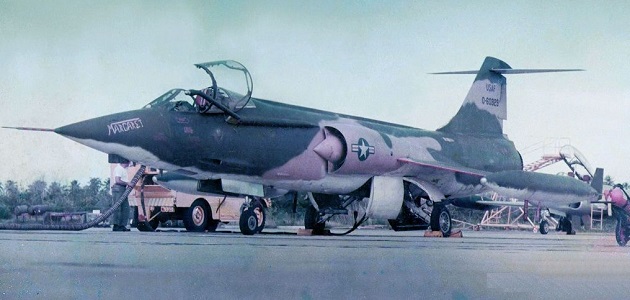
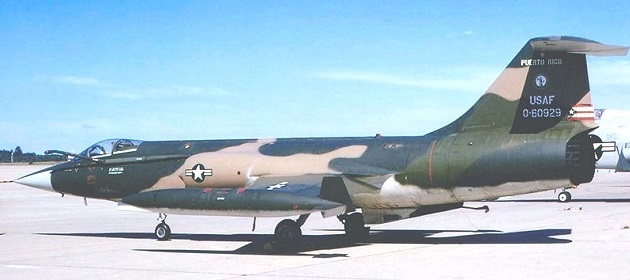
F-104C-5-LO 56-0929 was one of the 12 additional Starfighters which arrived at Udorn on 22 July 1966. During the last days at Udorn, the name “MARGARET” was painted on its nose. The name was chosen by its pilot Lieutenant Arthur K. Poe which was his beloved wife.
This is a photo of the aircraft just after delivery to the 198th TFS at Muniz in 1967. Note the “0-” before the tail number. Behind the Starfighter on the right is the open canopy and nose wheel of a Lockheed T-33 Shooting Star trainer.
F-104C-5-LO 56-0914 landing at Muniz after returning from the gunnery range in 1971. Mounted on the center line pylon is a SUU-21 practice bomb dispenser and on the left wing pylon is a rocket pod which was fired. Note the speed brakes and drag chute are deployed.
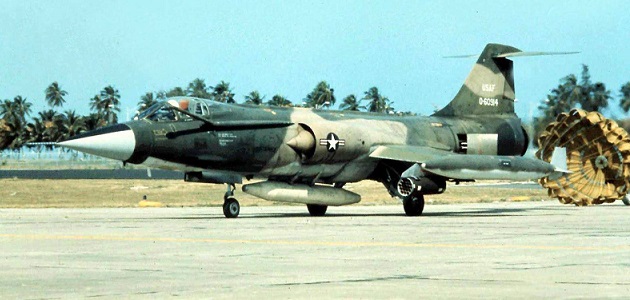
F-104C 56-0929 in 1972. The name “MARGARET” had been removed.
The 198th TFS was the last USAF unit to fly the Starfighter. In 1975, the PRANG F-104Cs were retired and replaced by the Ling-Temco-Vought (LTV) A-7D Corsair II ground support aircraft.
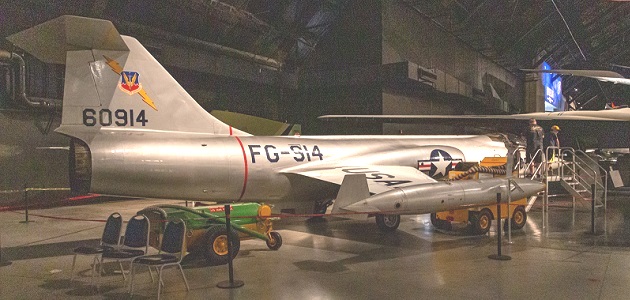
F-104C-5-LO 56-0914 is currently on display at National Museum of the US Air Force at Wright-Patterson Air Force Base in Dayton, Ohio. It was flown to the museum on 18 August 1975. The museum states that 56-0914 was flown by the 1962 USAF William Tell meet winner Captain Tofferi but he flew 57-0914 during the meet not 56-0914.
Model Kits and Decals
1/32
Hasegawa 08234 F-104C Starfighter ‘Vietnam War’ – 2013
Italeri 2515 F-104 A/C Starfighter – 2020
Caracal Models CD32022 F-104C in Vietnam Decalset – 2017
1/48
AMT 953 Star Trek The Original Series F-104 Starfighter “Tomorrow is Yesterday” 50th Anniversary (with USS Enterprise mini-model) – 2017
Eduard 11169 The Zipper F-104C Starfighter in Vietnam War – 2023
Hasegawa 07533 F-104 Starfighter (C Version) Vietnam War – 2024
Historic Plastic Models 48-010 Shenyang J-6/F-6 (MiG-19S)
Caracal Models CD48102 F-104 In Vietnam Decalset – 2016
Frontpenny 48018 PLAAF & PLAN decals J-6 Retirement Special DecalSet
1/72
KP Models J72072 Shenyang J-6 Chinese-built MiG-19 – 2012
Italeri 1359 LOCKHEED MARTIN F-104 A/C Starfighter – 2014
Academy 12576 USAF F-104C “Vietnam War” – 2022
Caracal Models CD72064 F-104C in Vietnam Decalset – 2017
Frontpenny FP72018 PLAAF & PLAN decals J-6 Retirement Special Decalset


