There are a few prototype armored fighting vehicles that are as recognizable as the US Super-Heavy Tank T28. It was originally designed to assault the heavy fortified defenses expected to be encountered on the Siegfried Line along the western borders of Germany. Later it was planned to be used in the invasion of the Japanese mainland. Only two prototypes were completed in 1945 after WWII ended and it was the heaviest armor vehicle built for the US Army.
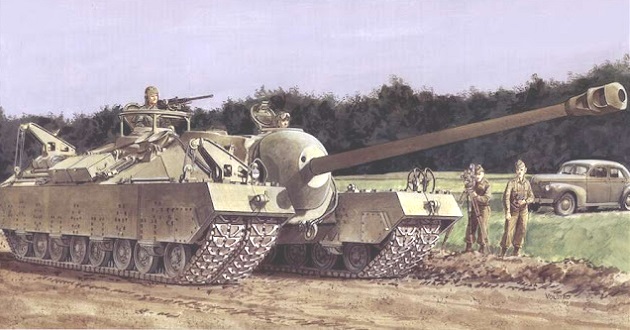
On 22 December 1943, a special sub-committee on automotive equipment, which was composed of six high ranked representatives, including Major General Gladeon Marcus Barnes and Brigadier General Lucius Dubignon Clay, met and discussed the design, production, and designation of this new tank. This was not standard procedure, as most if not all US armored fighting vehicles of the time were processed by the Ordnance Technical Committee. During this meeting, the new tank received the designation “Heavy Tank T28”. Almost no aspect of the its design was left unexpanded as the project was dissected and revised many times. Although designed to use as many existing parts as possible, the T28 had some rather unusual design features.
An early drawing of the Heavy Tank T28.

On 26 April 1944, the commanding General of the Army Service Forces authorized the production of five Heavy Tanks T28 prototypes. As the development of the T28 continued into July 1944 with its thick armor and a 105mm gun, the tank’s weight reached 95 tons (86.2 tonnes).
General Barnes and the Ordnance Department then began a difficult search for a firm both willing and able to manufacture the five prototypes. At first, Barnes approached Baldwin Locomotive, but their schedule was too heavy to accommodate a job as taxing and complex as the T28. General Electric was also approached, but they were also unable to accept the contract. Finally, it was decided on 18 July 1944, that the Pacific Car and Foundry company in Seattle, Washington, would build the five prototypes. Pacific Car was, however, unable to machine the massive frontal hull castings of the T28, a job which was instead delegated to the General Steel Castings Company which meant longer production time.
T28 to T95
The Heavy Tank T28, despite its designation, had little in common with other US heavy tanks of the time. Although it was both heavily armed and armored, the T28’s lack of a rotating turret and no internal machine guns according to US Army tank doctrine it could not be considered a heavy tank. The Chief of Ordnance, Major General Levin Campbell, first proposed on 7 February 1945 that the Heavy Tank T28 be re-designated as a heavy self-propelled gun. This decision was far from spur-of-the-moment. The T28 was referred to as the “105mm Gun Motor Carriage T28” in official documents dating as far back as October 1944, indicating that the vehicle had been wavering between a heavy tank and a self-propelled gun for some time.
The re-designation request was officially proposed to the Ordnance Department on 8 March 1945 and was approved on 5 April 1945 by the Ordnance Committee in OCMs 26898 and 27219 respectively, officially re-christening the vehicle as the “105mm Gun Motor Carriage T95”. As was customary, the T95’s technical characteristics were adjusted to reflect the change of designation.
The completed wooden T95 mock-up in May 1945.
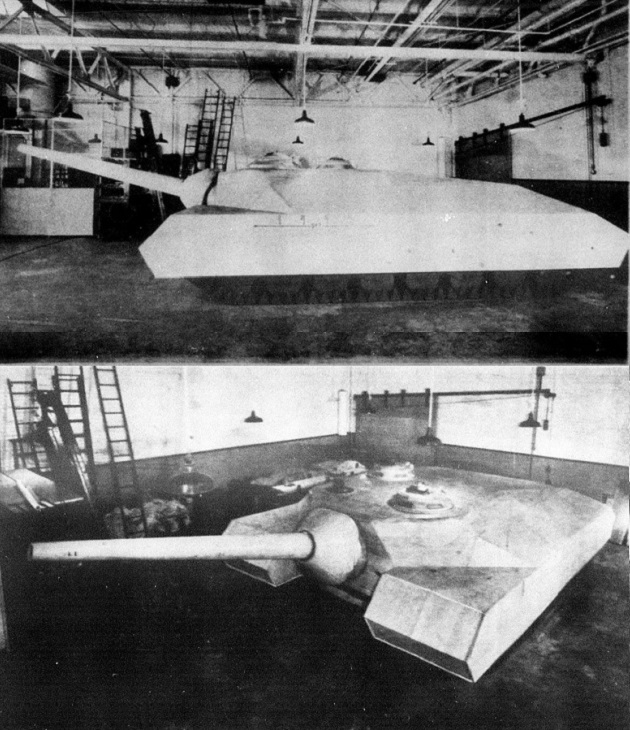
On 15 August 1945, Japan surrendered bringing an end to WWII. There was no longer a need for super heavy breakthrough vehicles without any fortifications to breach. The Ordnance Committee, accordingly, reduced the number of T95 Prototypes to be produced from five down to two.
The Pacific Car and Foundry Company completed the first T95 prototype in December 1945. After some preliminary tests at Pacific Car, the vehicle was shipped to the Aberdeen Proving Grounds in Maryland on 21 December 1945. The second T95 prototype was completed not long afterwards and was shipped on 10 January 1946. Both vehicles arrived at Aberdeen on January 15th and February 17th respectively. The plan was to keep one vehicle at Aberdeen for technical tests and to send the other to Fort Knox, Kentucky, for demonstration and tactical tests. The War Department registration number prefix “40” was for tracked and half tracked vehicles (except tanks). T95 No.1 and No.2 were assigned registration numbers 40226809 and 40226810, respectively.
T95 No.1 during initial testing at the Pacific Car and Foundry Company.
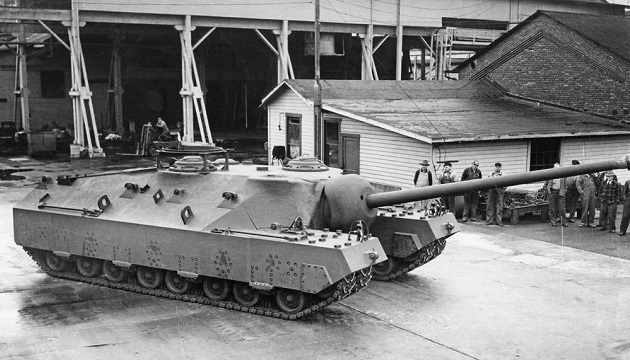
While T95 No.1 remained at Aberdeen Proving Ground for approximately a year and a half, as the tests were conducted, the second prototype spent no longer than a few months at the Proving Ground. After a mechanical baseline for T95 No.2 was established at Aberdeen in April 1946, it was shipped to Fort Knox, Kentucky, for demonstration and evaluation purposes under the Army Ground Forces (AGF). The AGF had no desire to perform extensive tests concerning what they considered as a dead end, low priority project, so it was transferred to the proving grounds of the US Army Corps of Engineers at Yuma, Arizona on 20 May 1946 after a brief demonstration at Fort Knox. The two T96s paint jobs were adjusted countless times during the testing period to reflect changes in designation or based on which branch was examining the vehicles.
Film: T-28 Superheavy Tank
The front view of the first fully assembled T95 at Aberdeen on 23 January 1946. Note that the muzzle brake for the main gun was not fitted yet.
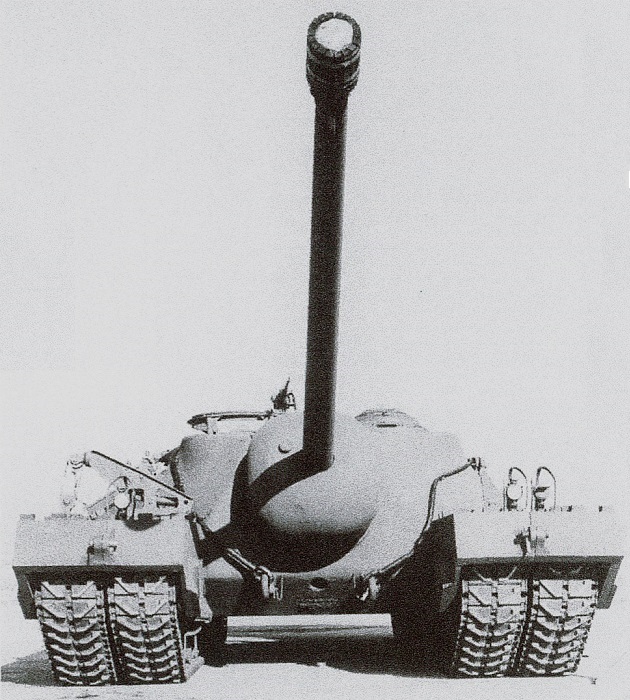
The rear view of the first T95 on 23 January 1946. Note the armor thickness of the vehicle’s side skirts.

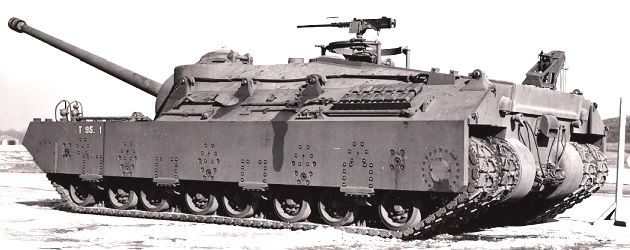
A three-quarters rear view of the first T95 in January 1946 at Aberdeen. Note on the “T 95. 1” is painted on the side skirt behind the headlights.
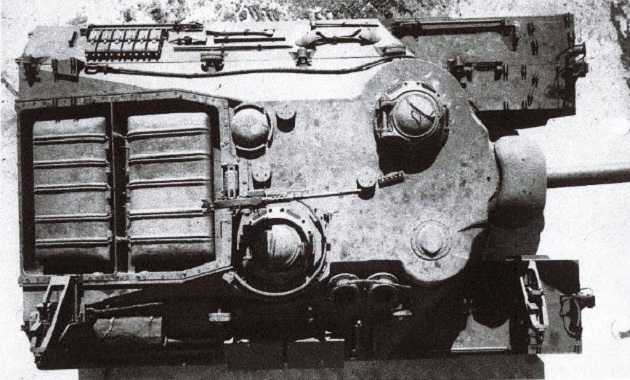
A top view of T95 No.1. The cupola located at the front left of the vehicle was for the driver and the cupola at the rear right was for the commander.
Specifications
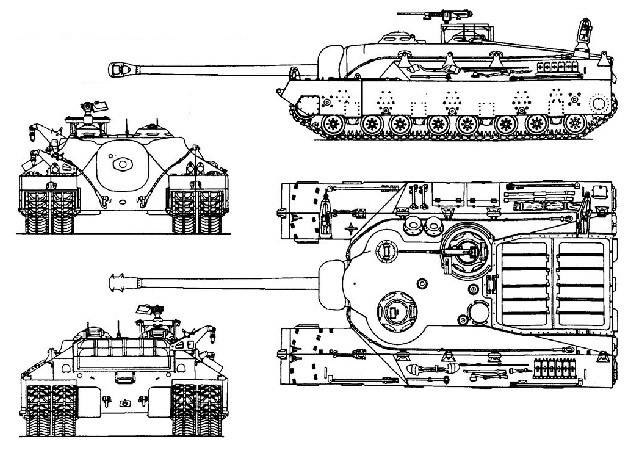
Crew: 4 (Driver, Gunner, Loader, Commander)
Length: 36 ft 8 in (11.18 m), without gun 24 ft 7⅛ in (7.50 m)
Width: 14 ft 10 in (4.52 m), without outboard tracks 10 ft 8 in (3.25 m)
Height: 9 ft 4 in (2.84 m) to top of machine gun, 7 ft 10 in (2.39 m) to cupola
Ground Clearance: 19 in (48.26 cm)
Weight
95 tons (86.2 tonnes) combat loaded
90.3 tons (81.9 tonnes) empty
65.5 tons (59.4 tonnes) without outboard tracks
Ground Pressure: 11.7 psi (80.6 kpa), 16.2 psi (111.7 kpa) w/o outboard tracks
Armor Thickness
Gun Mantlet: 11.50 in (292mm) maximum
Front, Upper: 12 in (305mm) @ 0°
Front, Lower: 5.25 in (133mm) @ 60°
Sides, Upper: 2.50 in (63.5mm) @ 57°
Sides, Lower: 2 in (50.8mm) + 4 in (102mm) side skirt @ 0°
Rear: 2 in (50.8mm) @ 9°
Roof: 1.50 in (38.1mm) @ 90°
Floor: 1 in (25.6mm) @ 90°
Engine
Ford GAF, 410 net hp @ 2,600 rpm, 4.32 hp/ton (4.76 hp/tonne)
All-aluminum 32-valve DOHC 60-degree liquid-cooled V8 engine (same engine which powered the M26 Pershing)
Fuel Capacity: 400 gal (1514 liters)
Max Speed: 8 mph (13 km/h)
Range: 100 mi (161 km) range on roads
Armament:
1x 105mm Gun T5E1 (58 rounds actual, 62 rounds predicted)
1x .50 caliber Browning M2 machine gun (660 rounds)
Crew Weapons
1x .45 caliber M3 Submachine gun (180 rounds)
3x .30 caliber M2 Carbines (225 rounds)
12x hand grenades
Radios: SCR 508 and AN/VRC 3 (SCR-300)
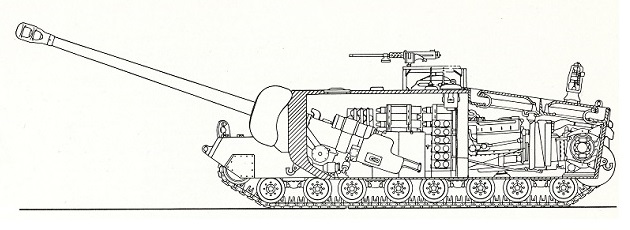
A cutaway view of the T95 with the T5E1 gun at maximum elevation. Note the 305mm (1 foot) frontal armor.
Main Gun
The T95’s main gun was the 105mm Gun T5E1, derived from the 105mm Anti-Aircraft Gun T4. This gun was chosen as the main armament because of its impressive anti-concrete performance, an absolute necessity for an armored vehicle designed to destroy bunkers and other fortifications. The powerful armor-piercing power of the gun was a nice bonus, although the T95 was not designed to combat tanks. The T5E1’s muzzle velocity was predicted to be about 3000 ft/s (914 m/s). To help manage the recoil and provide a better view after firing, the T5E1 was equipped with a 180 lb (81.6 kg) double baffle Muzzle Brake T10. The T5E1 was mounted in the hull of the T95 with traverse limited to 10 degrees to the left and right of center, 15 degrees of elevation, and 5 degrees of depression. Traverse was manual only and was controlled by the gunner via two separate hand cranks, one for the horizontal and the other for the vertical. To manage the recoil of the gun, three large recoil cylinders were mounted on top of the gun. A 3x zoom Telescope T139 was mounted to the right of the gun for direct fire purposes and a Panoramic Telescope T141 was provided for indirect fire.
The T5E1 gun was designed to use separately loaded two piece ammunition. It could fire quite a few different types of ammunition, including the explosive filled T13E1 Armor-Piercing Capped Ballistic Capped (APCBC) shell, the T32 APCBC round, the T30E1 High-Explosive (HE) shell, and the T29E3 High-Velocity Armor-Piercing (HVAP) round.
The ammunition clamps and locking devices, as well as the cramped ammunition racks, can be seen in this interior photo.
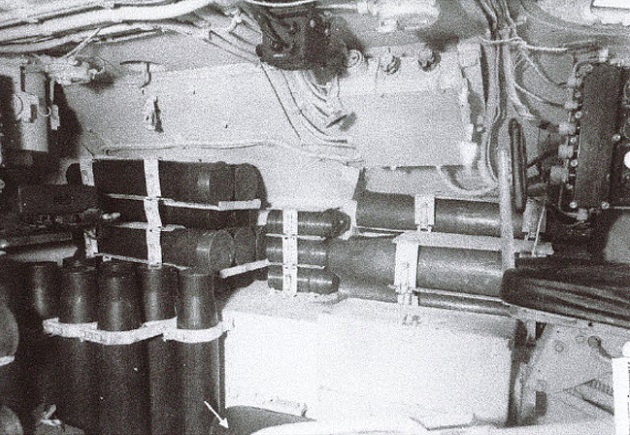
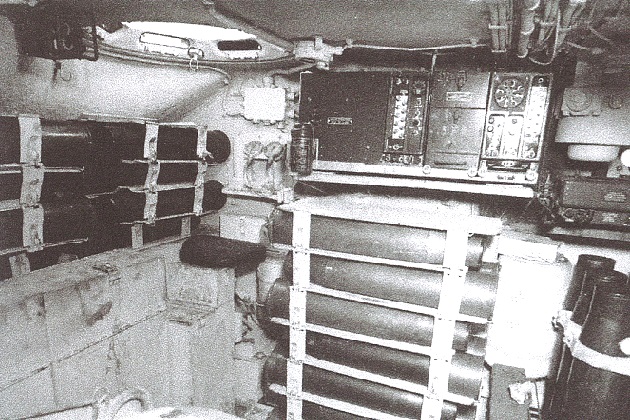
A view of the interior looking back from the driver’s position. The SCR-508 radio is above the rear bulkhead ammunition rack to the right of the commander’s copula and the smaller AN/VRC 3 radio is below it to the right.
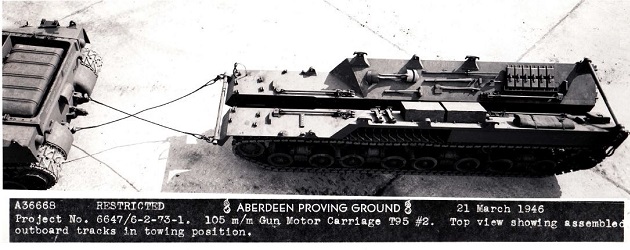
The T95’s most unique characteristic was its quadruple track system. To reduce the ground pressure of the massive vehicle to acceptable levels, two equal width set of tracks were mounted to each side of the T95. With the aid of a jack and a pair of hydraulic winches, the outboard set of tracks could be detached from the vehicle, coupled together, and towed as a trailer. Because this system allowed for some 29 tons (26.3 tonnes) of its weight and about 4.6 feet (1.40 m) of its width to be shaved off, the T95 could be transported by rail or tractor trailer and cross certain types of floating bridges that it otherwise would not be able to when the outboard sets of tracks were fitted.
The T95 had four suspension systems, all identical in structure. Each system consisted of four double row HVSS bogies, three return rollers, a front-mounted idler wheel, and a rear-mounted drive sprocket. The tracks of the T95 were essentially standard rubber backed steel T80 tracks cut down to 19.50 inches (49.53 cm) wide. Each complete track weighed approximately 9500 lbs (4309 kg) and was composed of 100 individual links. The transmission was a Torquematic unit with three forward speeds and a reverse gear. The steering was accomplished through a controlled differential.
In order to determine how long it would take to remove the outboard tracks, an inexperienced four man crew was given an area of approximately 30 x 40 feet (9.1 x 12 m) and two hydraulic jacks, one rated for 3 tons and the other for 35 tons. No other specialized tools were provided. The first attempt by the crew to remove the outboard track units took approximately four hours, and an equal amount of time was required to reattach them. The second attempt was significantly faster, at three hours each to remove and reattach the track units, and the third attempt was yet faster, with the final time noted as two and a half hours for each operation.
This is a photo of the T95 outboard track attachment process. After attaching the left track, the driver would very carefully maneuver the T95 into position alongside the right track so it could be attached. Note the small white star on the front left fender.

T95 No.2 half way through having its outboard tracks removed in March 1946.
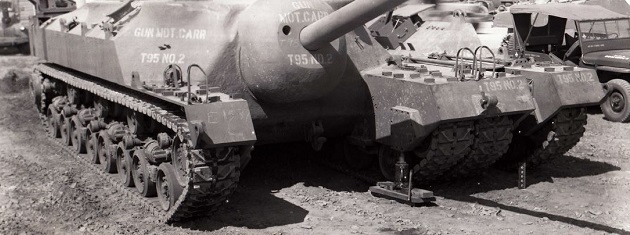
The two outboard track units are coupled together and a towing bar mounted. To the right is the rear hull of the T95.

Two views of the T95 towing the outboard track units on 21 March 1946.
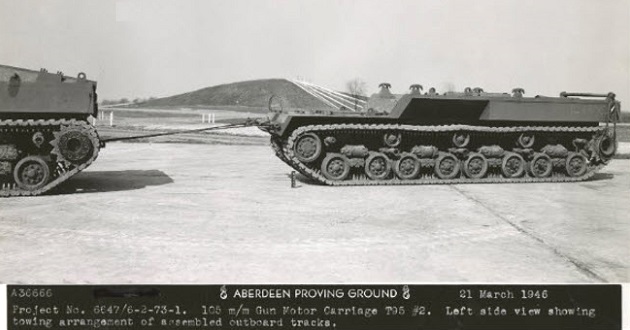
This is an overhead view of the coupled the outboard track units. Note the tools, spare track links and other stowage were kept in place on the outboard track units.
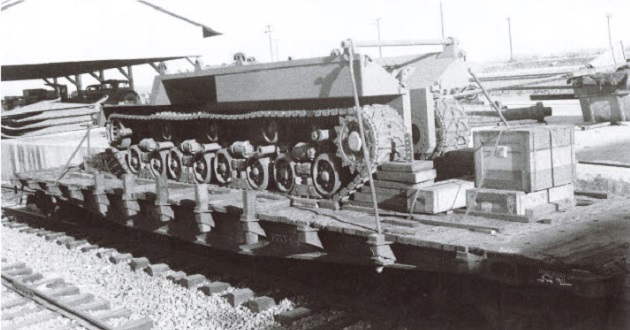
The detached outboard track units of T95 No.1 as they were transported by rail to the Aberdeen Proving Ground on 16 January 1946.
A T95 on the Proving Grounds. The muzzle break has not been installed yet and the barrel is capped to protect the threads. Note the foul weather windscreen mounted on the front of the driver’s cupola.

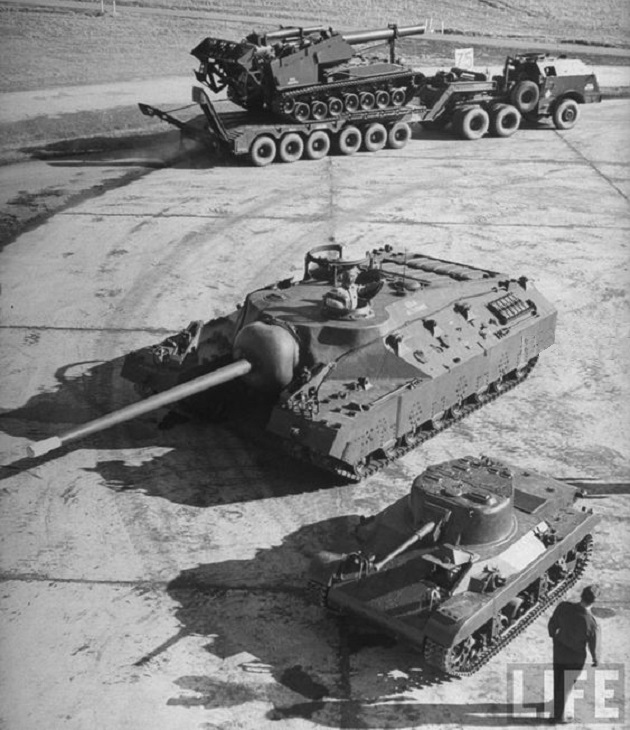
These LIFE Magazine photos compare the T95 with the US Army’s smallest and lightest tank, the M22 Locust armed with a 37mm gun.

In the background of this photo is a T92 240mm Howitzer Motor Carriage (HMC) on a T67 100-ton Semitrailer towed by a M26 tractor.

T95 No.2 at Fort Knox during demonstrations in April/May 1946.
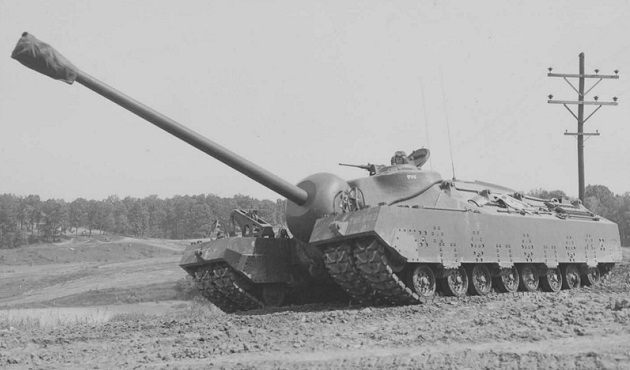
A frontal view of T95 No.2 traversing some rough terrain during a demonstration at Fort Knox in April/May 1946. Note the complex shape of the frontal armor.
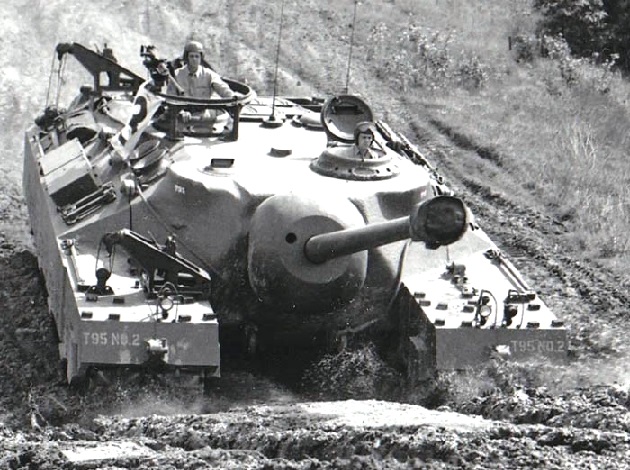
T95 to T28
In June 1946, the Ordnance Committee, with OCM 30758, officially re-designated the T95 as the “Super-Heavy Tank T28” citing the tank’s record topping weight as the reason for creating a new Super-Heavy tank weight class. From that point on it was referred to as the T28, although the T95 and T28 were the same vehicle. Since the War Department registration number prefix “30” was for tanks (and some special vehicles), the registration numbers for T95 No.1 and No.2 were probably changed to 30226809 and 30226810, respectively.
T28 No.1 during a demonstration at Aberdeen on 3 October 1946. Note the marking on the hull side.
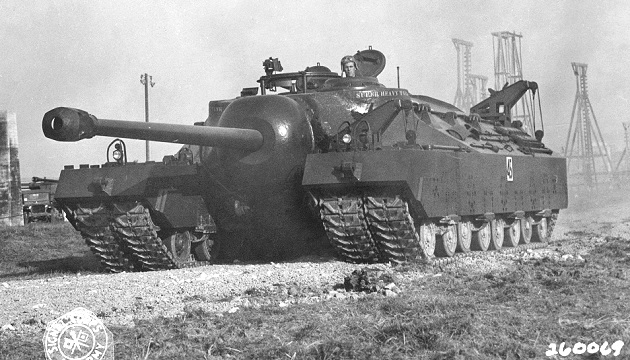
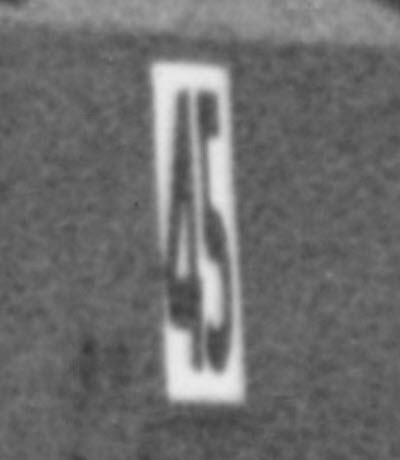
This is my close up of the hull side marking in the above photo. It is a black number 45 on a white square which most likely indicate the year it was built.
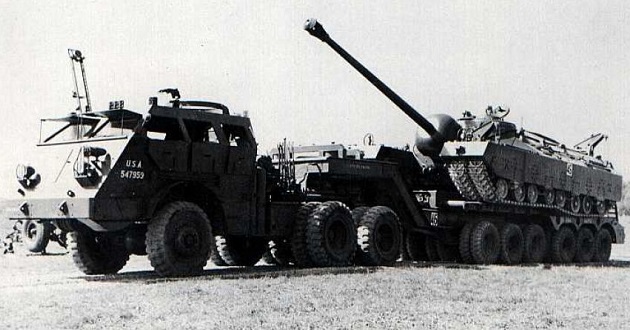
T28 No.1 loading onto a T67 100-ton Semitrailer and M26 tractor at Aberdeen firing range on October 3rd.
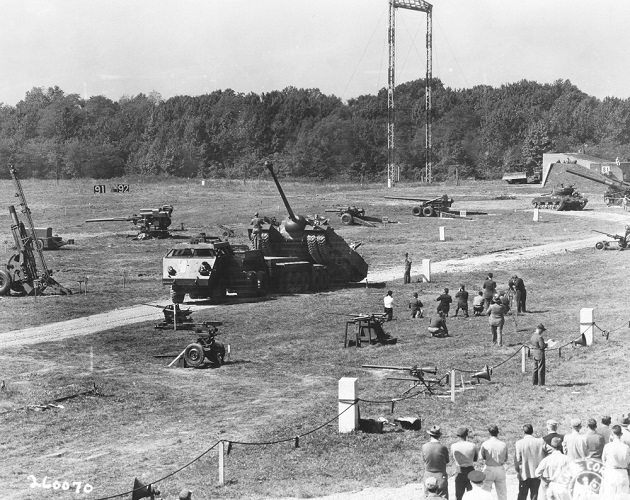
This is my close up of the T28 in the above photo.
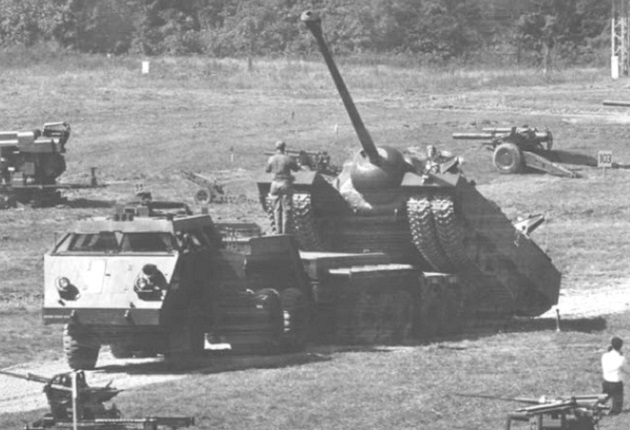
A close up photo taken after the T28 was loaded. The T67 trailer was more than capable of carrying the T28’s massive weight, but the M26 tractor was barely able to pull such a heavy payload.
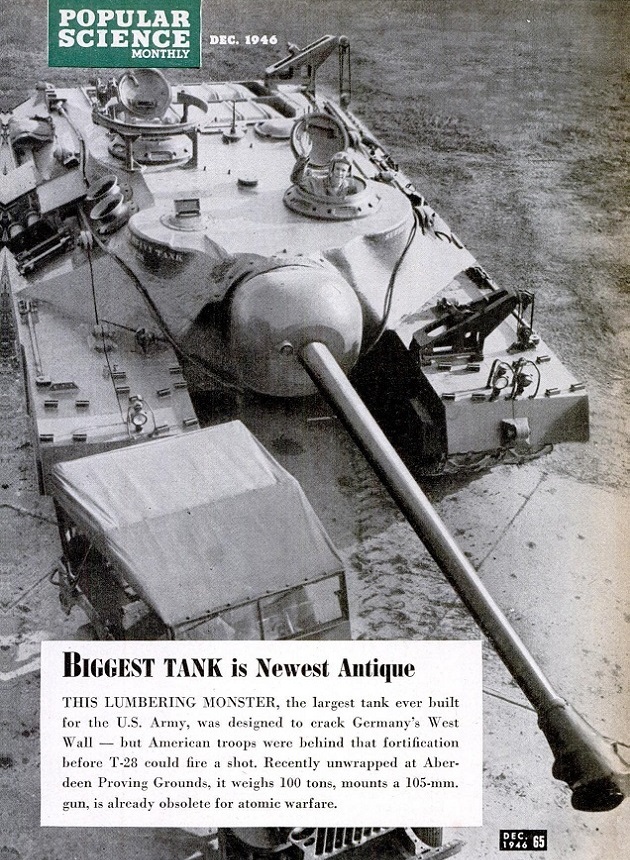
This single page article in the December 1946 issue #65 of Popular Science Monthly states the T28 was the US Army’s “Newest Antique”.
A T28 Loss
Under the direction of the US Army Corps of Engineers, T28 No.2 was to be used to test various floating bridges. However, these tests were cut short for two reasons. The first of these was the canceling of the T28 program, which was first considered in October 1947. The second was the total destruction of T28 No.2. Although most sources concerning the incident are vague, it was determined that T28 No.2 suffered a catastrophic engine fire in late 1947 while at Yuma. The damage was reportedly so severe that the only course of action was to scrap the vehicle. The number of T28 Prototypes had then dropped from two to just one.
Testing of the first T28 prototype at Aberdeen Proving Ground concluded on 18 August 1947, and the first conclusive report on the vehicle was submitted on 9 October 1947. The report, as a result of the many shortcomings noted during tests of the vehicle, concluded that the massive weight with an inadequate engine, had critically reduced the mobility of the vehicle. From the standpoint of mobility, reliability, and performance, the Super-Heavy Tank T28 was unsatisfactory.
Although the official termination of the T28 program did not occur until 11 August 1949, all developmental work on the vehicle effectively ceased following Aberdeen’s report. After that point, the remaining T28 was relegated to the role of a testing aid vehicle, with its impressive weight it was used to evaluate the weight limits of tank trailers, bridges, and landing crafts.
The T28 is used in test loading a T79 100-ton Semitrailer in April 1948.
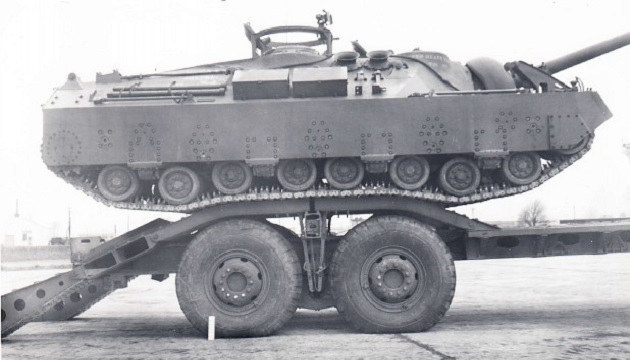
The most notable of these heavy load tests were executed between April and May 1948 under the direction of the US Navy. Although they recognized the obsolescence of the T28, the US Navy wanted to gather experience with transporting heavy vehicles to prepare themselves for future heavy tank designs.
LCT/LST Testing
The T28 was transported to Little Creek, Virginia, where the US Navy tests took place. The T-28 was loaded onto a Landing Craft, Tank, LCT(6) at Aberdeen Proving Ground. Sea transport was preferred to ground transport due to T28’s excessive weight (which could have damaged the State of Maryland’s public roads) and the poor early spring road conditions. A tractor was used to help move the vehicle onto the landing craft, and the vehicle was loaded backwards to facilitate easy unloading.
The T28 being loaded onto the LCT(6) at Aberdeen. A guide wire was used to keep the trailer straight as the vehicle was reversed into position.
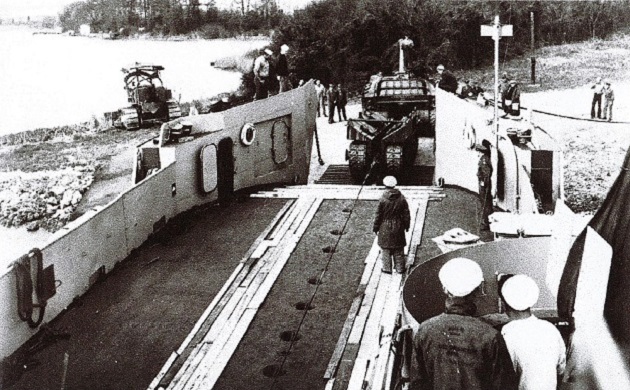
The chained down T28 aboard the LCT(6) while in transit. Note the foul weather windscreen mounted on front of the driver’s cupola.
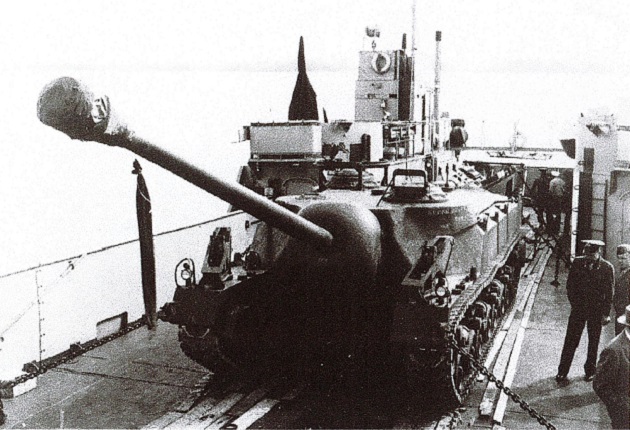
The LCT(6) met up with a Landing Ship, Dock (LCD) stationed near Howell Point, New Jersey, to begin its journey to Virginia. After arriving in Virginia, the T28 was unloaded from the LCT using a purpose built ramp and was loaded (without its outboard tracks) onto LST-1153, the tank landing ship used for the tests.
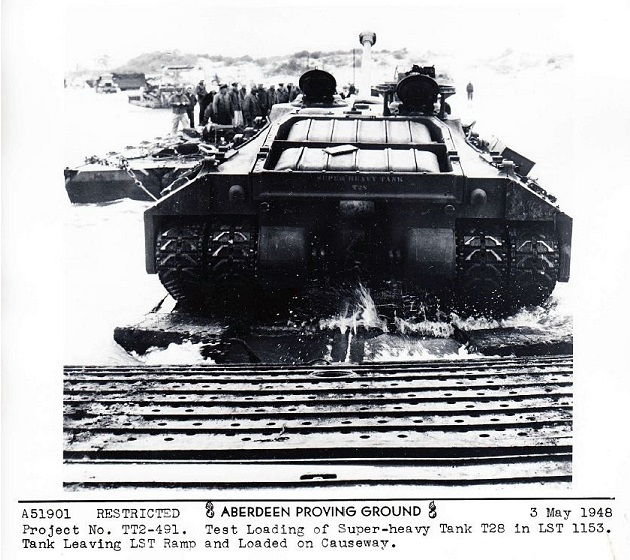
On 3 May 1948, the T28 unloading from the LCT(6) at Lynnhaven Roads, Virginia (Virginia Beach, east of Norfolk).
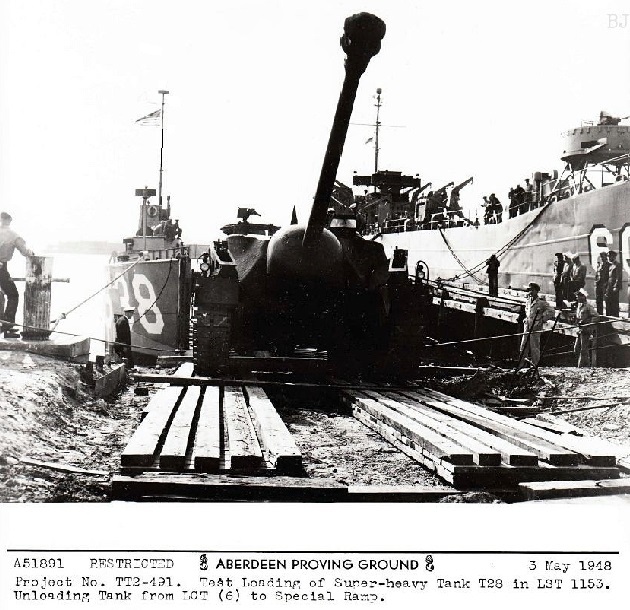
The T28 being loaded onto LST-1153.

The loading procedure was a success, and the T28 fitted with its outboard tracks disembarked from LST-1153 and was loaded aboard LST-1153 again. This was also a success, although it was noted that there was no more than 1 in (25.4 mm) between each side of the tank and the ship’s guard rails. One final loading test was conducted the next day at a different nearby beach, after which the T28 was returned to Aberdeen.
A view of the T28 with its outboard tracks fitted inside LST-1153.
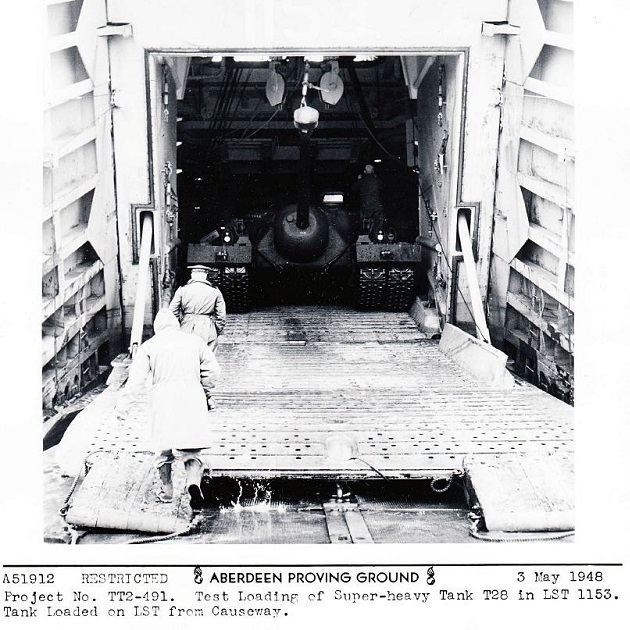
The T28 leaving the LST-1153 ramp and driving onto a causeway.
Missing T28
After the Navy trials, the T28 was occasionally used around Aberdeen Proving Ground as a testing vehicle. Its activities after 1948 were evidently of little importance and little, if any, documentation, made determining the timeline of the T28 during the 1950s and 1960s very difficult. It can be confirmed, according to Captain J. R. Shrader of Chicillocothe, Ohio, that the T28 was kept in working order at Aberdeen until at least February 1964.
The T28 seen at the Aberdeen Proving Ground on 8 March 1951. The “ERDL” on the tank’s right front mudguard indicates that it was under the command of the Engineer Research and Development Laboratory (ERDL).
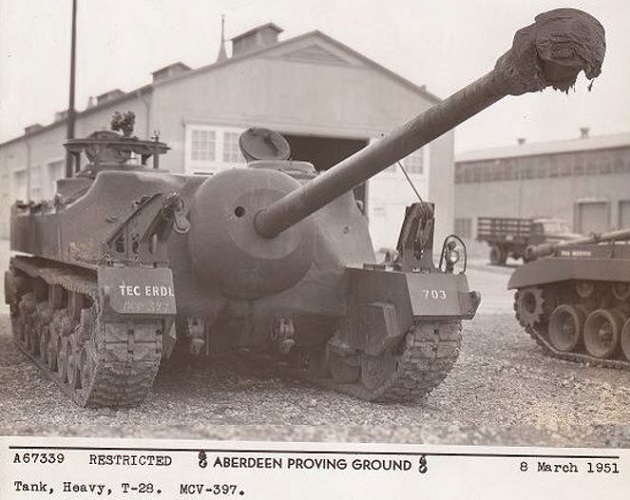
The ERDL was a US Army Corps of Engineers research facility located at Fort Belvoir, Virginia. The ERDL established the first US Army research group dedicated to night vision systems in 1954, called the Research and Photometric Section.
In February 1964, Shrader was a private on a work detail painting the T28 at the Aberdeen Proving Ground. One night, as he was coming back from the “1-2-3 Club”, he saw the T28 driving out of the base’s industrial area. As it was moving, the ground moved under his feet, not a lot, but enough to let him know that about 100 tons had just passed. He never saw the T28 again.
Not long after Shrader seen the tank leaving Aberdeen, the T28 appeared to drop off the face of the earth completely. The tank did not appear in Aberdeen’s equipment lists and sources from the late 1960s claim that the remaining T28 Prototype was broken up for scrap during the Korean War, but this would later prove to be false.
T28 Found
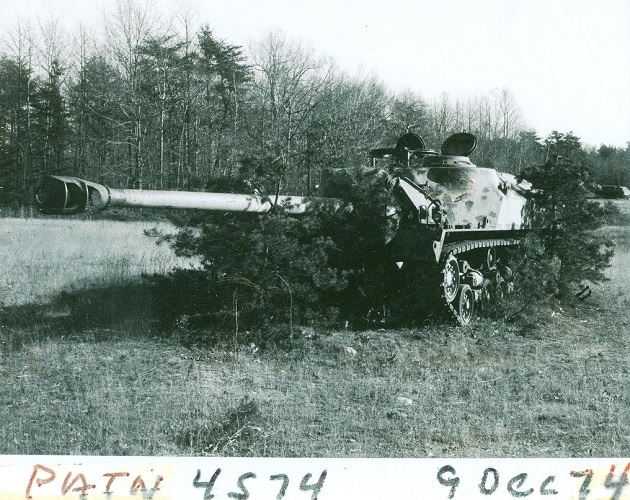
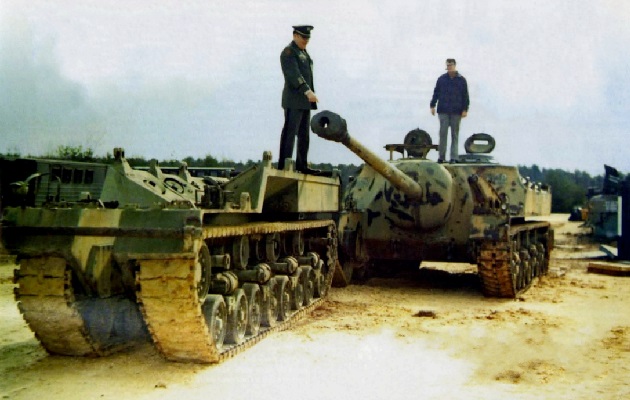
Sometime in 1974, an Army Reserve Captain Gil Burhmann, working at Fort Belvoir, Virginia, sent a letter to the Office of the Chief of Military History claiming there was a T28 tank sitting on a classified night-vision testing range at the fort. The historian who received Captain Burhmann’s letter immediately went to confirm the claim and saw the weather beaten and brush covered (yet remarkably intact) Super-Heavy Tank T28. How it got there was a mystery, but the historian immediately contacted the Patton Museum at Fort Knox to arrange for the vehicle’s recovery. The Patton Museum’s curator thought it was some kind of a joke until photographs of the forgotten tank were provided, at which point plans were made for the Army Reserve to disassemble and transport the tank to the museum.
Photo of the T28 when it was rediscovered in 1974.
Chief Warrant Officer 3 Odis M. Smith of the US Army MERDC (left) and Major Norman Carey of the US Army Office of Military History (right) inspect the T28 on 17 April 1975, before it was transported to the Patton Museum.
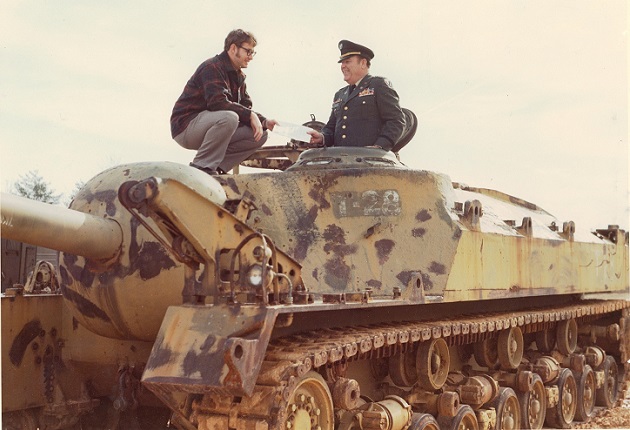
Another view of Major Carey and CWO3 Smith inspecting the T28. The tank’s outboard tracks appear just as weather beaten as the tank itself. Despite not appearing near the T28 when it was found, the outboard track units must have been somewhere in the area.
Patton Museum
The T28 arrived at the Patton Museum at Fort knox on 5 March 1975 and it was in surprisingly good shape. Despite having spent 10 years exposed to the elements, the tank and its components were deemed restore-able. The T28 was officially entered into the Museum’s collection on 15 April 1975, at which point it was noted that the tank had a few missing parts, such as the driver’s hatch direct vision block, which had allowed visitors to stuff garbage into the T28’s crew compartment. In late 1975, all parts of the T28’s power plant were removed to prepare it for outdoor display as a gate guard. A fresh coat of olive drab paint was applied to the T28 in May 1988, although it had faded to a dull reddish-brown color by the mid 2000s.
The T28 on display outdoors at the Patton Museum.

Video: T-28 Super Heavy Tank
The Patton Museum was closed on 6 September 2010, and preparations were made to ship the museum’s entire tank collection to its new home at the US Army Armor and Cavalry Museum at Fort Benning, Georgia.
Fort Benning
In 2011, the T28 arrived at Fort Benning located near Columbus, Georgia, on Georgia’s border with Alabama. The T28 sat outdoors alongside its outboard tracks while the new museum space was prepared and the collection’s other vehicles were slowly restored.
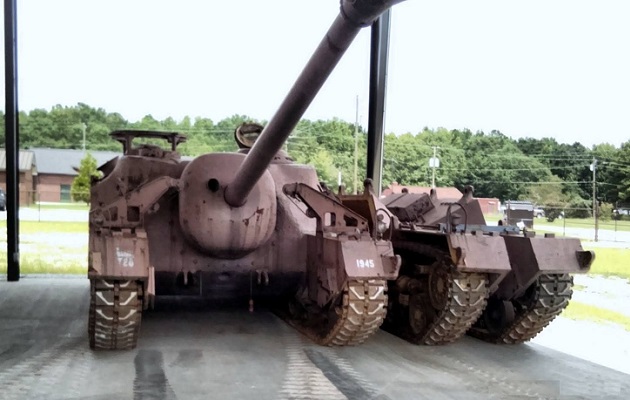
Walk around: T28 Fort Benning
The T28’s time for a proper refurbishment finally arrived in January 2017, and the vehicle was transported via Heavy Equipment Transporter (HET) to the workshop where it would be cleaned up and repainted inside and out.
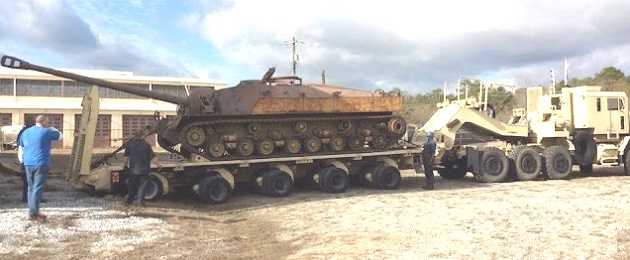
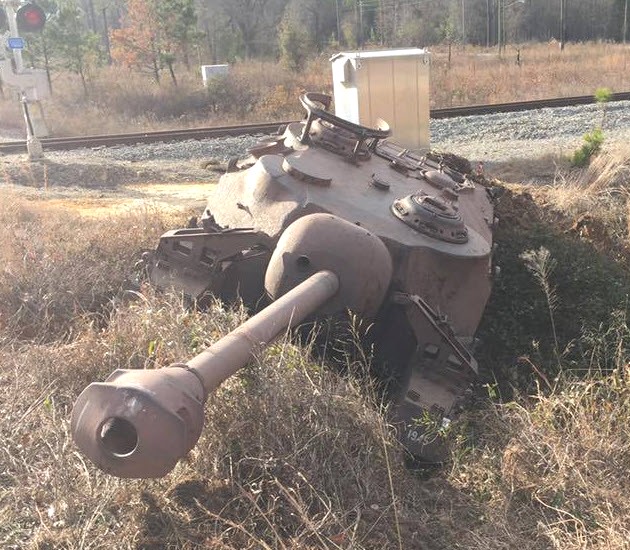
During the journey, however, an accident occurred when the HET’s brakes failed while driving downhill, forcing the driver to turn sharply. This maneuver caused the T28 to break free from its restraints and roll off the trailer and into a ditch. Nobody was injured and the T28 suffered only minor damage to a few of its suspension units. After spending about 24 hours in the ditch, the stranded tank was rescued by a pair of M88A2 “Hercules” Armored Recovery Vehicles and was reloaded on the trailer.
After a few years of restorative work, the freshly cleaned and repainted (although still non-functional) Super-Heavy Tank T28 was mated with its outboard tracks for the first time in nearly a decade in October 2020 at the newly-built Armor Heritage Training Support Facility at Fort Benning.
Video: Touring the last T28 / T95 heavy tank before the big move at NACC Ft. Benning
Video: Reassembling the Last U.S. T28 Super Heavy Tank
Video: Crew positions and interior features of the last T28 / T95 American superheavy tank
Video: What’s the difference between the T28 and T95 tank?
Video: 95 Ton T28 Super Heavy Tank towed by M88 Hercules ARV at NACC Ft. Benning
Today
Fort Benning was originally named for Brigadier General Henry Benning of the Confederate Army during the American Civil War. On 11 May 2023, Fort Benning was renamed Fort Moore after Lieutenant General Hal Moore and his wife Julia Compton Moore, both of whom are buried on post. It is the only US base named after a married couple.
On 14 November 1965, Lieutenant Colonel Moore led the 1st Battalion, 7th Cavalry, 3rd Brigade of the 1st Cavalry Division (Airmobile) during the week-long battle in the Ia Drang Valley. It was the first large scale US helicopter air assault of the Vietnam war. The 2002 film “We Were Soldiers” starring Mel Gibson and Madeleine Stowe dramatizes the battle and Mrs. Moore (Stowe) on the homefront.
The T28, alongside many other armored fighting vehicles, is currently on display at the US Army Armor and Cavalry Collection at Fort Moore.
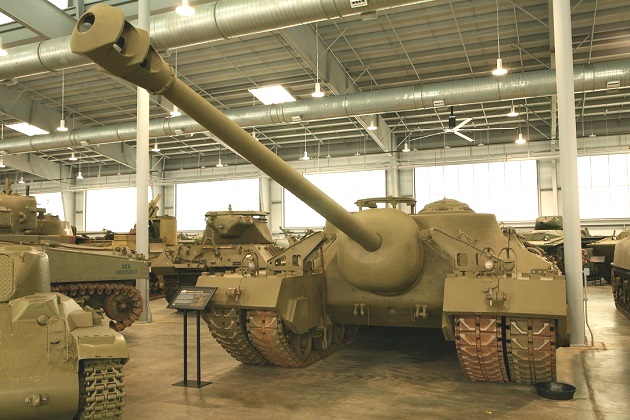
Photo: By Schierbecker – Own work, CC BY-SA 4.0

Video: Inside the Chieftain’s Hatch: T28 Part 1
Video: Inside the Chieftain’s Hatch: T28 Part 2
Trivia
The 1945 Super-Heavy Tank T28 is heavier than the current US M1A2 SEP V3 Abrams tank which weighs 66.8 tons.
Model Kits
1/35
Dragon 6750 T28 Super Heavy Tank – 2012
Dragon 6825 T95 Super Heavy Tank – 2017
1/72
5M Hobby 72039 American T28 Heavy Tank – 201?

 Mike's Research