The WWI French Renault FT light tank was probably the most revolutionary and influential tank design in history. It was the first production tank to have its armament in a fully rotating turret with separate crew and engine compartments. It saw combat in 1918, in interwar conflicts around the world and was still being used during WWII.
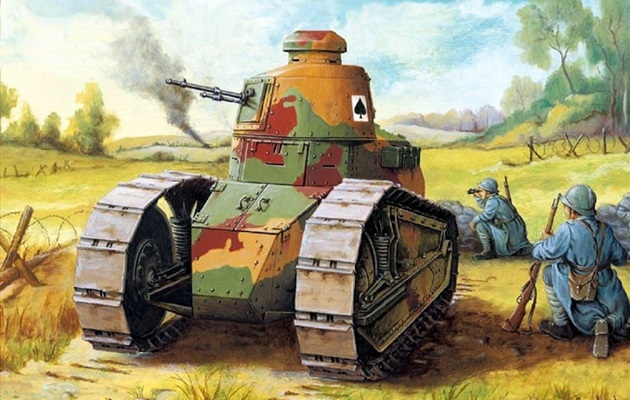
Artist: Peter Dennis (Osprey)
The early conception of the FT tank goes back to Colonel Jean-Baptitste Eugene Estienne, a pioneer of early armored theory and development. The first two French tanks of WWI, the Schneider CA and the Saint-Chamond, were both unwieldy, huge vehicles similar to their British counterparts but even less reliable and practical. Estienne envisioned a smaller, more mobile tank that could be produced quickly and support infantry assaults over rough terrain.
Schneider CA (1916)

Saint-Chamond (1917

The Renault FT tank was designed and produced by the Société des Automobiles Renault (Renault Automobile Company). The Renault corporation was founded by Louis Renault and his brothers Marcel and Fernand. It was thought that Louis Renault began working on his tank idea as early as 21 December 1915 after a visit from Colonel Estienne. Estienne had drawn up plans for a tracked armored vehicle based on the Holt caterpillar tractor, and with permission from General Joseph Jacques Césaire Joffre (Commander-in-Chief of French forces on the Western Front), approached Renault as a possible manufacturer. Renault declined, saying that his company was operating at full capacity producing war materiel and that he had no experience with tracked vehicles. Estienne later discovered that the Schneider company was working on the Schneider CA tank. During a chance meeting with Renault on 16 July 1916, Estienne asked him to reconsider which he did. Louis Renault himself conceived the new tank’s overall design and set its basic specifications. Rodolphe Ernst-Metzmaier was the Renault engineer who done the chassis and bodywork studies and developed the design of the tank.
The Name
Over the years, it been stated that the letters “FT” stood for a number of the French terms: “Faible Tonnage” (low tonnage), “Faible Taille” (small size), “Franchisseur de Tranchées” (trench crosser), or “Force Terrestre” (land force), but none of these terms are correct. The name was the two letter production code that all new Renault projects were given for internal use. It was also called the Char Mitrailleur (Machine Gun Tank) “Mosquito”. Later it was called the “Victory” tank.
Note:
The Renault FT is sometimes referred to as the “FT 17” or “FT-17” in English literature. This is incorrect as all official French documents referred to the tank as the “Renault FT”. The number 17 was most likely added to the name sometime after WWI to indicate the year of its design.
Specifications


Crew: 2 (Commander, Driver)
Length: 4.10 m (13 ft 5 in) or 5.00 m (16 ft 5 in) with tail
Width: 1.74 m (5 ft 9 in)
Height: 2.14 m (7 ft 0 in)
Armor: 8 to 22 mm (0.31 to 0.87 in)
Weight: 6.5 tonnes (6.4 long tons; 7.2 short tons)
Main armament: Puteaux SA 1918 37mm cannon or 8mm Hotchkiss machine gun
Engine:
Renault 4-cyl, 4.5 liter, thermo-siphon water-cooled; Gasoline (petrol) pump; Engine oil pump; Zenith preset carburetor; Magneto ignition 39 hp (29 kW) at 1500 rpm.
Power/Weight: 5 hp/t (3.7 kW/t)
Transmission:
Sliding gear; four speeds forward, one reverse. One main clutch plus two subsidiary clutches (one for each of the two tracks) used for steering the tank.
Suspension: Vertical springs
Fuel Capacity: 95 liters (25 Gallons) – about 8 hours of running time
Operational Range: 60 km (37 miles)
Maximum speed: 7 km/h (4.3 mph)
The FT’s tracks were kept automatically under tension to prevent derailments, while a rounded tailpiece was added to assist in crossing trenches. The engine was designed to run normally at any angle so the Renault FT could negotiate very steep slopes without loss of power. Internal ventilation was provided by the engine’s radiator fan, which drew the air from the crew compartment and forced it out the rear of the engine compartment.
Turret
The first turret design for the FT was circular, cast steel and designed to carry a Hotchkiss 8mm machine gun. In April 1917, Estienne decided for tactical reasons that some vehicles should be capable of carrying a small cannon. The 37mm Puteaux cannon was chosen. The Canon d’Infanterie de 37 modèle 1916 TRP (37mm mle.1916) was a French infantry support gun. TRP stood for tir rapide, Puteaux (“fast-firing”, designed by the Puteaux arsenal).
This is the interior of the Renault turret. Note the 37mm Puteaux cannon breach and the racks for 37mm rounds. Below the cannon is the driver’s position.

Attempts to produce a cast steel turret capable of accommodating the cannon were unsuccessful. The first 150 FTs were for training only and were built using non-hardened steel and the first model of turret. Meanwhile, the Berliet Company had produced a new design, a polygonal turret of riveted plate, which was simpler to produce than the early cast steel turret. It was given the name “omnibus”, since it could easily be adapted to mount either the Hotchkiss machine gun or the 37mm Puteaux cannon with its telescopic sight. This turret was fitted to production models in large numbers.

In 1918, Paul Girod Forges et aciéries (Forges and steelworks) produced a successful circular turret which was mostly cast with some rolled parts. The Girod turret was also an “omnibus” design. Girod supplied it to all the companies producing the FT, and in the later stages of the war it became more common than the Berliet turret. The turret was mounted on a circular ball-bearing race, and could easily be rotated by the gunner/commander or be locked in position with a handbrake.
All three types of Renault FT turrets in one photo. The Berliet-Girod turret is the closest. The Renault turret is in the center and the Girod-Renault turret is the furthest.

The prototype was refined during the second half of 1917, but the Renault FT remained plagued by radiator fan belt problems throughout the war.
Production
About half of all FTs were manufactured in Renault’s factory at Boulogne-Billancourt near Paris, with the remainder subcontracted to other companies. The original order was for 3530 tanks.
Manufacturers:
- Renault 1850 (52%)
- Berliet 800 (23%)
- Somua (a subsidiary of Schneider & Cie) 600 (17%)
- Delaunay-Belleville 280 (8%)

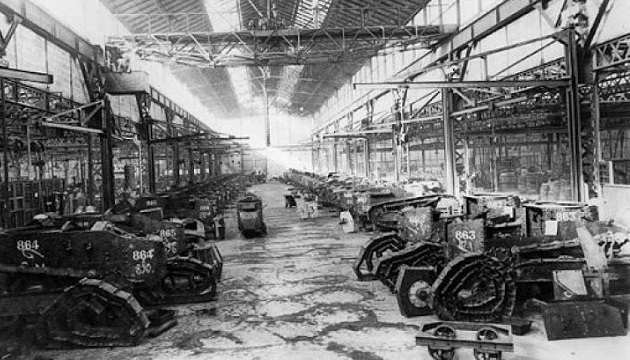
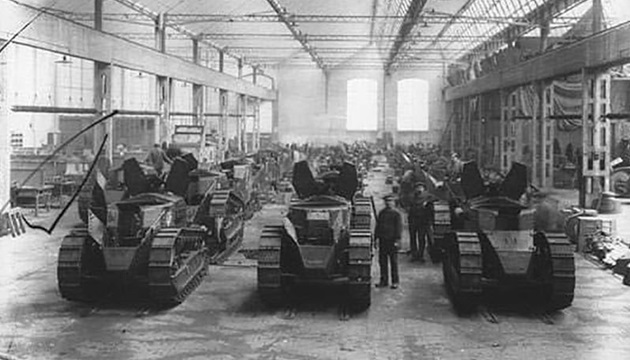
Only 84 were built in 1917, but 2697 were delivered to the French army before the Armistice was signed on 11 November 1918.
In 1918, the order was increased to 7820 and production was distributed in roughly the same proportion. Louis Renault agreed to waive royalties for all French manufacturers of the FT.
Serial Numbers
There are often 2 different numbers found on FT tanks, one is a factory number (4 digits) and the other the official acceptance number (5 digits). The permitted ranges of these numbers are detailed in No. 410 836 1/SA Ministry of Armaments and War Manufacturing/Automotive Service Management/Equipment from 1 October 1917. The Renault light tanks that the French Army received were registered in the series 66001 to 75000.
Renault tanks in No. 66xxx – 67xxx – 68xxx
Schneider/Somua tanks in No. 69xxx
Delaunay-Belleville tanks in No. 70xxx
Berliet tanks in No. 73xxx
Specific manufacturers internal numbering:
Renault tanks – No. 0001-2000
Schneider/Somua tanks – No. 3001-3601
Delaunay-Belleville tanks – No. 4001-4281
Berliet tanks – No. 2001-2801
Organization and Markings
The organization of French heavy tank units (St Chamond, Schneider) were different from the FT light tank units.
Schneider and St. Chamond units were organized as:
Groupement (3 or 4 Groups) – Group – Battery – Section (Platoon).
Renault FT units were organized as:
Regiment – Battalion – Company – Section (Platoon).
The tank carried two brands which distinguish the Battalion Group, the Group, the Company, the tank in the Group or the Company, battery or section of tank. The brand of the Group or Company was formed by a cartridge as defined below. The cartridges were painted in white on each side of the tank in the upper half of the rear panel.
Circle – Group 1 or 1st Company.
Square – Group 2 or 2nd Company.
Triangle – Group 3 or 3rd Company.
Diamond – Group 4 or 4th Company.
Each cartridge was painted 25cm (9 27/32 inches) in diameter.
The brand of battery or Section consisted of an Ace inscribed in a circle of 15cm (5 29/32 inches) painted black in the center of the cartridge as defined below:
Ace of Spades – Battery 1 or Section 1.
Ace of Hearts – Battery 2 or Section 2.
Ace of Diamonds – Battery 3 or Section 3.
Ace of Clubs – Reserve (Section d’echelon).
Variants
Char mitrailleuse:
An FT with an 8mm Hotchkiss M1914 machine gun: about 2/5 of tanks ordered, about 3/5 of tanks built.
Char canon:
An FT with a 37mm Puteaux SA18 short-barreled gun: about 3/5 of tanks ordered, about 1/3 of tanks actually built.
FT 75 BS:
A self propelled gun with a short barreled Blockhaus Schneider 75mm gun, 40 were built.
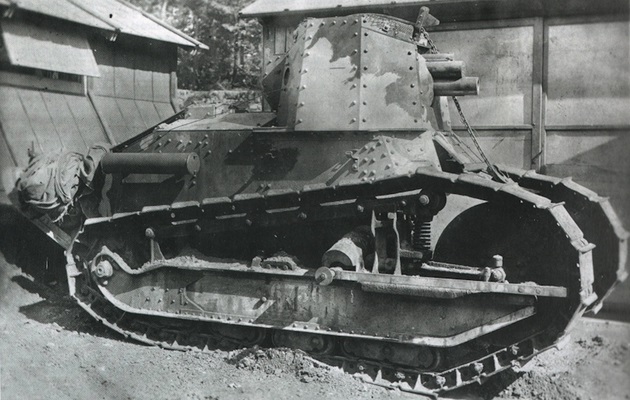
Char signal or TSF:
A command tank with a radio. “TSF” stands for télégraphie sans fil (“wireless”). No armament, three-men crew, 300 ordered, 100 built.
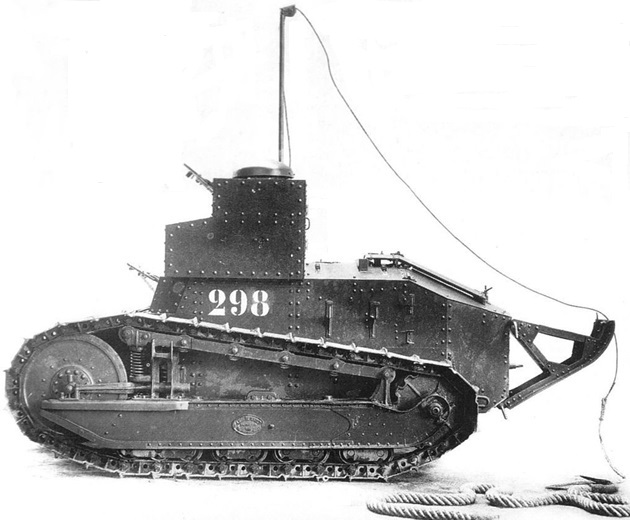
FT modifié 31:
Upgraded tanks with a 7.5mm Reibel machine gun. After trials from 1929 to 1931, this modification was made in 1933–1934 on 1000 chars mitrailleurs still in French stocks. This version was sometimes referred to as the “FT 31” which was not the official name.
FT tank dozer:
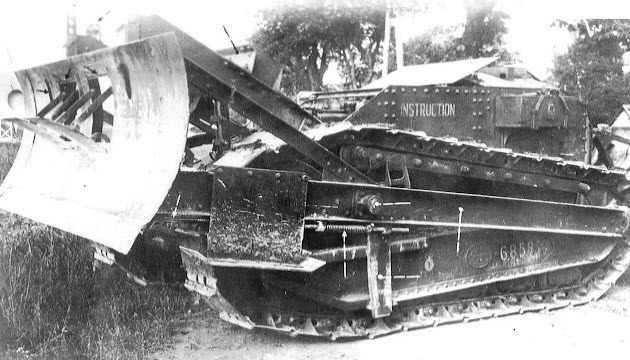
In 1936, ten tanks were converted into bulldozer tanks with a hydraulic blade mounted and two pivoting arms on the rear wheel axle. Two hinged windows in the blade gave the driver a better view. The tank was turret-less.
First Combat
The Renault FT was widely used by French forces in 1918 and by the American Expeditionary Forces (AEF) on the Western Front in the closing stages of WWI. More information on the Renault FT use in the US Army will be in another post.
Film: British Pathé – Tanks roll through devastated village
On 27 May 1918, the Germans launched a sudden and very violent offensive on the Chemin des Dames (the “ladies’ path”, today D18), overwhelming the French defensive troops under a flood of storm troopers who had been assembled in secrecy. From the first day, the German thrust reached a depth of 30 km (18.64 miles) inside the French lines, crossing the Aisne and Vesle rivers. It brought German troops on the Marne as far as Château-Thierry in the following days. The 501st Assault Artillery Regiment (501° RAS) was ordered to intercept the attacking enemy forces.
The 501° RAS comprised of the following:
Group 1: (Squadron Leader DE FORSANZ)
- Groups AS 2, AS 4, AS 5, AS 9 (Schneider CAs)
- 2 companies of the 262nd Infantry Regiment
- Section de Réparations et de Ravitaillement (Repair and Supply Section) SRR 106
Group 2: 1° BCL (Captain GOUBERNARD)
- Companies AS 301, AS 302, AS 303 (Renault FTs)
Group 3: 2° BCL (Captain WATTEL)
- Companies AS 304, AS 305, AS 306 (Renault FTs)
Group 4: 3° BCL (Major PERALDI)
- Companies AS 307, AS 308, AS 309 (Renault FTs)
AS – Artillerie Spéciale (Special Artillery)
BCL – Bataillon de Chars Légers (Light Tank Battalion)
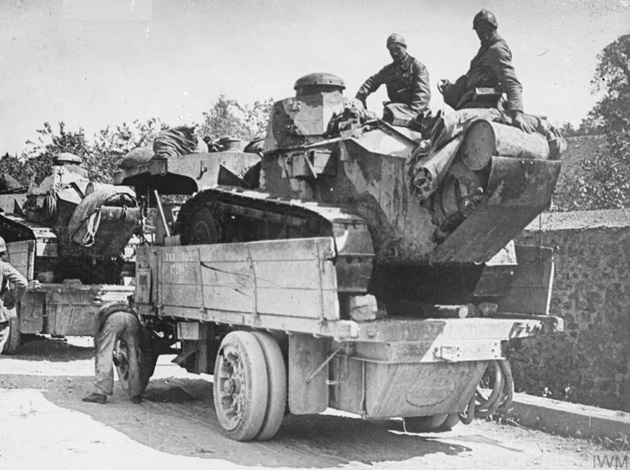
Embarked on May 30th, on trucks, trailers, and by rail, coming from several locations, the three Renault FT battalions of the 501st were directed towards the forest of Villers-Cotterets, south of Soissons on the right flank of the pocket formed by the German advance.

Renault FT tanks being transported on trucks at La Ferte-Milon (south of Villers-Cotterets), May 1918.
On May 31st at 0800 hours, two thirds of the tanks of 2° BCL were able to reach Saint-Pierre-Aigle and Dommiers, northeast of Villers-Cotterets. The situation did not allow them to wait for the rest of the battalion to arrive, because if the enemy forces the last barrier that the completely exhausted troops of the Moroccan division were barely maintaining on the plateaus south of Soissons, it will mean the collapse and probably the encirclement of French forces still fighting in the Compiègne region (west of Soissons), and the road to Paris will be completely open.
The companies of 2° BCL that were present in the attack:
- Company AS 304: Captain Lemoine with two sections (Lieutenant Dumay, S / Lieutenant Aubert)
- Company AS 306: Captain Mortureux with one section (MdL Bornier). MdL is Maréchal des logis-chef (Chief Warrant Officer).
- Company AS 305: Captain Delacommune with its three sections (Lieutenants Cornic, Charvolin, and Tracou)
The section of MdL Bornier (AS 306) was integrated into the AS 304. Therefore, there were only 2 companies with 15 Renault FTs which supported the attack of the Moroccan Division to the north of Chaudun, and the attack of the 74th Infantry Division, to the south of Chaudun.
No prior liaison could be established with the infantry. Contact was made on the firing line somewhere along the road from Soissons to Villers-Cotterets. The infantry was composed of blacks who had never seen tanks. No terrain reconnaissance could be carried out due to lack of time. Instead of a night approach, allowing the tanks to reveal themselves only at the moment of attack, it was necessary, to reach the front lines at midday on a 1500 meter (1640.42 yards) glacis under the direct view of German observation balloons. No smoke barrage and no effective support was expected from artillery dispersed by successive withdrawal movements. It would be a charge straight ahead, on unknown terrain, to stop the advancing enemy at all costs.
Captains Mortureux and Lemoine, personally leading the attack, deploying their companies in battle formation east of Dommiers, on the Chaudun, Croix-de-Fer, Missy-aux-Bois front, and at noon charge straight ahead into tall wheat fields under the falling shells of German artillery. The tanks cleared the edge of Chazelles ravine and the plateau west of Ploisy, destroying machine guns and light cannons, killing and incapacitating the German infantrymen and machine gunners, who suffered heavy losses.
Brigadier Christiaens, whose tank had broken down, dismantled his machine gun and put it in a position on the front line. Lieutenant Aubert charged a German gun that fired on his section on sight and completely destroyed it. Lieutenant Cornic’s tank caught fire, so he freed himself, climbed into another tank and continued on with the attack. Gunner Bocquillon, of 306 Company, with a serious head wound, continued to fight and only allowed himself to be evacuated after the fighting had ended on the orders of his commanders. All the tanks conducted their fight like a cavalry action. It was a line charge with the 2nd battalion, combing the Chaudun plain, forcing back the enemy clinging to the plateau where the tall wheat fields favored their advance. Using the full power of their fire, the tanks dug furrows in the enemy ranks. Six tanks, hit by shells, overturned, or broken down, remained on the battlefield. Others, damaged, managed to reach the rallying point.
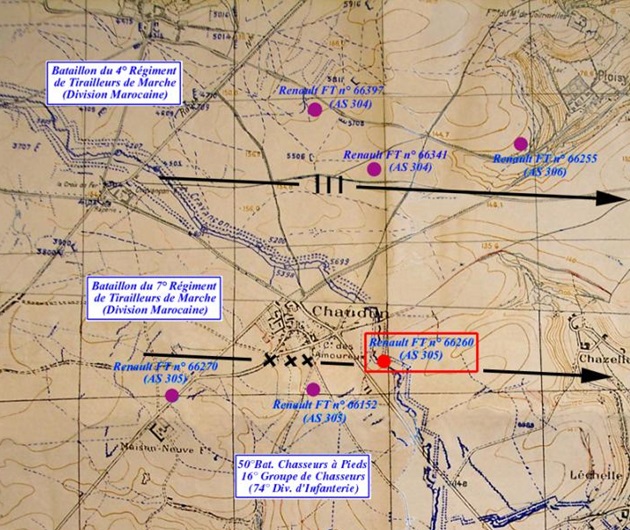

Renault FT n° 66341 (AS 304) – hit by a shell (southwest of Ploisy).
Renault FT n° 66397 (AS 304) – hit by a shell (west of Ploisy).
Renault FT n° 66255 (AS 306) – broke down (southwest of Ploisy).
Renault FT n° 66260 (AS 305) – overturned in a shell hole (southeast of Chaudun).
Renault FT n° 66152 (AS 305) – overturned (south of Chaudun).
Renault FT n° 66270 (AS 305) – overturned and burned (southwest of Chaudun).
Renault FT-17 n° 66260 of AS 305 (2° BCL/501° RAS) was the first tank captured by the Germans. The location and the date of this photo is unknown.

Soldiers of the Württemberg Gebirgs-Bataillon walk around a captured Renault FT at Noyant-et-Aconin (East of Ploisy).

The attack successfully halted the German major advances on the plateaus south of Soissons and saved the situation for the troops engaged near Compiegne and eliminated the threat to Paris.
Battle weary French tankers on their Renault FT tank. The markings indicate that Renault built this FT and it belonged to the reserve platoon of the 2nd Company.
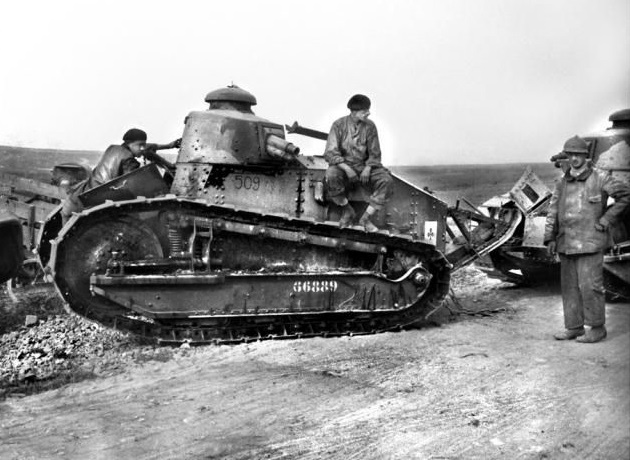
French Renault FTs and British tanks transported by rail to the Central Workshops of the Tank Corp for repair in Teneur, spring 1918.

A Renault FT at the AS depot in Vierzy (south of Chaudun), after the fighting in July-August 1918. The tank’s serial number beginning with “66” was painted on the turret.

Canadian troops in the vicinity of Arras take cover in a ditch alongside the Arras-Cambrai road in September 1918. On their left ran the Scarpe River. In the background is a Renault FT tank which is missing its gun. The soldier on the left in front of the tank is holding a folded stretcher.
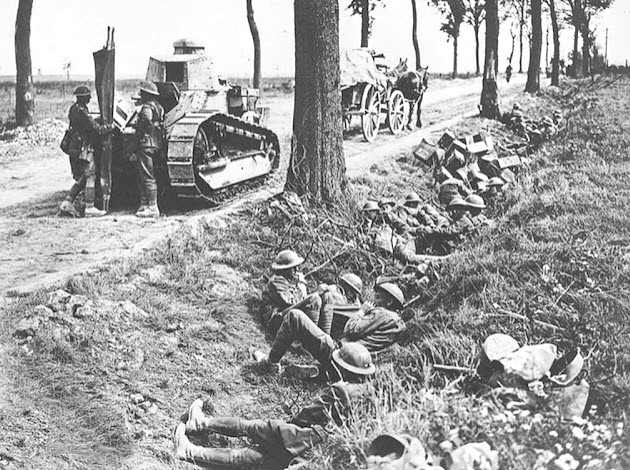
Battle of Ypres 1918
28 September to 2 October 1918:
This battle was also known as the “Advance in Flanders” or the “Battle of the Peaks of Flanders”. Unofficially, it is sometimes named the “Fifth Battle of Ypres”. On 28 September 1918, the Allied Army Group of Flanders attacked and broke through the German front to the north, east and south of the city of Ypres, Belgium. This Allied Army Group comprised of British, French and Belgian divisions was under the command of King Albert I of Belgium.
Renault FT tank on the road near St. Julien (Flemish: Sint Juliaan), Belgium, northeast of Ypres on 2 October 1918.

This is my close up of the above tank which shows the outline number 3151 on the hull side.

French Renault FT tanks on a road near St. Julien.

In six days, the Allies recaptured the territory which was lost during the German Spring Offensive in April 1918.
Post WWI
After the end of WWI, Renault FTs were exported to many countries. Renault FT tanks were used by most nations having armored forces, generally as their main tank type.
- Belgium (54 tanks bought in 1919, used until 1934 in a tank regiment and then by the Gendarmerie before being scrapped in 1938).
- Brazil (12 tanks, six with cannon, five with MGs and one TSF, bought in 1921, later joined by 28 others).
- Republic of China (~20 FTs, used by the Fengtian clique and then by the Northeastern Army).
- Independent State of Croatia (12 former Yugoslav tanks and 12 others used against partisans).
- Czechoslovakia (7 tanks, bought in 1921–1923 and used until 1933).
- Estonia (4 FTs with cannon and 8 FTs with MGs, bought in 1924 and used until 1940).
- Finland (34 FTs, used 1919–1942).
- Japan (13 FT-Ko)
- Italy (7 FTs in 1919, license built the Fiat 3000 based on the FT).
- Lithuania (12 FTs with Maxim MGs, bought in 1923).
- Poland (1st Tank Regiment was equipped with 120 FT tanks)
- Romania (74–76 FTs, including 40 tanks with cannon, bought in 1919).
- Soviet Union (built their first tank the T-18 based on FTs captured in the Russian Civil War).
- Spain (18 FTs delivered from France between 1919 – 1925, 48 delivered from France/Poland to the Spanish Republic in the mid 1930s).
- Turkey (one company of FTs, received from France in 1921 or 1928).
- United Kingdom (24 on loan in 1918, for command and reconnaissance. Returned after WWI).
- United States (License built the FT, the M1917).
- Yugoslavia (10 Renault FTs and 11 improved Renault-Kégresse tanks)
Renault-Kégresse tank:
During the 1920s, an attempt to improve the Renault FT’s overall driving performance, the French army tested a new type of suspension. The completely redesigned Kégresse type suspension consisted of eight smaller road wheels, one return roller and larger idler and drive sprockets. It employed new metal and rubber band tracks. While it offered better driving characteristics, it was only built in limited numbers, mostly due to a reduction in the French Army budget.
The wheels mounted on front is an aid for crossing trenches.

A Polish modification developed and tested in 1926, was a FT with a smokescreen generator (called: a “gas tank”). It mounted two long cylinders filled with non-lethal chemicals. The project was rejected, but the photos of this tank remained popular in the Polish and foreign press for a long time suggesting it was a chemical warfare tank.

The first conventional Soviet tank, the T-18 (sometimes called MS-1), was a close copy of the Renault FT, but with improved suspension and a larger turret. This is an initial production Soviet T-18 tank from the first batch in 1927.

Fiat 3000
Based on the Renault FT, the Fiat 3000 was the first tank to be built in series in Italy. During WWI, 1400 tanks were ordered with deliveries to begin in May 1919 but the end of the war caused the original order to be canceled and only 100 tanks were delivered.
Variants:
- Fiat 3000 Model 21 (two 6.5 mm machine guns)
- Fiat 3000 Model 30 (37mm gun, more powerful engine, improved suspension)
A FIAT 3000 model 21 with 1935 modifications (final version). Note the 4 box-shaped reinforcements (with holes) on the suspension.

A limited number of Fiat 3000 Model 21 tanks were exported to Albania, Latvia (6 in 1926), Hungary, and Abyssinia (Ethiopia) prior to 1930. The Model 21 was first used in combat in February 1926 in Libya, and subsequently also saw action against the Ethiopians in the Second Italo-Abyssinian War in 1935.
French Indochina
The first French tanks in Indochina was a platoon of five Renault FTs of the 16e BCL and it was sent for trials in Tonkin, French Indochina in December 1919. The trials proved successful enough for the tanks to be permanently stationed in Hanoi and administratively attached to the 9e RIC (Régiment d’Infanterie Coloniale – Colonial Infantry Regiment). In early 1920, several FT-17s abandoned in Vladivostok, Russia were repatriated and used to create a Cochinchina platoon, stationed in Saigon.
A Renault FT driving through a rice paddy with French troops in Tonkin, French Indochina, 1920.
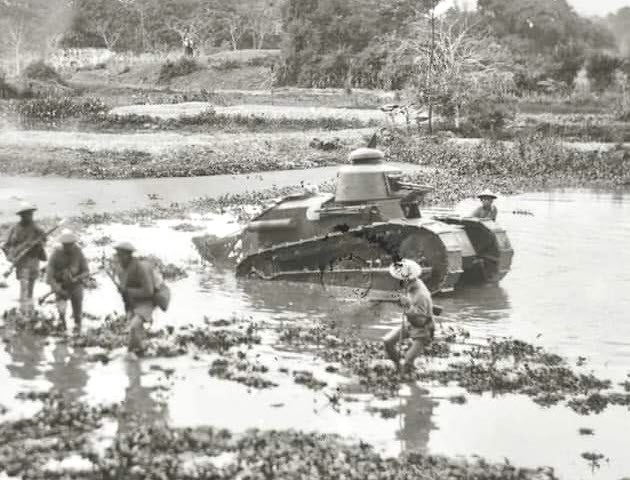
The Renault FT was found to be nearly ideal for colonial service because its low weight allowed it to use most bridges in Indochina or to be transported by boat or truck while its cross-country mobility was not greatly impaired by the terrain. Its main role was internal security and it never had to face opposing tanks in combat. The only modification for Indochina service was the replacement of the wooden idler wheels with metal ones because of the detrimental effects of the tropical climate on such vital parts.
Rif War
The Rif War was an armed conflict fought from 1921 to 1926 between Spain (joined by France in 1924) and the Berber tribes of the mountainous Rif region of northern Morocco. The Berbers under Abd El-Krim were vying for control and so the Spanish Army started a fateful expedition that would end in one of the biggest colonial defeats in history.
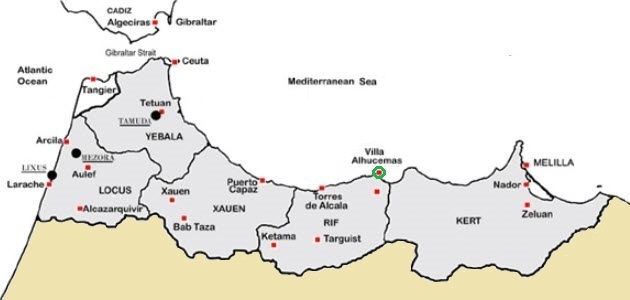
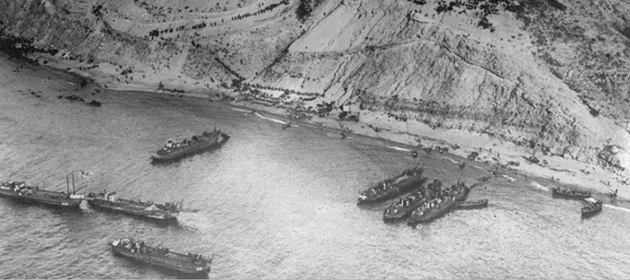
On 8 September 1925, the Alhucemas landing (also known as the Al Hoceima landing) was a landing operation which took place at Alhucemas by the Spanish Army and Navy and, in lesser numbers, an allied French naval and aerial contingent, that would put an end to the Rif War. It is considered to be the first amphibious landing in history involving tanks and seaborne air support. The landing under the command of Francisco Franco landed 12 FT tanks. The tanks were not very effective because they had serious difficulties in reaching the shore.
This photo shows the distance between the barges and the shore, but also the wooden structures used to land the tanks.
Two Renault FTs getting ready for action after landing at Alhucemas.

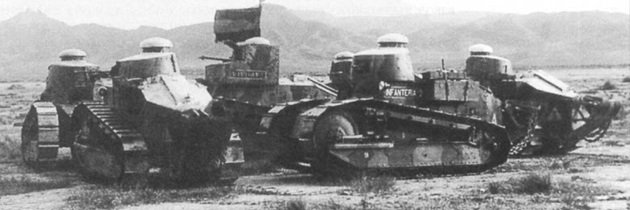
The FTs lined up in camp with a Renault TSF command tank on the far end.

In the field, the FTs formed a tank laager around the TSF command tank.
Video: The Spanish Rif War 1921-1926
Film: LET US BE TANKFUL (1930)
Japan
In 1919, thirteen Renault FTs were bought, the most common tank of the day worldwide, which became the mainstay of their early infantry tank force, under the name of “FT-Ko”. They were armed with either a 37mm Puteaux SA18 cannon or a machine gun.
Two Japanese Army (IJA) FT tanks, Kasuga, Fukuoka Prefecture, Japan, 1920s.

An unsuccessful attempt at loading a Renault FT tank into a landing craft in Japan. The wooden vessel appears to be too small to handle the 6.5 ton tank.
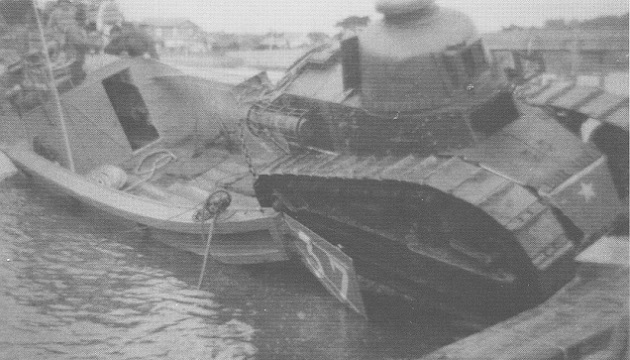
When the Manchurian Incident occurred in September 1931, the Imperial Japanese Army organized a temporary tank unit and sent it to Manchuria. The 1st Special Tank Company commanded by Captain Hyakutake had one tank platoon (Renault FT and Renault NC27 tanks).
The Renault NC27 was an updated FT with a completely new suspension system and was accepted in Japanese service as the Otsu-Gata Sensha (Type B).
On 3 January 1932, Japanese forces occupied Jinzhou, Manchuria with the local populace waving homemade Japanese flags during the night to appease the conquerors. The 1st Special Tank Company first combat was in the battle for Harbin which was defended by Chinese forces under the command of General Ding Chao.

Japanese FT tank number 105 near Jinzhou, Liaoning Province, January 1932. Note the white star on the front plate and the main gun is missing.

For seven days, the Japanese columns struggled over the frozen countryside in freezing temperatures of -30°C (-22°F). Finally, they closed in on Harbin from the west and south on February 4th. While Harbin’s inhabitants watched from their rooftops, the battle lasted for 17 hours. Ding’s troops, many of whom were poorly equipped and untrained civilian volunteers, finally broke under the fire from Japanese guns and the bombing and strafing by Japanese aircraft. The tanks had little chance to fight, because the Chinese forces had quickly withdrawn. Ding’s forces were forced to retreat from Harbin to the northeast, down the Sungari River, and was pursued by Japanese aircraft. Within a few hours, the Japanese occupation of Harbin had been completed.
This is another photo of tank number 105 probably in Harbin after the battle. Note the Japanese troops and flag in the background.

This is another Japanese FT tank probably in Harbin after the battle. Note the external stowage on the rear hull.

The suspension of the Renault tanks were fragile and caused a lot of problems. After this battle, the Renault tanks were withdrawn from combat and then were used only for training.
Spanish Civil War
The Spanish Civil War was fought from 1936 to 1939 between the Republicans and the Nationalists. It was a struggle between dictatorship and republican democracy. The Nationalist forces led by General Francisco Franco received munitions, soldiers, and air support from Fascist Italy and Nazi Germany while the Republican side received support from the Soviet Union and Mexico. Other countries, such as the UK, France, and the USA, continued to recognize the Republican government but followed an official policy of non-intervention. Despite this policy, thousands of volunteers from non-intervention countries fought in the conflict, mostly in the Republican International Brigades.
The Republicans used 10 surviving Renault FTs from the Rif War, as well as 32 FTs that were bought from France and Poland. Some were captured by the Nationalists and they used them.
A Renault FT in the capital city Madrid on 1 January 1936 before the start of the war (started on 17 July 1936). Note the penguin painted on the front hull. Its meaning is unknown.

A group of Nationalists (on the left in mixed uniforms) posing in front of a Renault FT in the center of Zaragoza, Aragon, Spain. In the background are civilians. The Republicans tried to invade Zaragoza in vain in July 1936. Another offensive failed in September 1937.
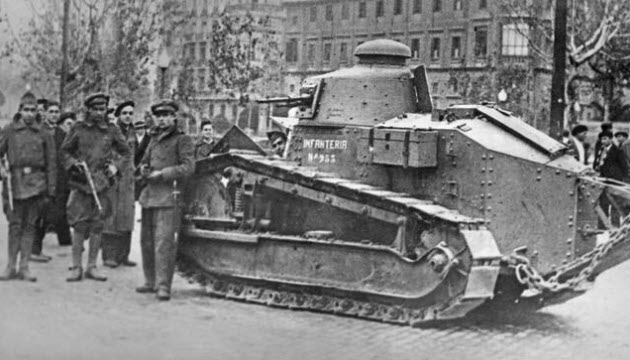
In October 1936, the Republican controlled city Madrid came under siege which lasted for two and a half years. It was known as the Madrid Front. November 1936 was the most intense fighting in and around the city when the Nationalists made their most determined attempt to take the Republican capital.
Nationalist soldiers use a captured Renault FT tank on the Madrid Front in 1936.

A Renault FT of the Republican 40th Mixed Brigade, in Plaza de Cánovas del Castillo, Madrid, 1937. In the middle of the plaza is the Fuente de Neptuno (Fountain of Neptune).
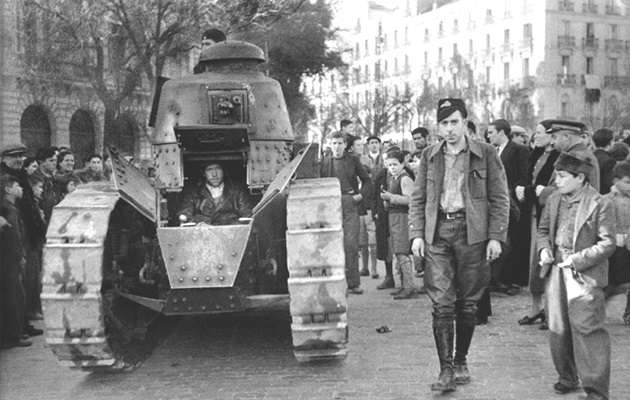
Republican troops of an International Brigade with a Renault FT tank on 1 February 1937. The location is unknown.

On 26 March 1939, the Nationalists started a general offensive, on March 28th the Nationalists occupied Madrid and, by March 31st, they controlled all Spanish territory. Franco proclaimed victory in a radio speech aired on April 1st, when the last of the Republican forces surrendered. The Nationalists ruled Spain until Franco’s death on 20 November 1975.
Brest Fortress 1939
The fortress of Brześć (today Brest, Belarus) is located at the confluence of the Bug and Muchawiec (today Mukhavets) Rivers east of Warsaw. Occupying the site of a medieval castle, it was strengthened and rebuilt in Napoleonic times and then again in 1847. Heavily damaged during WWI, the fortress was turned into a matériel depot and its central area into a prison. Although largely obsolete by contemporary standards, the fortress occupied a strategic position in the Polish lines and its defense could prevent German forces from crossing Polesia into Lesser Poland and Galicia to the south. The objective of the German XIX. Armeekorps was to seize the fortress in order to prevent elements of a divided Independent Operational Group Narew under General Młot-Fijałkowski from retreating southwards and joining the rest of the Polish forces.
At the end of the summer 1939, the fortress was housing marching battalions of the 82nd and 35th infantry regiments and elements of various smaller units. A large number of newly mobilized reservists started to arrive at the fortress, awaiting deployment to other units. From these units, General Konstanty Plisowski organized a force of roughly three infantry battalions, supported by an engineering battalion, several batteries of artillery and two companies of tanks (Nos. 112 and 113) which were used for training.
This is an overview of the Brest Fortress. The highlighted island in the center is the Citadel. The bug River flow up from the south and veers to the west (left). The Muchawiec flows from the east, surrounds the Citadel and flows into the Bug River. Location number 3 on the top center of the map is the north gate.

On 14 September 1939, 77 panzers of the II. Abteilung of Panzer-regiment 8, 10. Panzer-Division, reached the area of Brześć and attempted to capture the fortress on the run. The probing attack was repelled by Polish infantry and the 113th company of light tanks, consisting of 12 Renault FT tanks. All the Polish FTs were either captured, damaged or destroyed, but the German forces were forced to retreat back to their initial positions.
A Polish Renault FT stuck in mud near the fortress.

The German artillery arrived and started bombardment of both the fortress and the town. Heavy street fighting ensued. At dawn approximately half of the town was in German hands, the other half being defended by Polish infantry. Polish anti-tank weapons, artillery and AA guns were very scarce and were unable provide enough support for the infantry. The following day Polish defenders withdrew from the town, but heavy casualties on both sides prevented the German units from continuing the attacks on the fortress. Instead, it was constantly shelled with artillery and bombed by the Luftwaffe.
The main assault on the fortress started in the early morning of September 16th. The Polish defenders had plenty of light arms and small arms ammunition thanks to the munitions depot in the fortress, but they only had a few anti-tank weapons and insufficient artillery support.
German officers examining a disabled Polish Renault FT next to one of the munitions bunkers located on the north side of the Citadel (see above map). Note the bunker is built into a hillside for protection.

This is the right side view of the disabled FT tank above.

The German infantry was repelled and the German panzers were halted by Renault FT tanks blocking the north gate of the fortress and by nightfall it became apparent that the German pressure made the fortress untenable.
Despite heavy losses, the German 20. Motorisierte Infanterie-Division and the 10. Panzer-Division captured the northern part of the Citadel. At dawn, Plisowski ordered part of the Polish forces to retreat from the easternmost fortifications and regroup to the other side of the river and southwards. The evacuation was completed by early morning, on the 17th. After the last unit crossed the bridge, it was blown up to hinder the Germans. An hour later, elements of the German 76. Infanterie-Regiment entered the fortress almost unopposed.
German soldiers are examining the barricaded north gate. In the mouth of the tunnel building blocks are piled up and inside the tunnel the turrets of 3 FT tanks can be seen.

This is a well known photo of inside the north gate tunnel showing 2 FT tanks. The Germans must had towed out one of tanks.

Bundesarchiv Bild 135-bild-101i-121-0007-24
This is the view of the other side of the two FT tanks in the above photo.
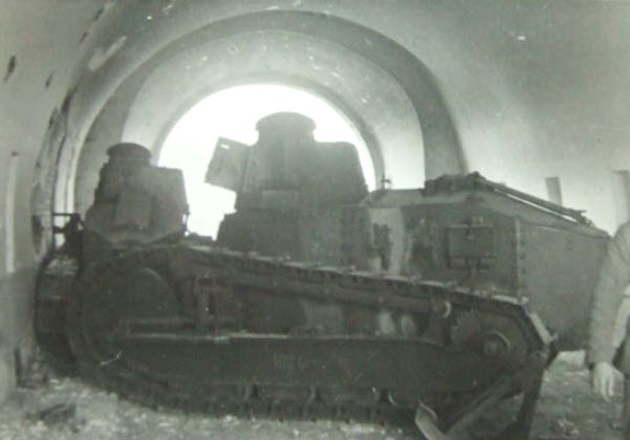
This is inside the rebuilt north gate tunnel today.

Soon afterwards, the Russians invaded Eastern Poland and occupied the fortress as per to the German–Soviet Treaty. When the Germans launched Operation Barbarossa on 22 June 1941, the Brest fortress was on the front line and the German Wehrmacht attacked without warning. The Soviets were taken by surprise and initially failed to form a solid front. By 0900 hours that day, the fortress was completely surrounded. The Soviet defenders held out for one week.
Winter War
On 30 November 1939, the Soviet Army invaded Finland which became known as the Winter War. The obsolete Renault FTs were the main core of the Finnish Army and they were ineffective against the Soviet tanks. The FT tanks most important contribution to the war effort was that they towed at least 27 captured Soviet armored vehicles off the battlefield which were repaired/modified and pressed into Finnish service. They were also used as defensive pill boxes and for forward artillery observation.
This Finnish Renault FT was captured by the Red Army somewhere in the Karelian Isthmus.

Eight Renault FTs of the 1st Tank Company were reported captured at the Kämärä (today Gavrilovo) railway station while waiting to be transported to the front lines to be used as bunkers. A Finnish Army report at the time indicated that those tanks were not able to drive due to mechanical problems and were disarmed. The Red Army also reported finding a Finnish FT at the Pero railway station.
France 1940
In early 1940, the French Army still had 7 front line tank battalions, each equipped with 63 FTs, one under strength tank battalion as well as three independent tank companies, each with 10 FTs, for a total organic strength of 504 FT tanks.
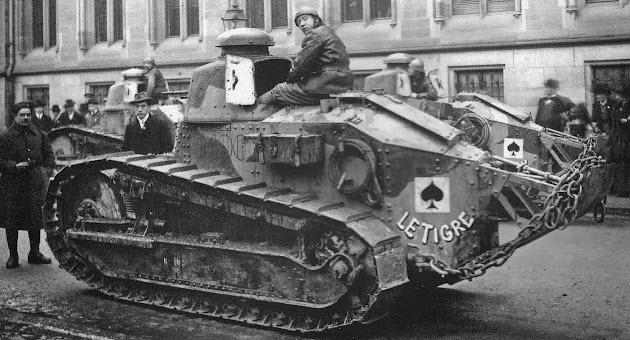
Renault FT “LE TIGRE” with Girod turret and a 8mm Hotchkiss MG is still in service. It has the number 3196 on the side hull.
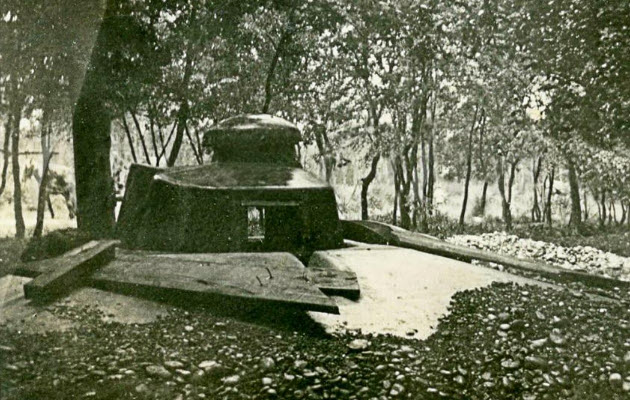
Some FT tanks had also been buried within the ground or the turret encased in concrete to supplement the Maginot Line.
On 10 May 1940, the Germans invaded Belgium, Luxembourg, the Netherlands and parts of France.
Fall of France
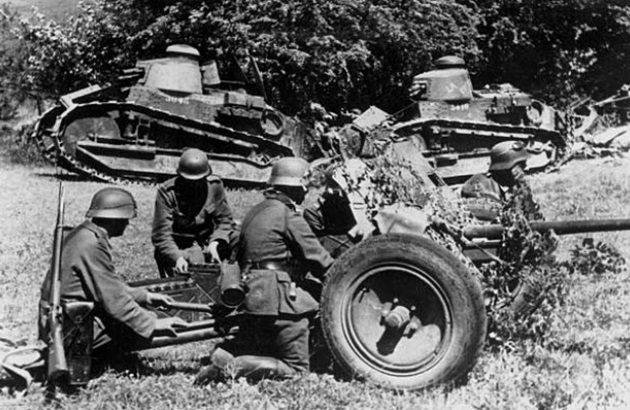
A German 37mm PaK 36 (Panzerabwehrkanone 36) anti-tank gun preparing for action somewhere near Dunkirk on 25 May 1940. In the background are two abandoned French Renault FT tanks. Just before 1900 hours on May 26th, the Allies began the evacuation of Dunkirk, Operation Dynamo.
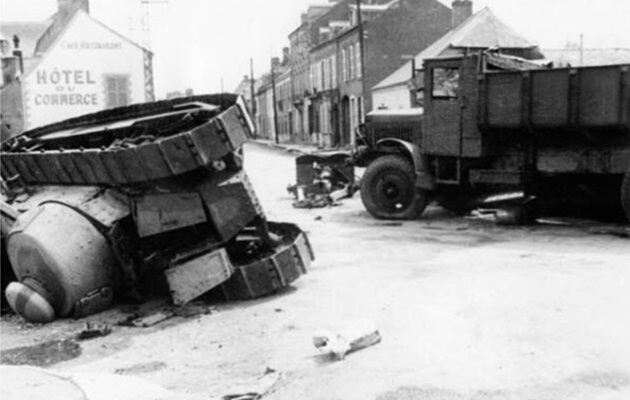
This Renault FT tank which was blocking a street in a French town was pushed over onto its side. In the background is an abandoned lorry (probably German).
Renault FT tank № 67646 abandoned on the side of a road. Some French cavalry armored vehicles carried national roundels. There were no standard for these markings.

This Renault FT tank crashed into the tree and stopped. Note the base of the tree is split and the tree is leaning against the front of the tank. It probably got caught in an artillery barrage or was being strafed/bombed by Stukas.

This color photo of a captured French Renault FT shows the camouflage colors and the general pattern.
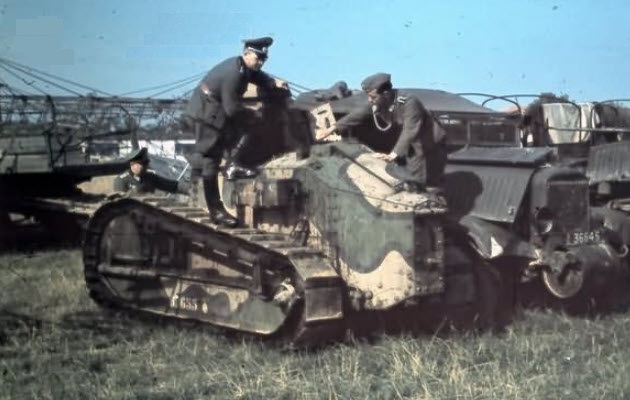
A German officer examining captured French tanks (Renault FT-17s and a R-35) at the marketplace of Soissons on 22 July 1940. The Germans were fighting Renault FT tanks 22 years earlier just south of Soissons.
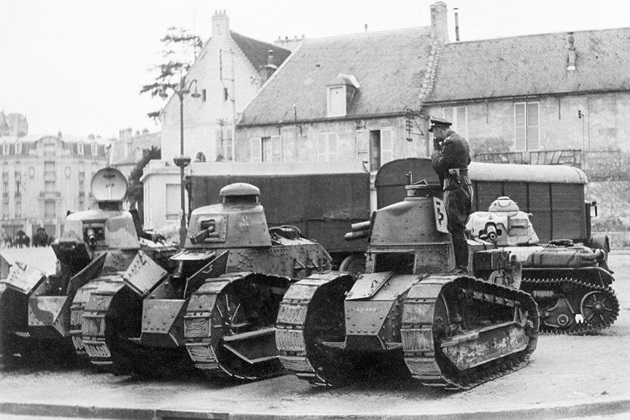
Renault FT tank № 67285 and other captured FT tanks parked in the Place de la Concorde (public square) in Paris. Renault FTs were on display in the Place de la Concorde 22 years earlier but as war heroes.
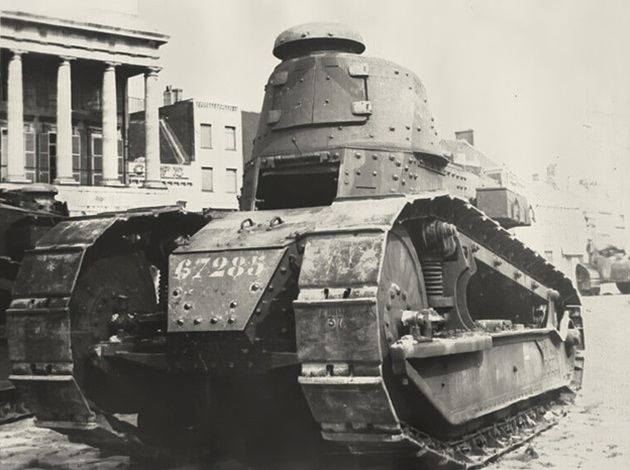
Two German soldiers inspecting an abandoned Renault FT near Coyviller, southeast of Nancy and west of Lunéville (behind the Maginot Line), 1940.

German Service
Similar to WWI, the German Army employed a large number of captured tanks. The captured vehicles were gathered in special collection points where they were examined and determine if they can be of any use. The useful captured tanks would then be repaired, modified, painted in feldgrau (field-grey) and German markings added. There were no standardization for the markings.
In German service, the captured Renault FTs were designated as the FT 17 Panzerkampfwagen 17R 730(f). The designation number 700 range was the category for tanks and 730 was for Light Tanks. The (f) indicated the producer, in this case Frankreich (France). Designation number 730c was for the cannon variant and 730m for the machine gun variant.
They were primarily used for security tasks in occupied territories, as drop vehicles for armored trains, and in independent armored units of Wehrmacht and police units.
A German soldier is painting a Balkenkreuz (Iron Cross) on the side of a Renault FT turret on 1 June 1940.

Rows of captured French Renault FT tanks in a factory hall, July 1940.

In a collection yard, more rows of captured French Renault FT tanks are awaiting processing. On the right, there is one captured French Char B1 heavy tank.
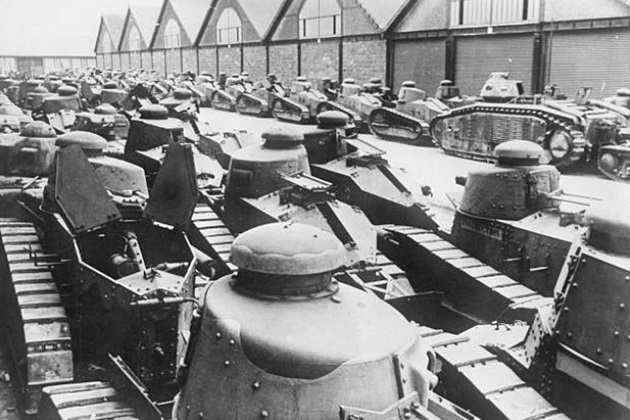
As part of Lend Lease, the US Army shipped these M1917 tanks (US licensed built Renault FTs) to the Canadian Armored Corps Training Center at Camp Borden in Ontario, October 1940. The closest tank is a TSF command tank lacking a gun. The Canadians probably only used them as targets. Note the message painted on the rear of the tank.

A small batch of captured FTs were sent to occupied Norway. Similar to the FTs in France, these tanks were placed into units to provide a weak armored core and were also used to fortify points on the Norwegian coast.
A German soldier is posing in front of a Renault FT tank in Norway, December 1940. Note the cover over the turret’s 37mm gun.

The Luftwaffe received 100 captured FTs to be used for protection (against partisans) and as towing vehicles at aerodromes and facilities. Luftwaffe FTs had WL license plates painted on the nose or the left side of the hull near the rear.
1941
This photograph was taken from an upstairs window by Frank le Page showing commandeered French Renault FT tanks driving along Rue Cauchez in St. Martin on the German occupied Channel island Guernsey.

Following the German invasion of the Soviet Union, a number of T-18s were updated with 45mm (1.8 in) guns in T-26/BT-5 gun mounts and they entered service.
These two Soviet T-18 tanks with 45mm guns were captured by German troops in one of the fortified regions, summer 1941. Note that the suspensions on these two tanks are slightly different, compare the first two road wheel.

Serbia 1941
A uprising in Serbia, Yugoslavia, started in July 1941 by the Communist Party of Yugoslavia against the German occupation forces and their Serbian collaborators in the territory of the Military Commander in Serbia. At first, the Yugoslav Partisans mounted diversions and sabotage and attacked representatives of Milan Aćimović’s quisling administration. In late August, some Chetniks joined the uprising and liberated Loznica. The uprising soon reached mass proportions. Partisans and Chetniks captured towns that weak German garrisons had abandoned. The armed uprising soon engulfed great parts of the occupied territory. The largest liberated territory in occupied Europe was created by the Partisans in western Serbia, and was known as the Republic of Užice.
After the brief German invasion of Yugoslavia (6–18 April 1941), the Germans captured 78 (out of 120) Yugoslav armored vehicles. These were transported back to Germany. Following the July uprising, the Germans were forced to allocate some of these vehicles to fight the Yugoslav Partisans. From the available stocks of captured FTs, the Germans formed 6 Zugs (platoons) with 5 tanks each. These were initially engaged against the Partisan forces, supporting the German infantry formations. Due to their general obsolescence, the FTs were replaced with more modern captured French tanks. Nearly all of the FTs were used instead to equip over 30 auxiliary and improvised armored trains that were used to protect the Axis supply lines in the Balkans. Each train was reinforced with at least two FT tanks. They were used in this role up to the end of the war. It is also possible that the Germans deployed additional FT tanks captured in France or elsewhere.
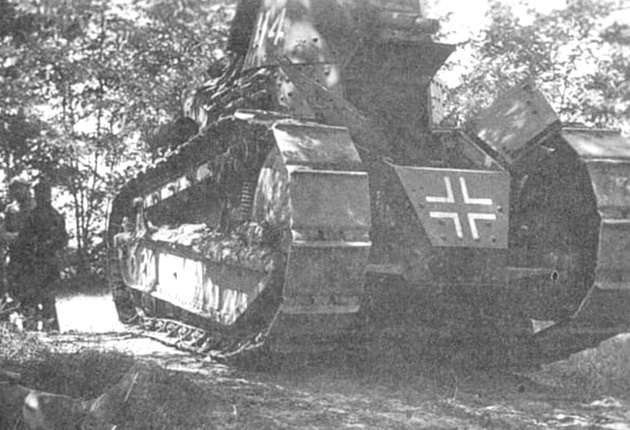

These German FT tanks are waiting to be entrained. Note the rail cars in the background.

Operation Blackstone 1942
Operation Blackstone was a part of Operation Torch, the Allied landings in North Africa. The operation called for US amphibious troops to land at and capture the French-held port of Safi in French Morocco. The landings were carried out by the 3rd Battalion, 47th Infantry Regiment, US 9th Infantry Division and took place on 8 November 1942. One platoon of the 82nd Armored Reconnaissance Battalion, US 2nd Armored Division, supported the landing at Safi.
As the GIs made their way into town, they neared the area southeast of the harbor where several army barracks were the main point of resistance. Company K and I were ordered to attack but were quickly pinned down by machine gun and rifle fire. Vichy French defenders counter-attacked the GIs with three FT tanks.
A GI fired a bazooka and hit one of the tanks, but the bazooka shells failed to explode. By then they were out of sight, but not for long. After going around the block, they were in position, ready for them with anti-tank rifle grenades. Two of the tanks were quickly knocked out by the grenades. The driver of the third FT was stunned by the explosions and action around him and drove his tank into a wall along the side of the street.
Sergeant Jackson of K Company ran to one of the tanks, pulled out the dead Frenchman and got in the tank himself. He then turned the turret by hand and began firing the 37mm gun. Jackson did not need to fire for long as a section of US mortars began firing onto the barracks and at around 1530 hours the French defenders ran up a white flag. They claimed they had been trying to surrender for a while, but the US fire prevented them from putting up the flagpole.
This is Vichy French Renault FT n° 72160 named “Le Champagne” which was driven into the wall.

This is another photo of Renault FT 72160 Le Champagne after it was pulled off the wall.

This is knocked out Vichy French Renault FT n° 74553 named “Le Lorraine”.

This is another photo of Renault FT 74553 Le Lorraine being examined by GIs and a Frenchman (on the left).
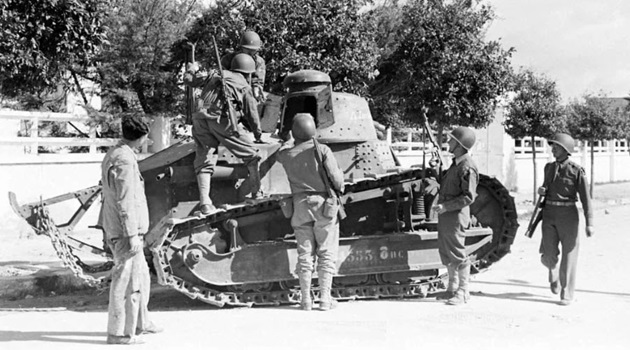
An unidentified GI is sitting in the driver seat of one of the Renault FTs. He is holding a 37mm round in his right hand and a couple of 37mm shell casings in his left hand.

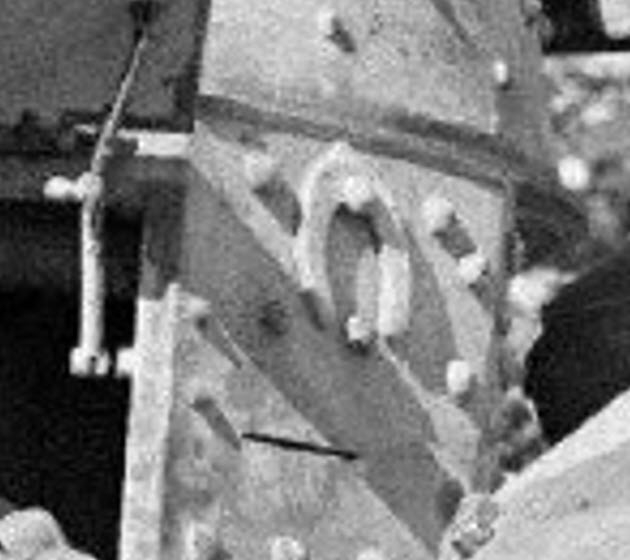
This is my close up of the above FT’s front left side armor plate. There is a horse shoe shape casted on the armor plate surface. I have not found any other photos of a FT tank with this on the front plates. Note the middle rivet goes through the shoe shape. Maybe it was added during the orginial production because this tank was built for a cavalry unit.
The location of the Renault tanks in Safi was on Rue Allal al Llan street and at the corner of Avenue Mohamed.
Operation Husky 1943
The last combat of the Italian Fiat 3000 occurred in July 1943 against US forces during Operation Husky, the invasion of Sicily.
Two companies, consisting of 9 tanks each, had been assigned to the 6° Armata (English: 6th Army). The 1ª Compagnia (English: 1st Company) was stationed in Scordia in the British sector, while the 2ª Compagnia (English: 2nd Company) was headquartered in Licata in the US sector.
The 1ª Compagnia was attached to the XII Corpo d’Armata (English: 12th Army Corps) to create machine gun nests and buried their tanks for the 207ª Divisione Costiera (English: 207th Coastal Division).
The Biscari-Santo Pietro Airfield was the Regia Aeronautica’s 504 air base east of Gela between the Italian town of Biscari (today Acate) and the village of Santo Pietro. During WWII, the airfield was fortified and defended by a joint Italian-German force. At that time, the 3 Gruppo CT; 153rd, 154th, 155th Squadriglie flying Me 109’s were based at that airfield. The airfield was used for attacks against Malta.
The 2ª Compagnia, under the command of Reserve Captain Angelotti Francesco, was part of the Gruppo Mobile H assigned to XVI Corpo d’Armata. The mobile group was stationed in Caltagirone and was defending the Santo Pietro airfield. On 10 July 1943, the unit was used to repel US paratroopers of the 504th Parachute Infantry Regiment around the airfield. The tanks, due to their extreme slowness, were transported near to the airfield on the trucks of the 23° Autogruppo. At 0035 hours, the US 3rd Paratrooper Battalion, commanded by First Lieutenant Peter J. Eaton, clashed with an Italian infantry column supported by some FIAT 3000s. The US Paratroopers forced the enemy unit to retreat, knocking out a FIAT 3000 with the fire of two 47/32 Italian guns that had been previously captured. At 1930 hours, the commander of the Santo Pietro airfield declared that 50 US paratroopers were captured in the fighting near the airfield with the support of two FIAT 3000s.
On July 13th, in order to defend the Santo Pietro airfield from an attack of the 180th Infantry Regiment, US 45th Infantry Division, the commander of Mobile Group H, Lieutenant Colonel Luigi Cixi, ordered the FIAT 3000s to position themselves on the perimeter of the airfield. The US attack started at 2200 hours. The airfield troops resisted for an hour but then had to retreat and the 2ª Compagnia lost 5 FIAT tanks.
These two Fiat 3000s and two Semovente da 90/53s mounting a 90mm Cannone da 90/53 anti-aircraft gun were captured on Sicily.

A captured Fiat 3000 waiting for the shipment back to the USA for evaluation.

1944
The Germans employed the FT 17 Panzerkampfwagen 17R 730(f) along the Atlantic Wall in France.
This Tobruk bunker with a Renault FT tank turret at Point Du Hoc took many Allied naval shell hits on 6 June 1944. It might had fired at the US Rangers who scaled the cliffs on D-Day.

The entrance to Grandcamp port (west of Point Du Hoc) was blocked by a metal net and defended by this Tobruk bunker. This photo was taken after liberation.

Two GIs inspect a Panzerkampfwagen 17R 730(f) in Brittany, France, 1944. This vehicle was on display at a US Army Ordnance depot. The number 325 is roughly painted over the bow.

This Renault FT had three owners. The Germans captured it from the French in 1940 and then in 1944 the Americans re-captured it. The device mounted on the bow armor plate is probably a German modification.
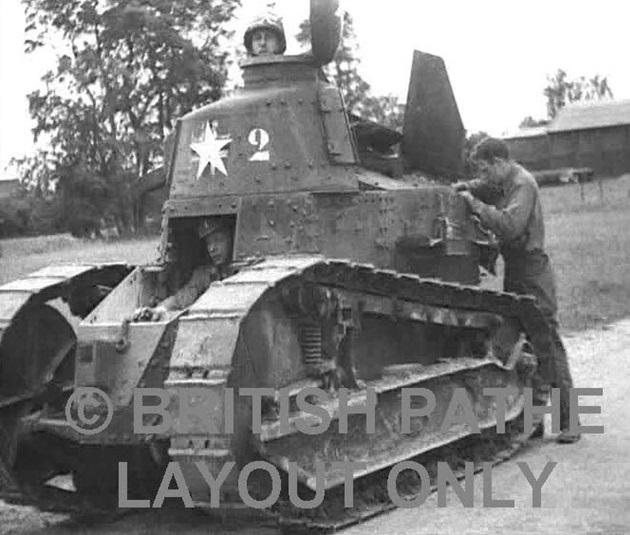
Film: Invasion Scenes (1944)
Two GIs are examining the engine compartment of a Panzerkampfwagen 17R 730(f).

In August 1944, Rouen (south of Dieppe) along the Seine River was a major crossing point on the Seine River for the retreating German forces in Normandy. The Kriegsmarine (German War Navy) had a HQ located in a château in Rouen (today it is the Rouen Business School). On August 30th, the Canadian II Corps liberated Rouen.
A building burns in Rouen probably after an Allied aerial attack. A German sailor is using a Panzerkampfwagen 17R 730(f) as a static defensive pillbox. Note that the tail skid on the rear is bent or folded down to the ground.

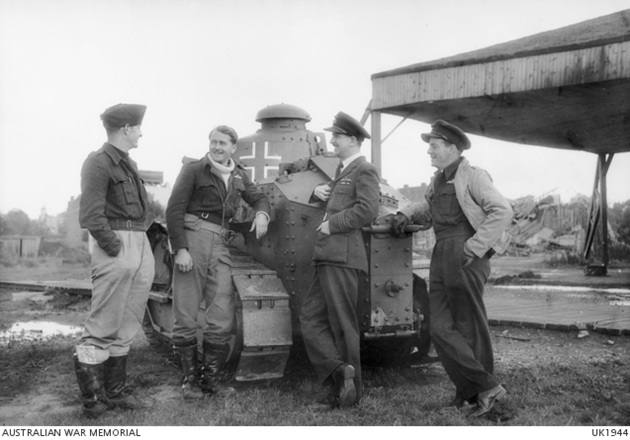
On 3 October 1944, pilots of RAAF No. 453 Squadron standing around a Panzerkampfwagen 17R 730(f) at the former German airfield Antwerpen-Deurne (I./JG 4). Liberated on September 3-4, the Allies renamed the airfield Advanced Landing Ground B-70 and 453 squadron was operating from it. Today, it is the Antwerp International Airport.
Panthers and a Panzerkampfwagen 17R 730(f) at the Vienna Armory. The Red Army liberated Vienna on 13 April 1945.

Today
There are a couple of surviving Tobruk bunkers south of Pleinmont along the coast on southwest tip of Guernsey Island.

Situated along the coast of northern Norway near the village of Kongsfjord resides the remains of Veinesodden Batteri (Gun Battery Veinesodden). This battery was expanded, to include ex-French Renault FT tanks of which one remains to this day, situated in a position overlooking the sea.

Photo: KStudio Photography/flickr
Left to rust and be picked over by souvenir hunters and scrappers, little is left. The round parts just behind the turret is the clutch and brake assembly. Preservationists received permission from the Armed Forces Museum located in Oslo, Norway to preserve and restore the tank. Missing parts were reconstructed by local metal workers and the FT-17 was given an external restoration where it rested. By 2008, the restoration was complete but not long afterwards, scrappers vandalized the tank and removed several of the rear plates. The battery was abandoned in October 1944. Four of its guns were removed but the fifth gun and other parts of the battery’s emplacements were blown up by the retreating Germans. The remains of the battery, along with this FT-17, can be visited to this day.
Video: Tank Chats #8 Renault FT-17 | The Tank Museum
Video: Meet the First Great Tank – Renault FT 17
Video: Original WWI Tank Renault FT [FT-17] Driving at Tankfest 2018
Video: Renault FT-17, restored by the Swiss Army
Video: Renault FT-17 of the Swiss Army on the move
Model Kits and Decals
1/16
Takom 1002 French Light Tank Renault FT Char Mitrailleur/Girod Turret – 2014
Takom 1003 Light Tank Renault FT Char Canon/Berliet Turret – 2014
Takom 1004 French Light Tank Renault FT-17 (3 in 1) – 2017
FC Modeltips 16201 FT-17 international Decalset – 2018
1/35
5 Star Models 35013 Polish Armored Draisine R – 2019
Meng Model TS-008 French FT-17 Light Tank (Cast Turret) WWI – 2013
Meng Model TS-011 French FT-17 Light Tank (Riveted Turret) – 2014
RPM 35060 FT-31 / PzKpfw. 730(f)
RPM 35061 Light Tank Char Mitrailleur FT17
RPM 35062 Renault FT Char Canon – 2012
RPM 35063 Light Tank Typ 79 Ko-Gata
RPM 35064 Traktor 730(f)
RPM 35065 Light Tank Char Canon FT 17 – 2000
RPM 35066 Light Tank Char Mitrailleur FT17 Renault
RPM 35067 FT 17 Gas Tank
RPM 35068 Renault TSF Command Tank – Wireless Telegraphy
Vargas Scale Models R3D-35-154 Renault (FT-17) Light Bulldozer – 2024
PanzerShop PS35298 Renault FT-17 Dozer conversion resin set – 2024
Black Lion Decals 35008 WW1 French Schneider and Renault FT-17 tanks
FC Modeltips FCM01001 Renault FT-17 Morocco war & Spanish Civil War Decals – 2016
FC Modeltips 35225 FT-17 international Decalset – 2018
HISTOPIC 35001 Renault FT France 1917-18 Decalset
Star Decals 35-C1350 French Fighting Vehicles in Africa # 3 – 2022
1/48
F&A Miniatures FA-48015 FT-17 (3D Printed Kit)
1/72
ALBY 918 RENAULT FT17 cast turret
FlyHawk Model FH 3000 Renault FT light tank with cast turret – 2014
FlyHawk Model FH 3001 Renault FT light tank with riveted turret – 2014
FlyHawk Model FH 3009 Renault FT 75 BS – 2019
First to Fight PL1939-013 Renault FT light tank – 2014
First to Fight PL1939-021 Renault FT light tank with 37mm gun – 2015
HäT (Hat) 8113 Renault FT-17 with 37mm Cannon – 2005
HäT (Hat) 8114 Renault FT-17 with Hotchkiss Machine Gun – 2005
PANZER GARAGE 72020 Renault TSF + KIT FT 17 – 2015
ROP o.s. Samek Models F72/112 Atlantický val 1939-1945 Lehký objekt – Renault FT-17 – 2011
RPM 72200 Char canon Renault FT cast turret with 37mm Puteaux gun – 2002
RPM 72201 Char mitrailleuse Renault FT cast turret with 8mm Hotchkiss MG – 2002
RPM 72202 Char FT modifié 31 – Pz.Kpfw. 730(f) cast turret with 7.5mm Reibel MG – 2002
RPM 72203 FT-Ko light tank Renault FT in japanese service – 2002
RPM 72204 Char canon Renault FT riveted turret with 37mm Puteaux gun – 2002
RPM 72205 Char mitrailleuse Renault FT riveted turret with 8mm Hotchkiss MG – 2002
RPM 72208 Renault FT Polish gas tank – 2003
RPM 72209 Renault FT TSF command tank with radio France 1918 – 2003
SSMODEL SS72833 Japan Renault Otsu Light Tank – 2024
Sphyrna HTP 2001 Renault FT-17 Light Tank – 2024
FC Modeltips 72201 Renault FT-17 in Spain Decalset – 2017
 Mike's Research