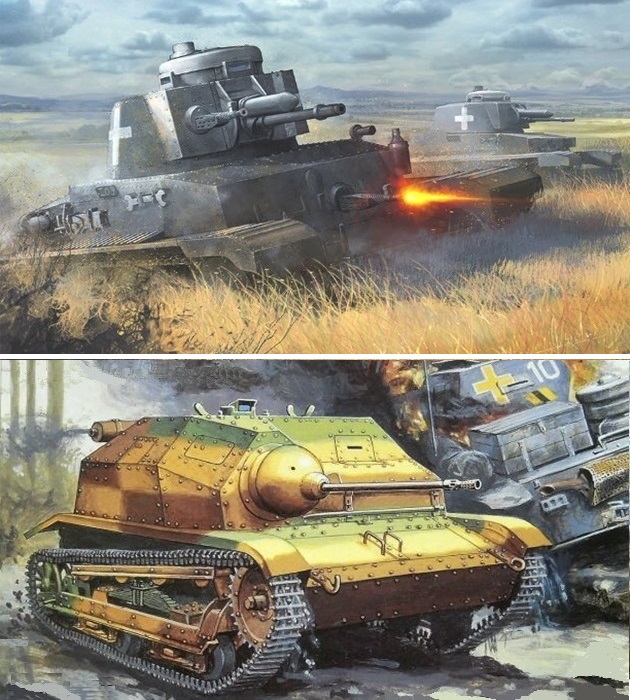
The invasion of Poland, also known as the September Campaign, Polish Campaign, and the Polish Defensive War of 1939 (1 September to 6 October 1939), was a joint attack on Poland by Germany and the Soviet Union, which marked the beginning of WWII. During the invasion, Polish Cadet Officer Edmund Roman Orlik became the first tank ace.
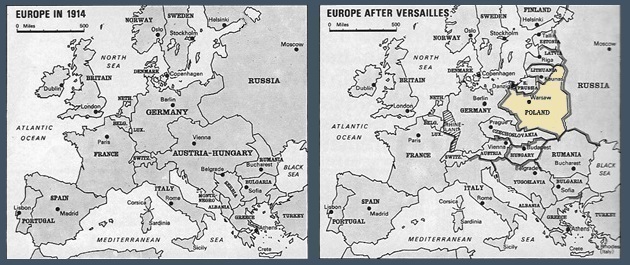
The Kingdom of Poland existed in central Europe during the medieval and early modern periods from 1025 until 1795. After more than a century of partitions between the Austrian, the Prussian, and the Russian imperial powers, Poland ceased to exist as a sovereign and unified state for 123 years. The Polish people were divided among its neighboring countries.
At the end of WWI on 11 November 1918, the Second Polish Republic was established with Józef Klemens Piłsudski as the Provisional Chief of State. November 11th became Poland’s Independence Day. The Allies agreed on the reconstitution of Poland, confirmed by the Treaty of Versailles signed on 28 June 1919.
Poland solidified its independence in a series of border wars fought by the newly formed Polish Army from 1918 to 1921 mostly against the Soviet Union. In early October 1920, the combatants on both sides had realized that they could not win a decisive military victory. The wars ended with a ceasefire on 18 October 1920, and peace negotiations led to the Peace of Riga, signed on 18 March 1921. The treaty divided the disputed territories between Poland and Soviet Russia. Despite the final retreat of Soviet forces and the annihilation of three Soviet field armies, historians do not universally agree on which side was the victor. The war’s main territories of contention lie in what is today Ukraine and Belarus.
In March 1938, Germany annexed the entire nation of Austria in an event known as the Anschluss (meaning “joining” or “connection”). After intense political pressure and threats of invasion from Adolf Hitler, German troops marched into Austria on 12 March 1938. The annexation was formalized the next day, absorbing Austria directly into the German Reich.
The European nations had pursued a strategy of appeasement, giving Hitler what they deemed reasonable concessions, in order to avoid an all-out war. The strategy reached its apex when Britain, France, Germany and Italy signed the Munich Agreement on 30 September 1938. It gave Germany the German-speaking part of Czechoslovakia, known as the Sudetenland, on the condition that he would not invade any more territory. However six months later, in March of 1939, Hitler violated the Munich Agreement by absorbing all of Czechoslovakia.
Following the occupation, the Germans seized a number of vehicles from the Czechoslovak Army. The seizure included a mix of modern light tanks and older support vehicles.
LT vz. 35
Approximately 244 LT vz. 35 light tanks were seized directly from operational Czechoslovakia army stocks. In German service, these tanks were named Pz.Kpfw.35(t) (“t” for tschechisch, or Czech) and 39 equipped the Panzer-abteilung (Panzer Battalion) 65 of the 1. Leichte (Light) Division and 81 equipped the independent Panzer-Regiment 11.
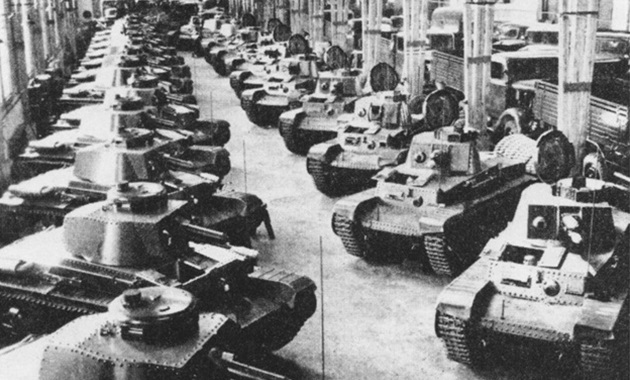
This is the main assembly floor of the Škoda Works plant in Plzeň, Czechoslovakia. On the left are two rows of LT vz. 35 tanks. In the upper right are Škoda 6ST6-L 6×4 cargo trucks.
This 1939 photograph shows a German operated LT vz. 35 (right) towing a Tatra T-III prototype. The LT vz. 35 still retains its original Czechoslovakian camouflage. Only two Tatra T-III medium tank prototypes were built in 1936.
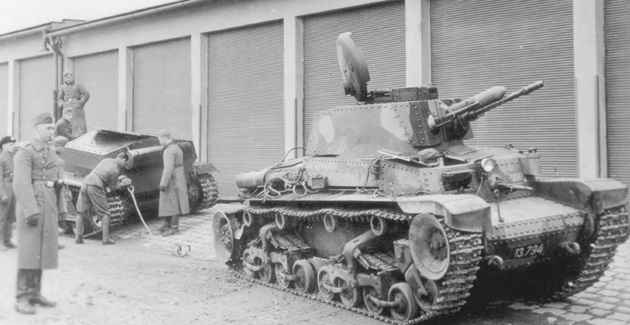
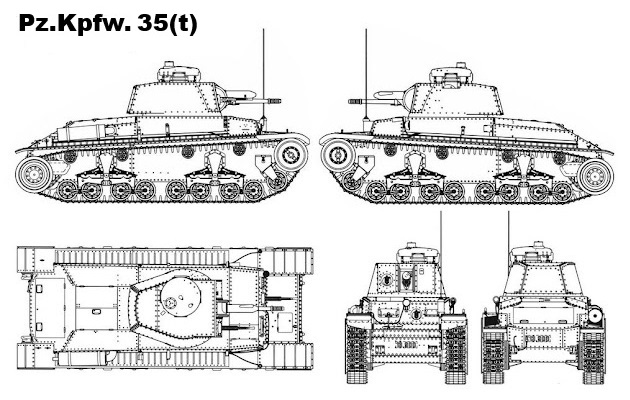
Pz.Kpfw.35(t) Specifications:
Crew: 4 (3 in the original design)
Weight: 10.5 tons
Length: 4.90 m (16 ft 1 in)
Width: 2.06 m (6 ft 9 in)
Height: 2.37 m (7 ft 9 in)
Armor: 8–25mm (0.31–0.98 in)
Main armament: 37mm (1.5 in) KwK 34(t) gun
Secondary armament: 2 x 7.92mm (0.3 in) MG 37(t) machine guns
Engine: 4-cylinder, water-cooled Škoda T11/0 gasoline, 120 hp (89 kW)
Fuel capacity: 153 Liters (40 US gallons)
Maximum speed: 34 km/h (21 mph)
Operational range:
Road: 190 km (120 miles)
Cross-country: 115 km (71 miles)
LT vz. 38
About 80 LT vz. 38 light tanks were seized during the occupation. While the Czechoslovak Army had ordered 150 of these, none had officially entered service before the occupation. The Germans took over the remaining production.
It was first introduced into German service as the Pz.Kpfw. (3.7 cm) L.T.M.38. L.T.M. 38 was an abbreviation which stood for Leichte Tank Model 38 (light tank type/model 38), while in some sources it stood for Leichte Tank Munster. In the period between October 1939 to January 1940, the name was once again changed to “LTM 38 Protektorat” (Protectorate). On 16 January 1940, it was designated as the Pz.Kpfw.38(t) and its main weapon was officially designated as 3.7 cm Kw.K.38(t).
In 1939, the Wehrmacht had roughly 57 to 59 Pz.Kpfw. L.T.M.38s in their inventory. Most of these panzers were concentrated in Panzer-Abteilung 67 of the 3. Leichte Division. A small handful were allocated to the 2. Leichte Division.
A Pz.Kpfw. L.T.M.38 with the original Czechoslovakian frame antenna.
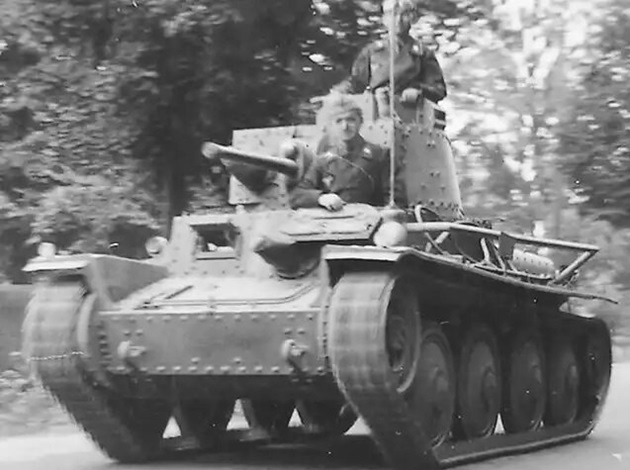
Pz.Kpfw. L.T.M.38 Specifications:
Crew: 4 (3 in the original design)
Weight: 9.725 – 9.85 tons
Length: 4.61 m (15 ft 1 in)
Width: 2.14 m (7 ft 0 in)
Height: 2.25 m (7 ft 5 in)
Armor: 8–30 mm
Main armament: 37mm (1.5 in) KwK 38(t) L/47.8 gun
Secondary armament: 2 x 7.92mm ZB-53 (MG 37(t)) machine guns
Engine: Praga Typ TNHPS/II water-cooled, 6-cylinder gasoline engine, 123.3 hp
Fuel capacity: 220 liters (58 US gallons)
Maximum speed:
42 km/h, 26.1 mph (road)
15 km/h, 9.3 mph (off-road)
Operational range:
250 km (160 mi) (road)
160 km (99 mi) (cross-country)
Pz.Kpfw.II Ausf.D
The Pz.Kpfw.II Ausf.D, with a completely new torsion bar suspension and four road wheels, was developed as a light panzer for use in the light divisions. Only the turret was the same as the Ausf.C model, with a new hull and superstructure design and the use of a Maybach HL62TRM engine driving a seven-gear transmission (including reverse). The design was shorter (4.65 m/15.25 feet) but wider (2.3 m/7.5 feet) and taller (2.06 m/6.75 feet) than the Ausf.C. Speed was increased to 55 km/h (34.17 mph).
A total of 43 Pz.Kpfw.II Ausf.Ds were built from October 1938 through March 1939.
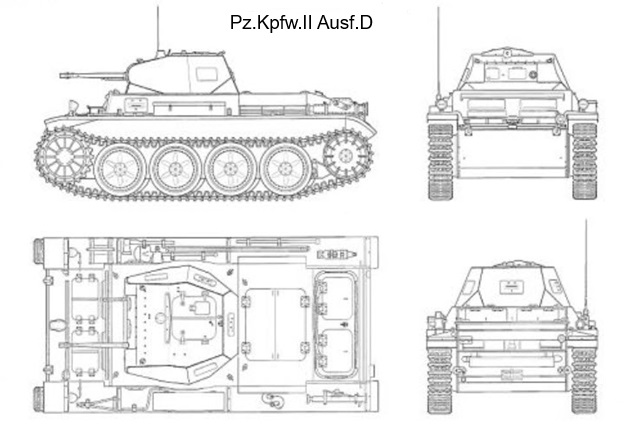
It is reliably known that the Pz.Kpfw.II Ausf.D ended up in the 66. Panzer-Abteilung, 2. Leichte Division, as well as the 67. Panzer-Abteilung Battalion, 3. Leichte Division. There is also information that panzers of this type also ended up in the 33. Panzer-Abteilung Verstärkt (strengthened), 4. Leichte Division.
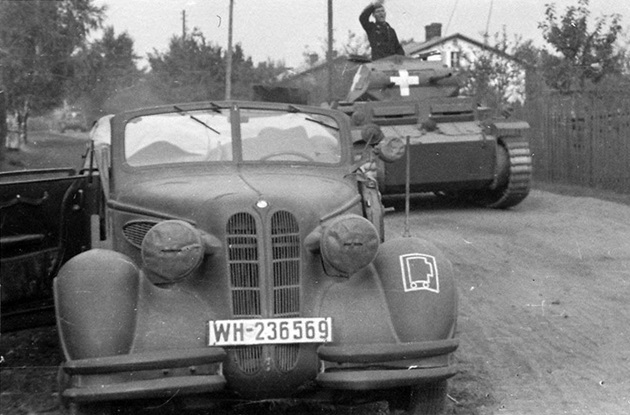
A Pz.Kpfw.II Ausf.D passing a BMW 326 or 327 Cabriolet, a luxury sports convertible seized from a private German owner for military use.
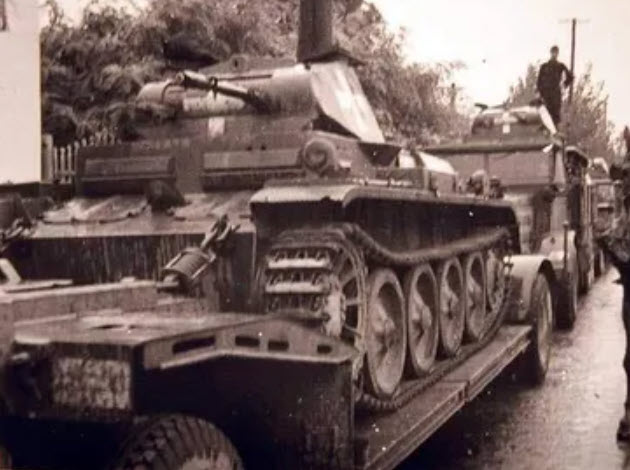
A Pz.Kpfw.II Ausf.D being transported on a Sonderanhänger 115 (abbreviated as Sd.Ah.115), an 8-ton to 10-ton capacity low-loading trailer.
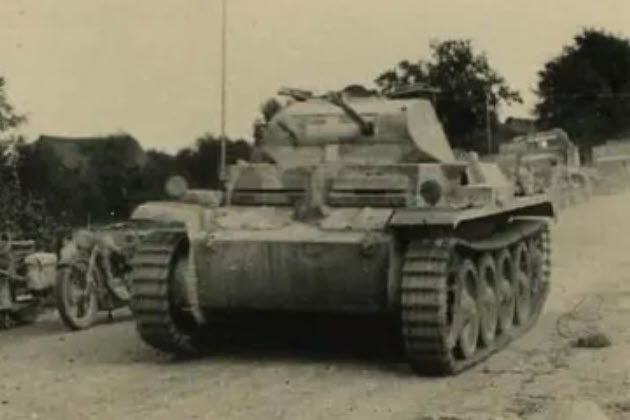
The unique suspension proved to have terrible cross-country performance and was highly unreliable off-road. Consequently, the German High Command withdrew all surviving Pz.Kpfw.II Ausf.Ds from active service in March 1940, two months prior to the invasion of France.
Polish Armor
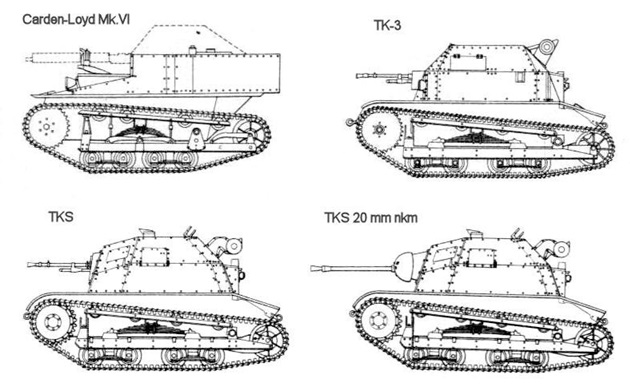
In 1929, Poland bought 10 or 11 British Carden-Loyd Mark VI tankettes and a production license to build them locally with their own modifications. They used them for development of their own TK tankette series. Two Prototypes TK-1 and TK-2 were built and were thoroughly tested at Modlin.
The final slightly simplified version was put into production at the Ursus company, near Warsaw. Production model TK-3 passed all tests in June 1931 and was officially commissioned. With a crew of two (Commander/Gunner and Driver), the closed roof TK-3 was armed with a light 7.92mm (0.3 in) wz.25 machine gun with armor from 4 to 6 mm (0.16 to 0.24 in) thick. 300 TK-3s were built by Panstwowe Zaklady Inzynierii (Ursus) until 1934.
In June 1933, a heavier TK-3, with stronger, thicker, cast steel armor and armed with a French Hotchkiss 13.2mm (0.52 in) machine gun was successfully tested and accepted as the TKS and production started in March 1934. It was not only better protected, armor from 3 to 10 mm (0.12 to 0.39 inches), but also incorporated many minor improvements as well. In 1938, a single TK-3 prototype was equipped with a Polish FK-A wz.38 20mm autocannon and tested. Unfortunately, only 22-24 TKS tankettes had been equipped with 20mm cannons by September 1939.
On 14 September 1931, Poland purchased the British Vickers Mk. E (6-ton) tank, signing an official contract for 38 twin-turret Type A tanks, spare parts, and a manufacturing license. The tanks they received were completely unarmed as Poland preferred to install their own machine guns rather than introduce British caliber ammunition into their logistics chain. The Soviets also received a manufacturing license for the Vickers Mk. E and it became the Soviet T-26 tank.
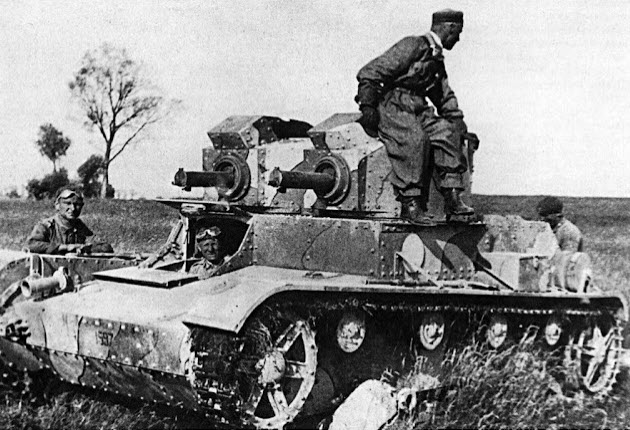
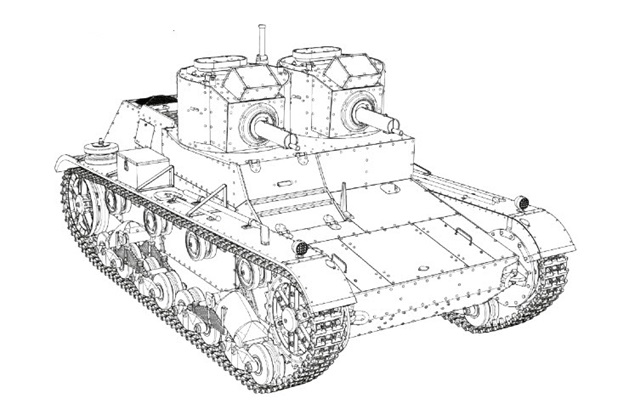
Like the British, the Poles initially produced their version, the 7TP in two variants: a twin turret version armed with two Ckm wz.30 machine guns and a single turret version, armed with 37mm Bofors wz.37 gun. After initial tests, it became clear that the twin-turret variant was obsolete and lacked firepower, so it was abandoned in favor of the more modern single turret design. By September 1939, only 24 twin turret 7TP tanks were operational.
7TP twin turrets
7TP single turret
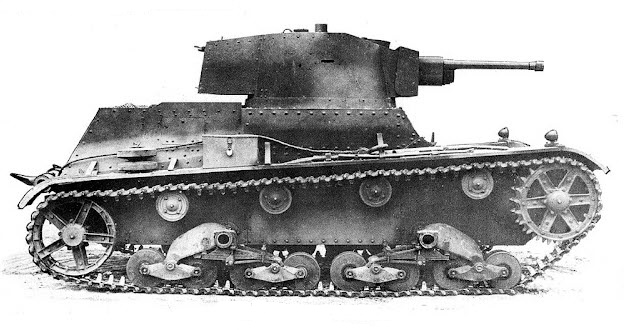
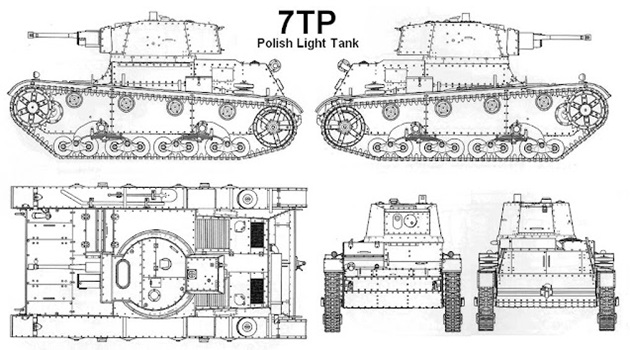
7TP single turret Specifications:
Crew: 3 (commander, gunner, driver)
Weight: 9.9 tons
Length: 4.6 m (15 ft 1 in)
Width: 2.4 m (7 ft 10 in)
Height: 2.27 m (7 ft 5 in)
Armor: 17 mm maximum
Main armament: 37mm Bofors wz.37 gun
Secondary armament: 1 × 7.92mm Ckm wz.30 machine gun
Engine:
PZInż.235 Liquid-cooled inline 6-cylinder 4-stroke direct injection diesel engine, 110 hp
Operational range: 150 km (93 miles)
Maximum speed: 37 km/h (23 mph)
Polish Tank Periscope
Rudolf Gundlach (1892–1957) was a Polish military engineer, inventor and tank designer. He headed the design division of the Armored Weapons Technical Research Bureau in Warsaw. He held the military rank of major in the Corps of Engineers of the Polish Army and was the chief designer of the Ursus wz.29 armored car and supervised the design work for the 7TP light tank. He is famous for his invention of the Gundlach Rotary Periscope, patented in 1936, which made possible 360° vision.
The Gundlach periscope enabled an observer (e.g., the tank commander) to look forward (left) or backward (right) without moving his seat.
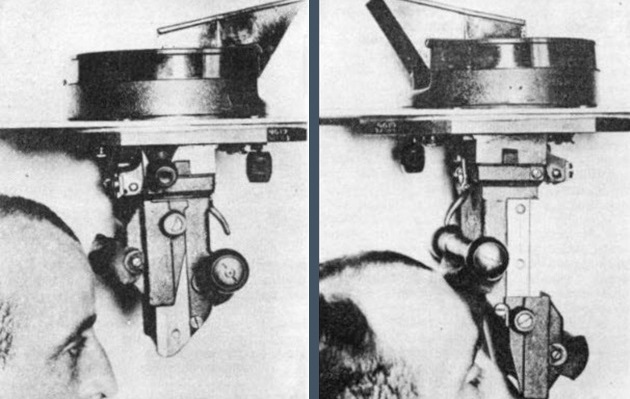
It was first implemented in the Polish TK tankettes and the 7TP light tank. As a part of Polish-British pre-war military cooperation, the patent was sold to Vickers-Armstrong who produced it as the Vickers Tank Periscope MK.IV and it was built into all British WWII tanks (Crusader, Churchill, Valentine, and the Cromwell).
After the fall of Poland, Germany, the USSR and Romania captured polish tanks, allowing them to copy the periscope. In the USSR, the Gundlach periscope was known as the MK-4 and was implemented in all their later tanks (including the T-34 and T-70). All Axis tanks and APCs (including tanks of Italy, Romania, Hungary, Finland and Japan) were equipped or retro-fitted with this periscope until 1941.
The technology was later transferred to the USA and implemented as the M6 periscope in all US WWII tanks (M3/M5 Stuart, M4 Sherman, M24 Chaffee and M26 Pershing). After WWII, the technology was adopted throughout the world. Even today, original Gundlach periscopes are still used in some tanks and APCs.
Video: Gundlach Periscope 1936 in EVERY Tank TODAY – But Inventor Died With NOTHING
Polish Armored Unit
A Dywizjon pancerny, Armored Unit (or Battalion) was a battalion level unit similar to the German “Abteilung”. These armored units were newly mobilized in August 1939 and were assigned to Cavalry Brigades as reconnaissance units.
Polish word “dywizjon” should not be confused with “dywizja” (a division in Polish). Some sources translated “Dywizjon” to “Division” in English and browser translators translates it to “Squadron” in English.
A Polish Dywizjon pancerny consisted of:
| Battalion HQ / Command Element | 1 x Armored car wz.34 | |
| Reconnaissance Tank Squadron | Squadron HQ | 1 x TK-3/TKS tankette |
| 1st Combat Platoon | 5 x TK-3/TKS tankettes | |
| 2nd Combat Platoon | 5 x TK-3/TKS tankettes | |
| Reserve Platoon | 2 x TK-3/TKS tankettes | |
| Armored Car Squadron | Squadron HQ | 1 x Armored car wz.34 |
| 1st Combat Platoon | 3 x Armored cars wz.34 | |
| 2nd Combat Platoon | 3 x Armored cars wz.34 |
A Tank Combat Platoon consists of a Platoon Commander’s tankette and 2 tankettes sections.
An Armored Car Combat Platoon consists of a Platoon Commander’s Armored car and 1 Armored car section.
A section consisted of 2 vehicles, the Section Leader’s vehicle and a Section Combat vehicle.
Battalions numbers 11, 51, 71, 81 and 91 were equipped with TK-3 tankettes, the rest were equipped with TKS tankettes. Battalion numbers: 71 and 81, apart from TK-3 tankettes, also had 4 TKS tankettes armed with 20mm guns. All units were equipped with armored cars wz.34 except the 11th Battalion, which had armored cars wz.29 “Ursus”.
These are numbers of battalions assigned to Cavalry Brigades (Brygada Kawalerii, BK). The names of Polish Cavalry Brigades were taken after regions of Poland.
Army “Modlin”:
11th Battalion (Mazowiecka BK) and 91st Battalion (Nowogródzka BK)
Army “Łódź” (Lodz):
21st Battalion (Wołyńska BK) and 61st Battalion (Kresowa BK)
Army “Poznań”:
62nd Battalion (Podolska BK) and 71st Battalion (Wielkopolska BK)
Army “Krakow” (Cracow):
51st Battalion (Krakowska BK)
Army “Pomorze” (Pomerania):
81st Battalion (Pomorska BK)
Reserve Army “Prusy” (Prussia):
33rd Battalion (Wileńska BK)
Independent Operational Group
(Samodzielna Grupa Operacyjna, SGO) “Narew”:
31st Battalion (Suwalska BK) and 32nd Battalion (Podlaska BK)
Polish Armor in 1939
300 Polish TK-3 wz.31 Tankettes
390 Polish TKS wz.31 Tankettes
(Tankette units were assigned to Cavalry Brigades and Infantry Divisions)
132 Polish 7TP wz.31 Light Tanks
- 1st Light Tank Battalion (49 7TP tanks)
- 2nd Light Tank Battalion (49 7TP tanks)
87 Polish Armored Cars wz.34 – one 7.92mm wz.25 Hotchkiss machine gun OR one 37mm SA-18 Puteaux L/21 gun.
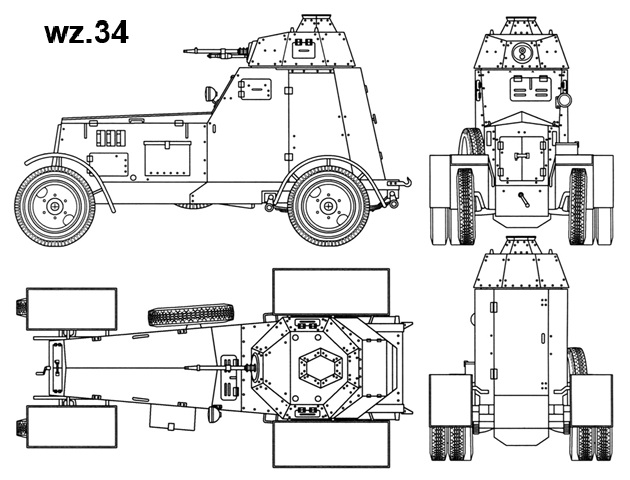
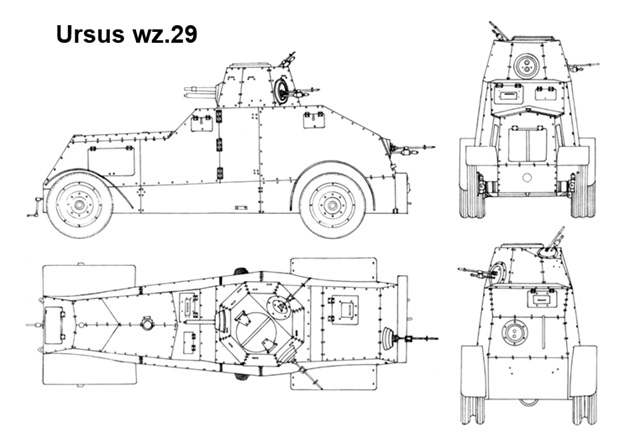
10 Polish Armored Cars Ursus wz.29 – one 37mm SA-18 Puteaux L/21 gun AND 3 x 7.92mm wz.25 Hotchkiss machine guns.
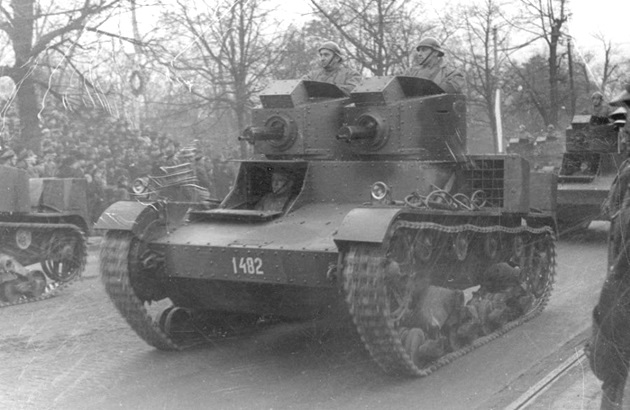
38 British 1928 Vickers E Light Tanks. The Poles added larger air intakes on the side hull to prevent engine overheating at high speeds. The Light Tank Company (Vickers E) had 16 tanks (10 single-turret, gun armed, and 6 twin-turret, MG-armed).
120 French WWI Renault FT-17 Light Tanks:
3 light tank companies (Nos: 111, 112, 113) each had 15 FT-17s. Most of the FT-17s were used by training units and garrison units.
50 French Renault R-35 Light Tanks:
21st Light Tank Battalion (45 R-35s)
3 French Hotchkiss H-35 Light Tanks:
“half-company” of the “Dubno” group (3 H-35s and 3 R-35s)
The “Dubno” group was an improvised unit formed on 12 September 1939 to defend the line at the Ikva River in Volhynia (today Ukraine). It acted as an emergency defensive barrier to prevent advancing German armored forces from breaking into the rear of the retreating Polish Army and it comprised of reserve units, retreating soldiers, scattered units from western Poland, and an armored “half-company”.
War Approaches
The Molotov–Ribbentrop Pact, officially the Treaty of Non-Aggression between Germany and the Soviet Union, was signed in Moscow by Soviet Foreign Minister Vyacheslav Mikhaylovich Molotov and German Foreign Minister Ulrich Friedrich-Wilhelm Joachim von Ribbentrop on 24 August 1939 (backdated to 23 August 1939).
The front page of the New York Times late City Edition on Thursday, 24 August 1939.
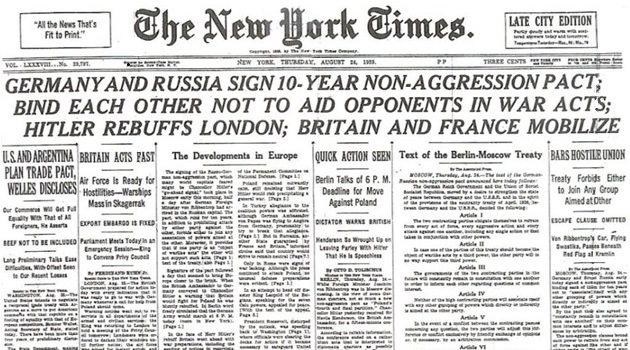
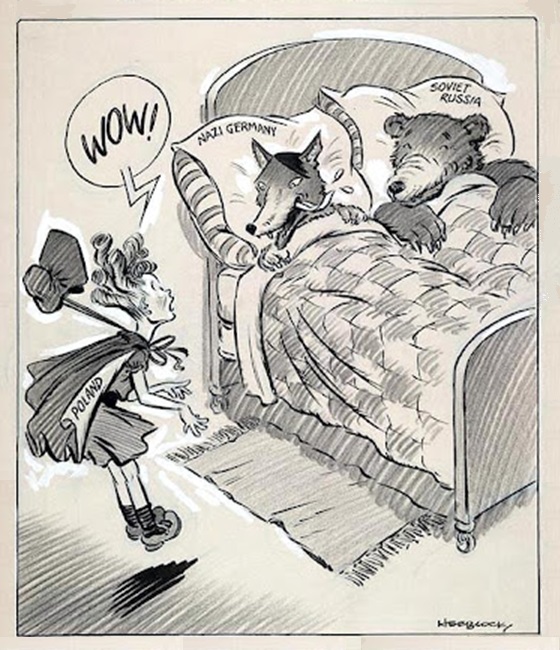
The pact included a secret protocol which divided eastern Europe into spheres of influence in the event of a conflict and guaranteed that Germany would face no resistance from the Soviets if they invaded Poland. The Soviets would regain the territories which they lost in the Polish–Soviet Wars (1919 to 1921).
This 1939 political cartoon by editorial cartoonist Herb Block illustrates the shocking alliance between Germany and Soviet Russia which paved the way for the dismemberment of Poland.
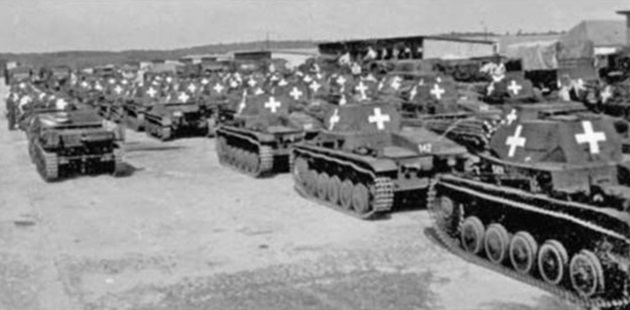
Panzers Mobilizing
Pz.Kpfw.Is and Pz.Kpfw.IIs of Panzer-Regiment 5, 3. Panzer-Division in a field camp in the Friedland area, south of Göttingen in Germany.
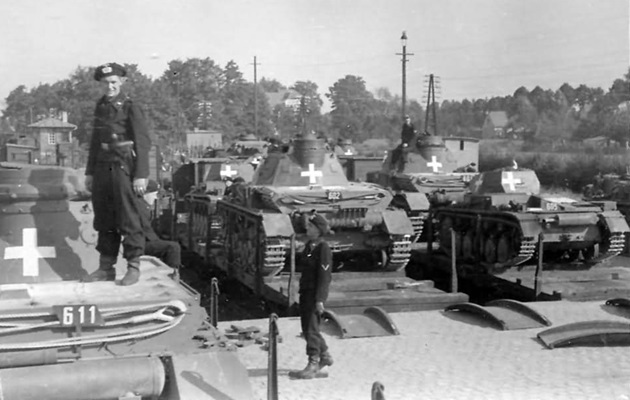
Panzers are being loaded onto flatbed railway cars for transport to the Poland border. In the foreground on the platform are several loading ramps (also known as bridging plates or loading channels). On the left is the rear of Pz.Kpfw.IV Ausf.C number 611. In the center is the rear of Pz.Kpfw.IV Ausf.A number 602 identifiable by the “dustbin” turret cupola and on the right is a Pz.Kpfw.II. Sources incorrectly captioned the panzers in this photo as being Pz.Kpfw.IIIs and a Pz.Kpfw.II.
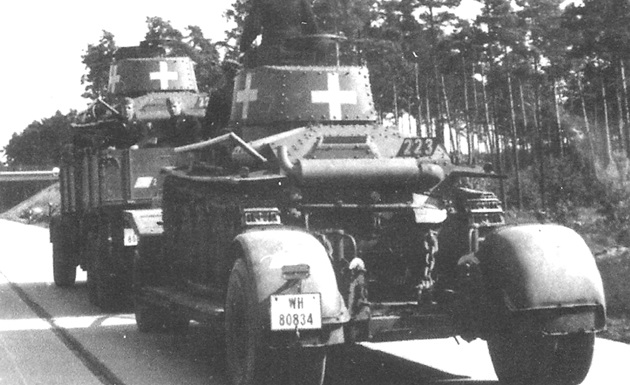
Two Pz.Kpfw. L.T.M. 38s of the 3. Leichte Division being transported by truck. L.T.M. 38 number “223” is on the trailer with license plate number “WH 80834”. L.T.M. 38 number “22?” is in the cargo bed of the truck with two crewmen at the rear.
Operation Himmler
Operation Himmler, also called Operation Konserve, consisted of a group of 1939 false flag incidents executed to give the appearance of Polish aggression against Germany. The Germans then used propaganda reports of the events to justify their invasion of Poland. The plan, named after its originator, Heinrich Himmler, was supervised by SS security chief Reinhard Tristan Eugen Heydrich and managed by Gestapo chief of operations Heinrich Müller.
There were several separate operations, including staged attacks on the following:
- The strategic railway at Jablunka Pass (Jabłonków Incident), on the border between Poland and Czechoslovakia.
- The German radio station Sender Gleiwitz (Gliwice), the Gleiwitz incident being arguably the most notable.
- The German customs station at Hochlinden (today part of Rybnik-Stodoły).
- The forest service station in Pitschen, today Byczyna.
- The communications station at Neubersteich, which was Nieborowitzer Hammer before 12 February 1936 (today Kuznia Nieborowska).
- The railway station in Alt-Eiche (Smolniki), Rosenberg in Westpreußen District.
- A woman and her companion in Katowice.
Gleiwitz Incident
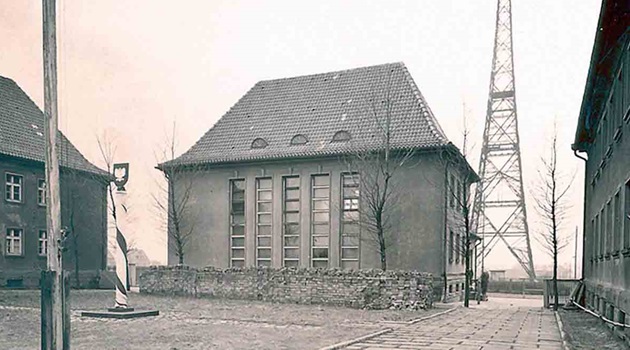
On the night of 31 August 1939, the Germans conducted a staged, false flag operation which was led by SS officer Alfred Helmut Naujocks (20 September 1911 to 4 April 1966). A small team of German SS operatives disguised in Polish military uniforms stormed the German radio station Sender Gleiwitz, located in the border town of Gleiwitz, Germany (today Gliwice, Poland). After seizing the radio transmitter, they broadcasted a short, anti-German message in Polish, proclaiming that the radio station was in Polish hands.
The Gleiwitz Radio Station in 1939.
To make the raid look authentic, they brought with them a local, pro-Polish German farmer named Franciszek Honiok, who was arrested the day before. He was drugged, dressed in a Polish uniform, shot, and left dead at the scene to serve as “proof” of a casualty in the raiding force. They also brought several deceased concentration camp prisoners dressed in Polish uniforms for the same purpose.
The Gleiwitz incident and Operation Himmler was uncovered primarily through eyewitness testimonies and sworn affidavits presented during the Nuremberg Trials in 1945 and 1946. The most critical breakthrough came directly from Alfred Naujocks, who defected to US forces in November 1944. He was not considered high-ranking enough to stand trial, but was called as a witness at the trials.
Invasion First Day
The German invasion actually began at 0430 hours on September 1st when a flight of three Junkers Ju 87 (Stukas) dive bombers from 3. Staffel / Sturzkampfgeschwader 1 (3./StG 1), led by Oberleutnant Bruno Dilley (29 August 1913 to 31 August 1968), dropped the very first bombs of WWII, attacking Polish forces guarding railway bridges over the Vistula River at Tczew (south of Danzig). The Stukas activated their sirens, dubbed “Jericho trumpets” by the Germans, for the first time. The screaming sirens were intended to terrify the enemy on the ground.
The Germans sent two trains carrying troops, disguised as freight trains, to capture the bridges at Tczew, however Polish railroad men at Szymankowo station (southeast of Tczew) redirected the first train to a blind track, delaying the assault. The trains arrived too late, without the element of surprise, and the Poles had blown up the bridges after 0600 hours that morning.
At approximately 0440 hours, the Luftwaffe launched a bombing raid on the Polish town of Wieluń, southwest of Warsaw near the Germany border. The town was completely undefended, lacking anti-air capabilities and a military garrison. Despite having no military targets, Stukas made devastating dive bomb attacks. German intelligence reports had stated there was a Polish cavalry brigade stationed in the town. The Luftwaffe had reportedly bombed a “clearly marked” hospital, and strafed fleeing civilians.
The German battleship SMS Schleswig-Holstein had been positioned in the port of Danzig, moored close to the Polish ammunition depot at Westerplatte under the guise of a ceremonial visit since August 1939. At 0448 hours, Schleswig-Holstein opened fire with her main battery at the Polish ammunition depot, and in doing so fired the first shots of WWII. These shots were also the signal for the German ground troops to begin their assault on the Polish installation.
At 0540 hours, Hitler issued the formal written proclamation to the German armed forces falsely claiming Germany is acting in self-defense. He officially launched Fall Weiss (Case White), the strategic plan for the invasion of Poland.
At 1100 hours, Hitler addressed an emergency meeting of the Reichstag at the Kroll Opera House in Berlin, which was broadcast live over the public radio. During this infamous address, Hitler formally announced the invasion of Poland (Germany did not submit a formal declaration of war to Poland).
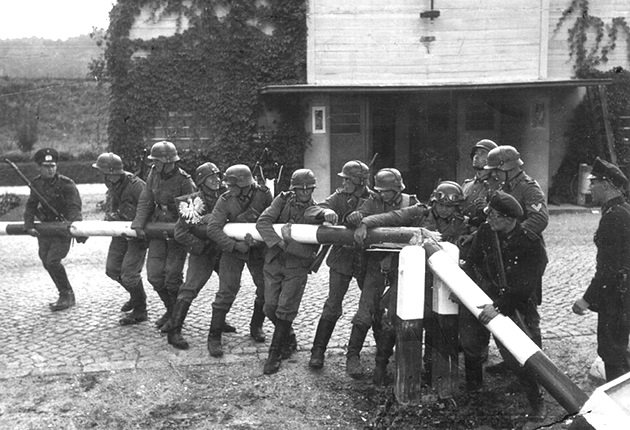
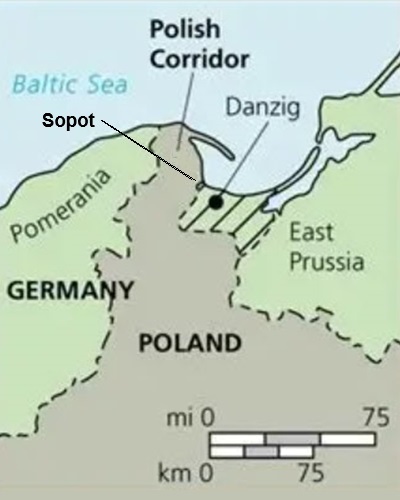
This is a German propaganda reenactment photo of the German soldiers of the Free City of Danzig and customs officials removing the Polish border gate in the seaport of Sopot on 1 September 1939. It was staged on 14 September 1939.
Map of the German-Soviet invasion of Poland.
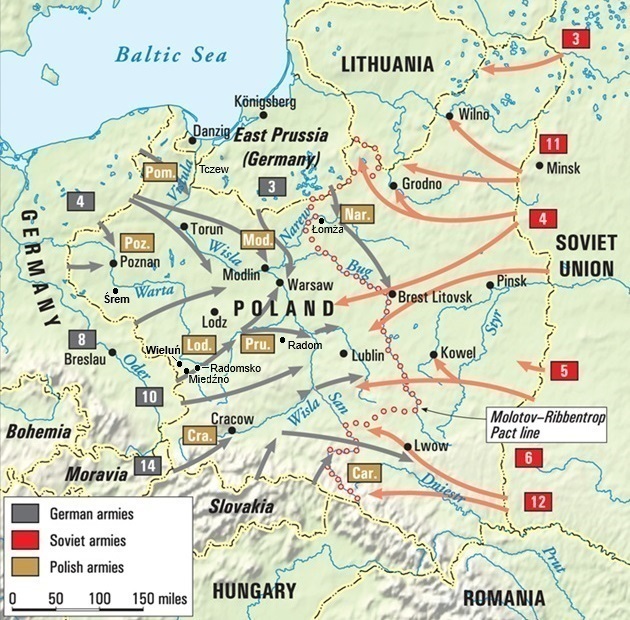
The German encirclement strategy known as Kesselschlacht (cauldron battle) used rapid pincers to trap Poland’s front line armies before they could retreat behind major rivers. Germany’s Army Group North and Army Group South targeted the forward-deployed Polish forces in the following ways during the opening weeks of the invasion.
Northern Pincer (German Army Group North):
- The 4th Army struck east from Germany, while the 3rd Army struck west from East Prussia. They slammed together to isolate and crush the Pomorze Army (“Pom.”) in the Polish Corridor.
- The 3rd Army then drove hard south toward Warsaw. This move pinned down the Modlin Army (“Mod.”) and prevented it from reinforcing other sectors.
- The XIX Korps of the 3rd Army drove south toward Brest-Litovsk pushing through the Polish Army Corps, Independent Operational Group Narew (“Nar.”).
Southern Pincer (German Army Group South):
- The powerful German 10th Army punched a massive hole between the Poznań Army (“Poz.”) and Łódź Army (“Lod.”). It rushed directly toward Warsaw, leaving the Poznań Army isolated in the west.
- The German 8th Army pinned down the Łódź Army (“Lod.”), while the 14th Army pushed through the Kraków Army (“Cra.”) and Karpaty Army (“Car.” for Carpathian) in the south. This forced a chaotic Polish retreat toward the southeast.
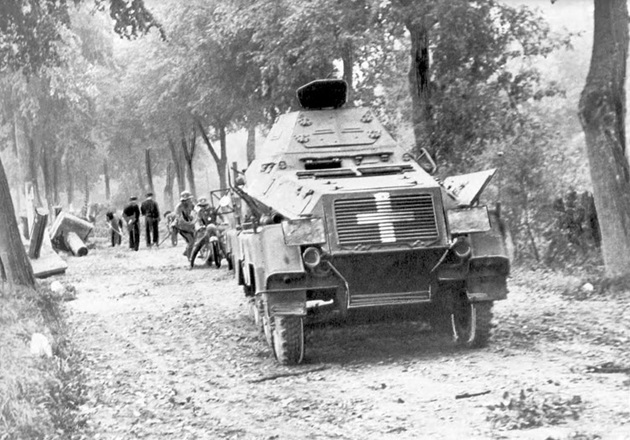
This is a German Sd.Kfz.231 8-Rad heavy armored car stopped on a forest road. The license plate numbers on the rear are smeared with mud. In the background, German troops are removing concrete anti-tank obstacles and debris of a Polish roadblock. Immediately in front of the armored car is a motorcycle messenger or scout pulled over to the side of the road, waiting for the route to be cleared.
Cavalry Charge at Krojanty
The Battle of Chojnice occurred on 1 September 1939. The city of Chojnice is in northern Poland south of Lake Charzykowskie (today Jezioro Charzykows) and Tuchola Forest (today Park Narodowy Bory Tucholskie), approximately 60 km (37 miles) due west of the Vistula River. A detached unit from the Polish army Chojnice Detached Group under Colonel Kazimierz Tadeusz Majewski, part of the Czersk Operational Group under General Stanisław Grzmot-Skotnicki, was assigned the task of defending the city, a major regional communications center, against the advancing German 20. Motorized Infanterie-Division in order to protect the southern flank of Army Pomorze.
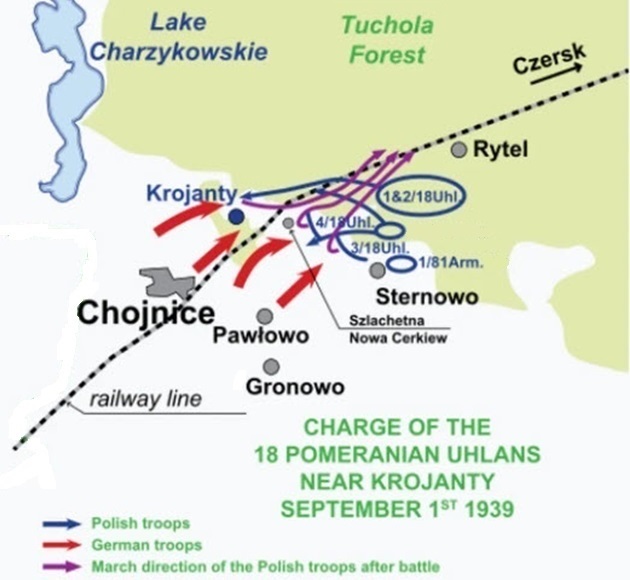
For the assault against Chojnice, the Germans first tried to sneak armored cars into the Chojnice railroad station but the Poles repulsed them. The Germans then launched an armored train attack on Chojnice and it was repulsed. The Polish troops managed to hold back the German advance until the early afternoon, but at 1400 hours with the German mechanized troops threatening to surround the city, the Polish units retreated northeast towards Rytel with the German forces following them. The 18th Pomeranian Uhlan Regiment (Cavalry) was ordered to cover the retreat of the Polish infantry.
The 18th Pomeranian Uhlan Regiment belonged to the Pomeranian Cavalry Brigade and the 81 Dywizjon Pancerny was assigned to support the brigade. The 81st had three TKS tankettes armed with 20mm cannons (the fourth TKS tankette with a 20mm cannon was damaged, probably during transport, and was sent to a repair shop in Włocławek). At 1700 hours, the tankette squadron of the 81st Armor arrived in Sternówo and made a sortie towards Szlachetna Nowa Cerkiew (northwest of Sternówo), supporting the 3rd and 4th Squadrons of the 18th Uhlan, fired at German infantry in trucks, inflicting heavy casualties.
Knowing he could take the Germans by surprise with a striking blow, Colonel Mastalerz ordered Captain Eugeniusz Świeściak, commander of the 1st squadron, to counter-attack the left flank of the German Infanterie-Regiment 76 with the 1st and 2nd Squadrons (about 250 strong). Around 1900 hours, the Polish cavalrymen did as they were ordered, executed a cavalry charge and wreaked havoc, effectively breaking up and scattered the German infantry, most of whom fled into the woods.
The Polish cavalrymen, however, had little time to rejoice in their victory, as German armored cars suddenly appeared. Totally exposed in a clearing near Krojanty, they tried to gallop away, but were fired upon. Over a third of them fell to machine gun fire from German armored cars, probably of Aufklärungs-Abteilung 20 (Reconnaissance detachment 20). Captain Świeściak was killed, as was Colonel Mastalerz, who tried to save him.
German Sd.Kfz.221 armored cars in the Tuchola Forest.
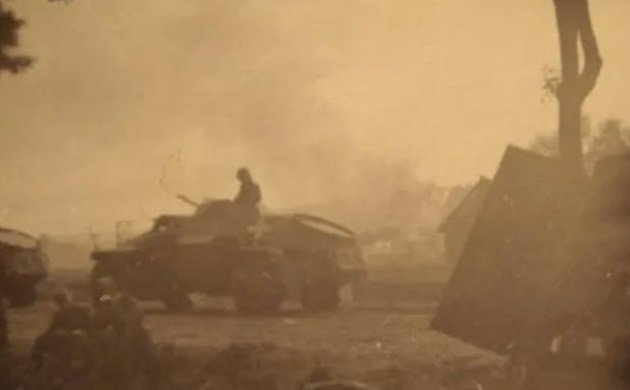
The German advance was stalled long enough to allow the withdrawal of the Polish 1st Rifle battalion and the National Defense battalion Czersk to Rytel. The cavalry charge startled the Germans and caused a delay in the advance of the 20. Motorized Division which considered a tactical retreat. This was prevented by personal intervention of Generaloberst Guderian.
Shortly afterwards, German war correspondents and two journalists from Italy were brought to the battlefield. They were shown the corpses of the Polish cavalrymen and horses as well as German panzers that had arrived after the battle. One of the Italian correspondents, Indro Montanelli, sent home an article in which he described the bravery and heroism of the Polish cavalry, who charged German panzers with sabers and lances.
Although such a charge did not happen, and there were no tanks used during combat, the myth was used in German propaganda during the war. The 13 September 1939 issue of the German propaganda magazine “Die Wehrmacht” stated that the Poles had gravely underestimated German weapons, as Polish propaganda had reported that German armored vehicles were covered only with sheet metal, which led to the charge.
Tuchola Forest
The Battle of Tuchola (1-5 September 1939) took place near the Tuchola Forest in the region of Pomerania (northern Poland). The German objective was to cut through the “Polish Corridor” to link East Prussia with the rest of Germany. This specific German 4th Army advance involved heavy fighting against the Polish 9th Infantry Division and the Pomorska Cavalry Brigade.
Generaloberst Heinz Wilhelm Guderian, commander of the XIX Army Korps of the German 4th Army, was an advocate of the “blitzkrieg” approach and played a central role in the development of the panzer division concept and tank warfare. Guderian used the German concept of “leading forward”, which required commanders to be at the battlefront, assessing the situation and issue orders immediately.
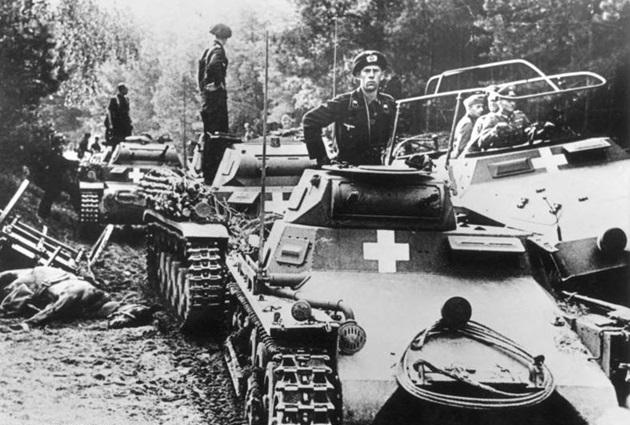
A Pz.Kpfw.I leading two Pz.Kpfw.IIs of the 3. Panzer-Division passing a Sd.Kfz.251/3 Ausf.A command half-track. The officer standing in the half-track is Guderian. The scene is a German column pausing along the banks of the Brda River (AKA Brahe River) in northern Poland. The Brda River was a significant obstacle during the initial days of the invasion.
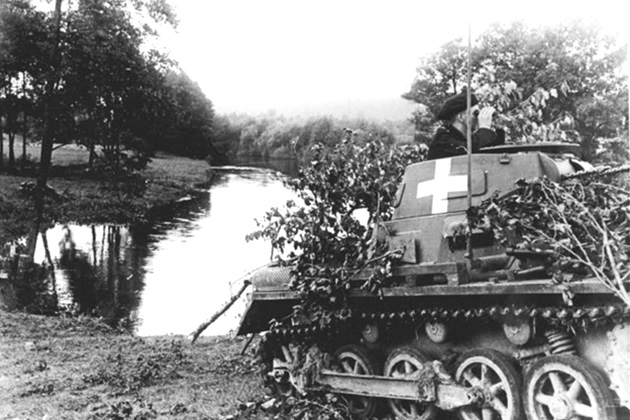
A Pz.Kpfw.I Ausf.A covered with foliage on the bank of the Brda River, 4 September 1939. By September 5th, Guderian’s forces had secured the river’s east bank and had broken through the Polish resistance in the area.
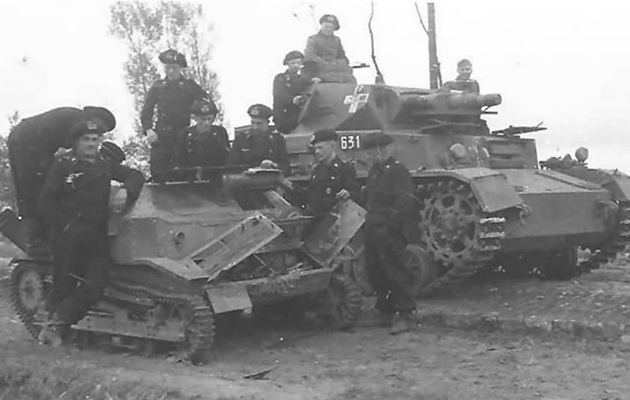
German panzer crews posing with an abandoned Polish TK-3 tankette of the 21 Dywizjon pancerny west of Miedźno (Kłobuck County, southeast of Wieluń) during the Battle of Mokra, September 1-3. In the background is Pz.Kpfw.IV Ausf.C number 631 of the 4. Panzer-Division (German 10th Army).
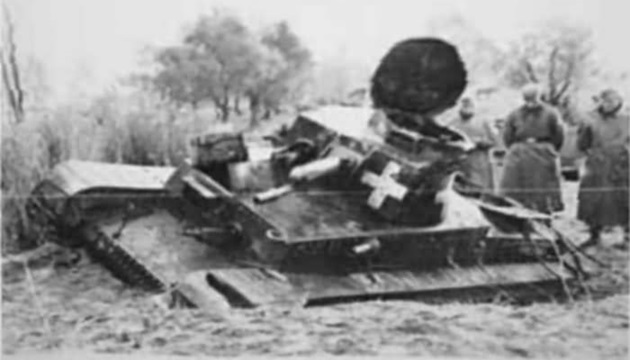
This Pz.Kpfw.35(t) of the 1. Leichte Division is stuck in a mud hole near Radomsko (northeast of Mokra and Miedźno). The division got bogged down along the unpaved, rain-softened secondary roads and river fields while advancing through the Radomsko and Piotrków Trybunalski regions toward the Widawka River.
A foliage covered Pz.Kpfw.IV Ausf.A or B is driving along a street of a Polish city or town. The sign on the building in the background on the right is “Szopiński”, a surname for a Polish business or store.
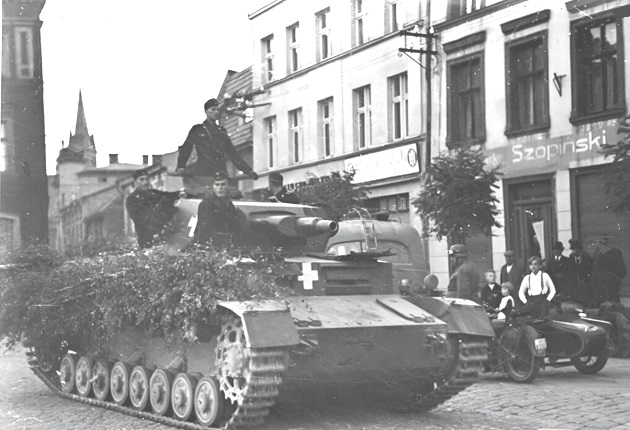
Bundesarchiv Bild 183-E10524
On the lower front hull of this disabled Pz.Kpfw.II Ausf.C are multiple penetrations probably from a Polish wz.36 37mm anti-tank gun. Note the spare track link mounted above the driver’s vision port.
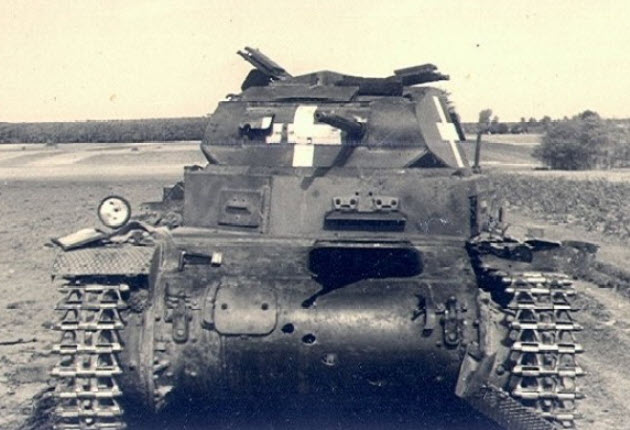
Radom
The Battle of Radom, also known as the Battle of Iłża, lasted from 8 – 9 September 1939. Radom is a city in east-central Poland, situated on the Mleczna River approximately 100 km (62.14 miles) south of Warsaw. Iłża is a small town on the Iłżanka river 30 km (19 miles) south of Radom.
Polish troops of the Prusy Army, under General Stanisław Skwarczyński, defended the city of Iłża and the road from Sandomierz (southeast of Iłża) to Radom. The Poles were not able to repel the overwhelming German XV Army Corps (General Hermann Hoth), and were defeated after two days of fighting. Afterwards, the Prusy Army ceased to exist. Some of the army’s surviving units joined other tactical groups of the Polish armed forces.
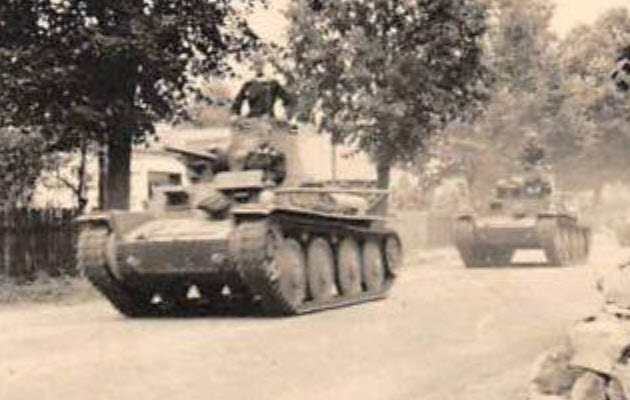
Two L.T.M.38s of Panzer-Abteilung 67, 3. Leichte Division advancing towards Radom from the south or southeast of the city.
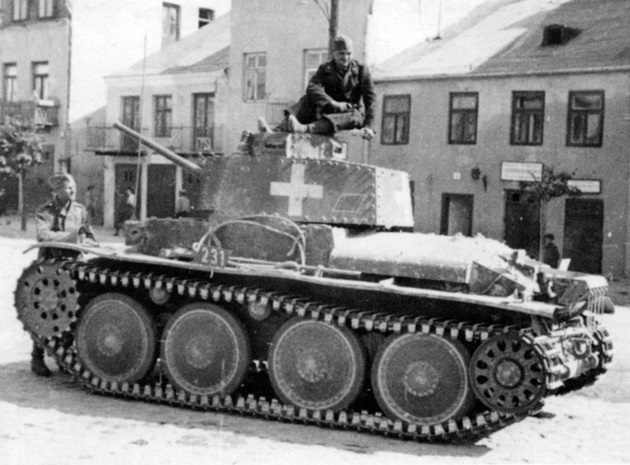
L.T.M.38 number 231 of Panzer-Abteilung 67, in the town of Opatów (south of Radom). This L.T.M.38 does not have the Czechoslovakian frame antenna.
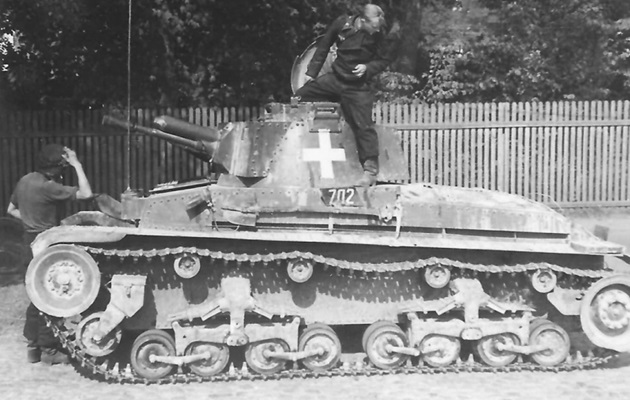
Pz.Kpfw.35(t) number 702 is probably in the outskirts of Radom. It belonged to the 7th Company Headquarters section of Panzer-Regiment 11.
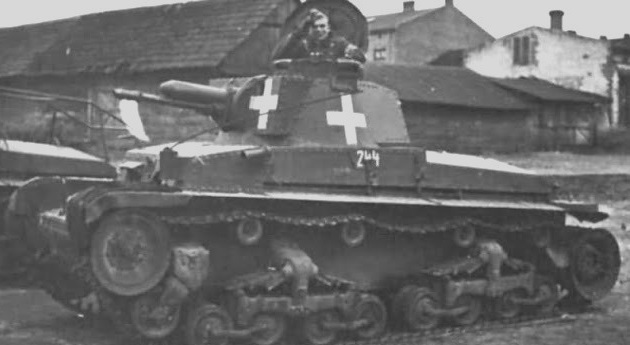
Pz.Kpfw.35(t) number 244 of the 1. Leichte Division probably in the outskirts of Radom. On the left is the rear of a Panzerbefehlswagen 35(t) command vehicle.
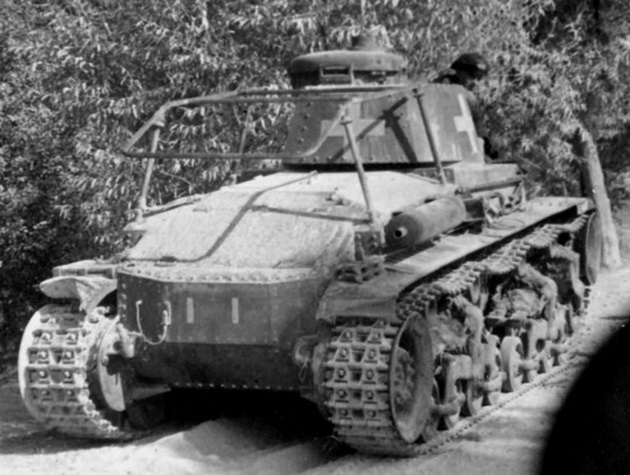
This is the rear view of a Panzerbefehlswagen 35(t) with the frame antenna.
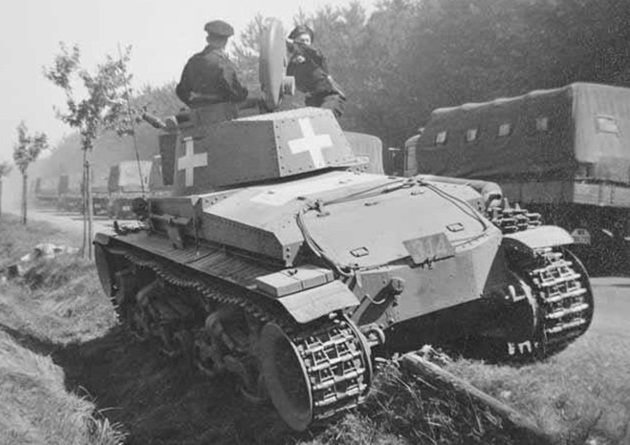
This is the rear view of a Pz.Kpfw.35(t) number 314 on the side of a road with lorries passing by. Note the large white rectangle painted on the engine deck behind the turret is for aerial recognition.
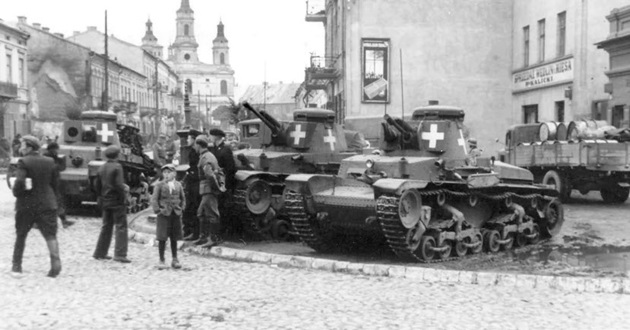
Pz.Kpfw.35(t)s of the 1. Leichte Division in Radom on September 8th. The text on the sign above the truck on the right is “SPRZEDAŻ WĘDLIN I MIĘSA” which translates to “Sale of Cured Meats and Meat” (a butcher shop). Below it is “P. KALICKI”, most likely the proprietor’s name.
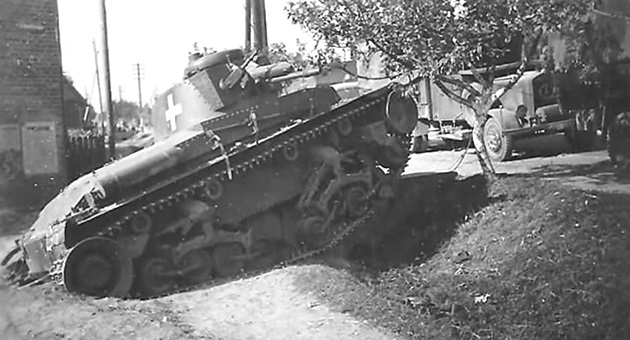
A Pz.Kpfw.35(t) is broken down on a slope. The Pz.Kpfw.35(t) had a specialized weapon mount that allows the machine gun to traverse and elevate independently from the main 37mm gun. The commander could mechanically lock or “couple” the machine gun to the main gun mount. Note the rotated bogie assemblies.
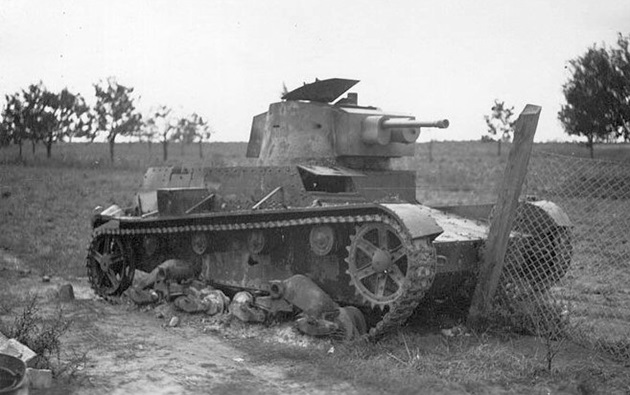
On September 8th, 7TP tanks of the Polish 1st Light Tank Battalion moved directly into the northern outskirts of Radom, engaging the Germans at Jedlińsk, 10 km (6.2 miles) north of Radom. The Polish tanks temporarily halted the German advance on the center of the Polish lines, providing rear guard defense for thousands of retreating troops.
A burnt Polish single turret 7TP tank probably somewhere near Jedlińsk. The tank appears to had suffered a severe mechanical failure during the withdrawal. The crew abandoned the tank and set it on fire to prevent enemy use.
The Polish Air Force was not destroyed on the ground in the first days of the war. Though numerically inferior, it had been redeployed from its major air bases to small camouflaged airfields shortly before the war began. Only some bombers, trainers and auxiliary aircraft were destroyed on the ground. The Polish Air Force, despite being significantly outnumbered and with its fighters outmatched by more advanced German fighters, remained active until the second week of the campaign, inflicting significant damage on the Luftwaffe. The Luftwaffe lost 285 aircraft to all operational causes, with 279 more were damaged, and the Poles lost 333 aircraft.
A damaged Pz.Kpfw.35(t) of the 1. leichte Division probably at the captured Radom-Sadków Airfield (today Warsaw Radom Airport). The large object directly behind the panzer is the fuselage of a Polish PZL.37 Łoś twin engine medium bomber with one of its radial engine nacelles in the background. In front of the panzer is a captured Polish 75mm armata wz.1897 field gun. Poland first received these guns from the French Army in 1919-20 and by 1939 the Polish Army had 1374 of them.
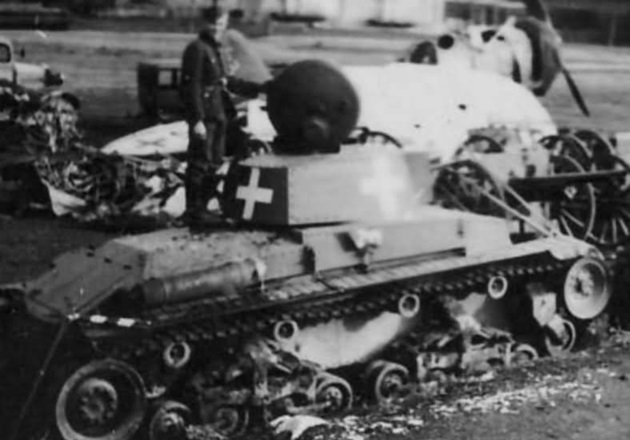
The 1. Leichte Division lost 77 Pz.Kpfw.35(t)s in Poland, mostly due to mechanical breakdowns. The division’s field workshops were highly efficient and only 7 of them were deemed irreparable, total write-offs. Due to shortcomings that the Polish campaign revealed in the organization of the Leichte divisions, the 1. Leichte Division was reorganized as the 6. Panzer-Division in October 1939, retaining nearly all of its Pz.Kpfw.35(t)s. The 6. Panzer-Division then fought in Belgium, France and the Soviet Union.
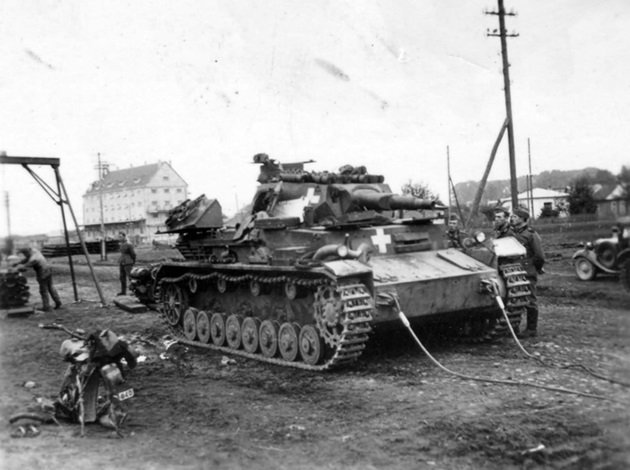
A Pz.Kpfw.IV Ausf.B being repaired at Łomża along the Narew River. The two large hatches over the rear engine deck are wide open with the exhaust fans showing.
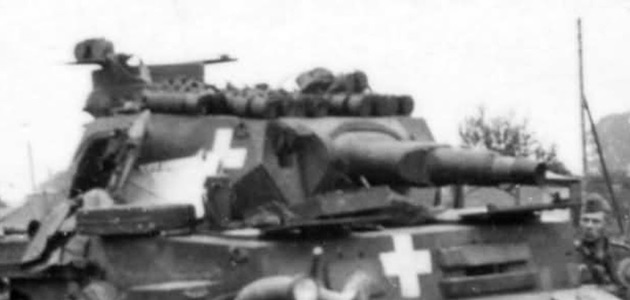
This is my closeup of the Pz.Kpfw.IV’s turret in the above photo. The turret roof is covered with some spare track links and Patronentrommel 34 (PT34) 75-round drum magazines for the MG 34 7.92mm machine guns. The Pz.Kpfw.IV carried 42 PT34 75-round magazines, a total of 3150 rounds.
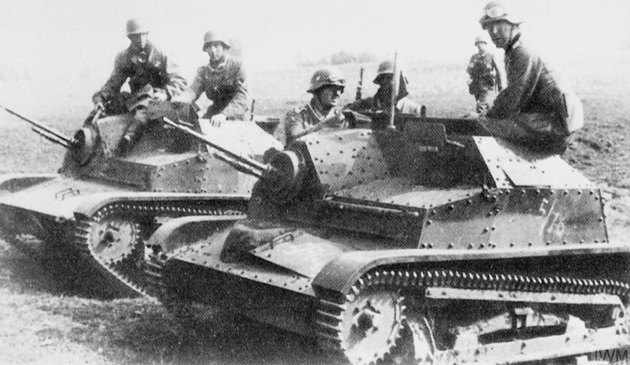
Two Polish TKS tankettes captured by the troops of the German Infanterie-Regiment 76 at the village of Zaręby-Bolędy (south of Łomża) on 12 September 1939. Painted on the side hull of the closest TKS is “5/76” which means 5. Kompanie – I. Bataillon (1-4 Kompanies), II. Bataillon (5-8 Kompanies), III. Bataillon (9-12 Kompanies).
The Battle of Bzura was the largest Polish counter-offensive of the 1939 campaign, taking place between September 9th and September 19th. It began as a Polish counter-offensive and achieved some initial success, but it faltered as the Germans ultimately outflanked the Polish forces with a concentrated counter-attack, which significantly weakened the Polish forces and resulted in the destruction of the Poznań and Pomorze Armies.
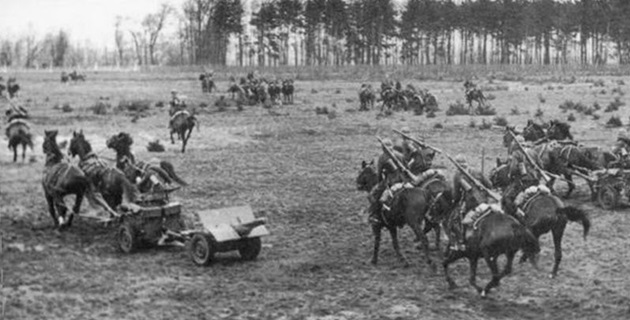
The Greater Poland (Wielkopolska) Cavalry Brigade during the Battle of Bzura. On the left side of the photo, horses are towing an artillery limber and a Bofors 37mm anti-tank gun (Armata przeciwpancerna 37mm wz.36).
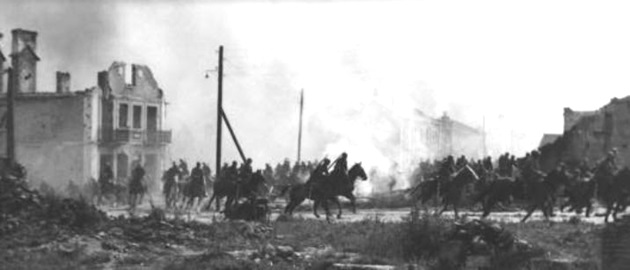
Greater Poland Cavalry retreating through the ruins of Sochaczew (west of Warsaw) on September 14-15.
During the initial stages of the invasion of Poland, the LSSAH Infanterie-Regiment (mot.) was attached to the 17. Infanterie-Division and was tasked with providing flank protection for the southern pincer. The regiment was involved in several battles against Polish cavalry brigades attempting to hit the flanks of the German advance. On September 7th at Pabianice, a town about 10 km (6 miles) southwest of Łódź, the LSSAH fought elements of the Polish 28th Infantry Division and the Wołyńska Cavalry Brigade in close combat.
After the success at Pabianice, the LSSAH was sent to the area near Warsaw and was attached to the 4. Panzer-Division under then Generalmajor (brigadier general) Georg-Hans Reinhardt. The 4. Panzer-Division and the LSSAH were tasked with crossing the Bzura River and attack the encircled Polish Poznań Army.
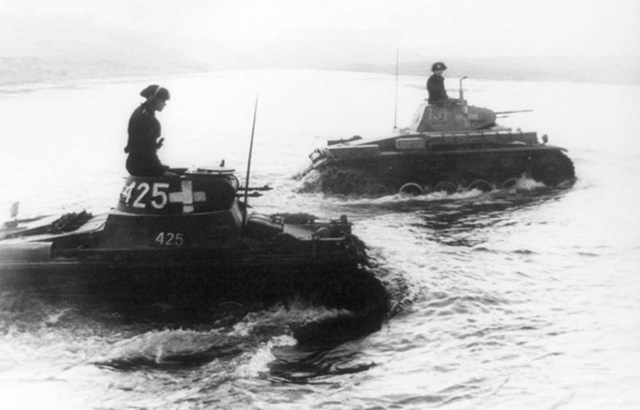
A Pz.Kpfw.I Ausf.A number 425 (foreground) and Pz.Kpfw.II number 131 of the 4. Panzer-Division fording the Bzura River on 15 September 1939.
However, on September 16th the LSSAH was initially beaten back, and was temporarily trapped by Polish forces during the intense fighting.
On September 17th, the largest air operation of the campaign was launched by the Luftwaffe targeting retreating Polish forces at river crossings, including near Brochów (east of the Bzura River and north of Sochaczew).
Polish Tank Ace
Edmund Roman Orlik was born on 26 January 1918, in Rogoźno, Poland, about 40 km (24.85 miles) north of Poznań. His father, Jan Orlik, served as a military pilot during WWI and was KIA several months before Edmund’s birth. There is no information about his mother.
Immediately after passing his high school leaving exams at Przemysław High School in Rogoźno, in the early autumn of 1935, he volunteered for the Armored Weapons Cadet School in Modlin, where he completed a year of military service. After completing his training, he began studies at the Faculty of Architecture of the Warsaw University of Technology, but was forced to interrupt his studies due to preparations for war (military exercises with the Armored Weapons Battalion in Poznań).
Orlik probably during military exercises in Poznań or in Modlin. The triangle in the circle on the TKS tankette indicate it is the 3rd platoon commander’s tank. Orlik is sitting in the foreground on the right with an open notebook or map.
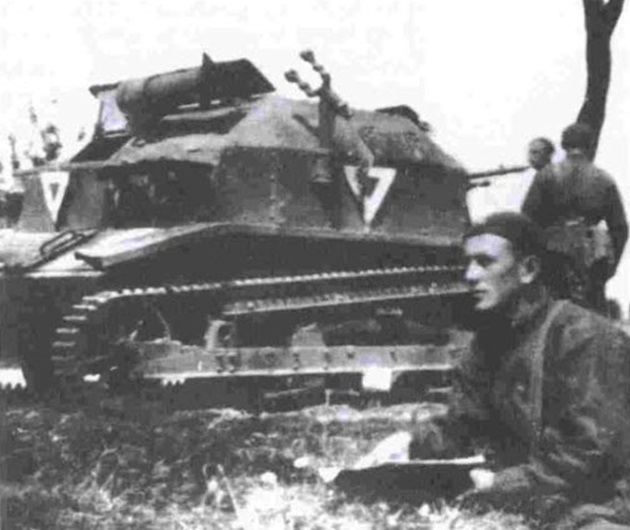
On 25 August 1939, Orlik was mobilized and was assigned to the 71 Dywizjon Pancerny which was assigned to the Wielkopolska Brygada Kawalerii (Greater Poland Cavalry Brigade). By the time war broke out, Orlik was promoted to the rank of Officer Cadet (Podchorąży, equivalent to Sergeant First Class) and became the commander of a TKS tankette armed with a 20mm cannon.
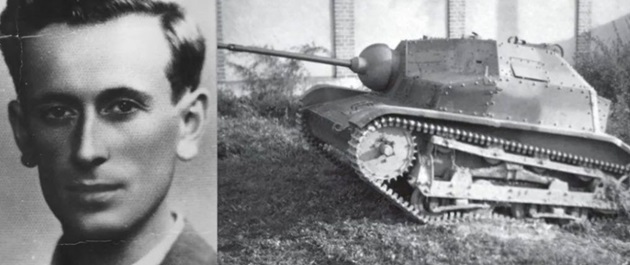
On 3 September 1939, the 71 Dywizjon Pancerny was located 45 km (28 miles) south of Poznań on the bank of the Warta River in the town of Śrem.
On 14 September 1939, Orlik scored his first kills. During the fighting in the village of Brochów, Orlik damaged 3 German Pz.Kpfw.IIs while supporting the 15th Uhlan Regiment and the 7th Mounted Rifle Regiment in its attempt to take back control of the village. The 3 panzers were most likely from Panzer-Regiment 36 of the 4. Panzer-Division. Some sources stated the 3 panzers were destroyed. Fighting around Brochów resulted in a Polish victory, with Polish forces temporarily recapturing Brochów securing the vital river crossings for retreating Polish forces.
The tankettes were so elusive and annoying to the Germans that they nicknamed them “Kakerlaken” (cockroaches), a name that the Polish tankers humorously and proudly assumed. They became affectionately known as “Karaluch”, the Polish word for cockroach.
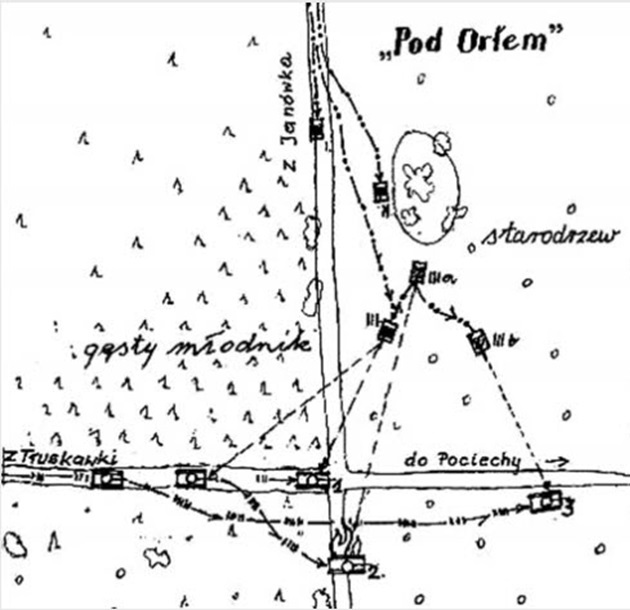
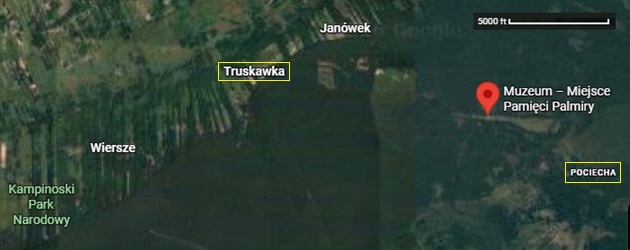
On the afternoon of 18 September 1939, Orlik’s TKS with a 20mm gun was leading two tankettes each armed with machine guns. While patrolling in an area northwest of Pociecha Truskaw in the Kampinos Forest (Today Kampinoski Park Narodowy, northwest of Warsaw), Orlik heard vehicles approaching. Orlik ordered the other two tankettes to halt and cover him while he move up and setup an ambush. Orlik ordered his driver, Corporal Bronisław Zakrzewski, to drive onto a small hill thickly overgrown with young trees.
Soon after he got into position, a German panzer column approached the crossroad in front of him. The first panzer to come into view through the trees was a Pz.Kpfw.35(t). With a single well-aimed shot, Orlik hit the panzer’s turret at its weakest point and knocked it out. Unfortunately, the next panzer was a Pz.Kpfw.IV Ausf.B armed with a 75mm gun and his 20mm shells bounced off its thicker armor.
The two remaining panzers finally opened fire, fortunately were off target. Another burst from Orlik’s 20mm proved effective on the Pz.Kpfw.IV. The shell most likely hit the ammunition rack, as the Pz.Kpfw.IV burst into flames. The third panzer, another Pz.Kpfw.35(t), fired and then fled. Orlik quickly moved to another position and with a burst of 20mm fire disabled that panzer as well.
Orlik wrote about this victory in his postwar memoirs, but there are no documents confirming it. This is Orlik’s sketch depicting the battle “Pod Orłem” (“Under the Eagle”).
Video: When Cockroaches Hunted Panzers
There are serious doubts as to the reliability of this description and Orlik’s participation in the engagement. According to some sources, three TKS tankettes each armed with a 20mm cannon, without Orlik, participated on the Polish side. Taking advantage of the tankette’s speed and low profile, Orlik’s dashing through the brush to new firing positions and firing could possibly made it appear to the Germans that they were being fired upon by three “Kakerlaken”.
After the engagement, Orlik and Zakrzewski attempted to save the crew of the burning Pz.Kpfw.IV. They pulled out, among others, the commander, a 23-year-old lieutenant. Unfortunately, the German was severely burned and died shortly afterwards. Seven days later, the Germans found the destroyed Pz.Kpfw.IV and the body of the dead German. The dead German was identified by its dog tag to been Oberleutnant Viktor IV Albrecht von Ratibor, the son of Duke Viktor III August von Ratibor. He was the commander of the 2nd Platoon, 2nd Kompanie of Panzer-Regiment 11.
Ratibor’s destroyed Pz.Kpfw.IV
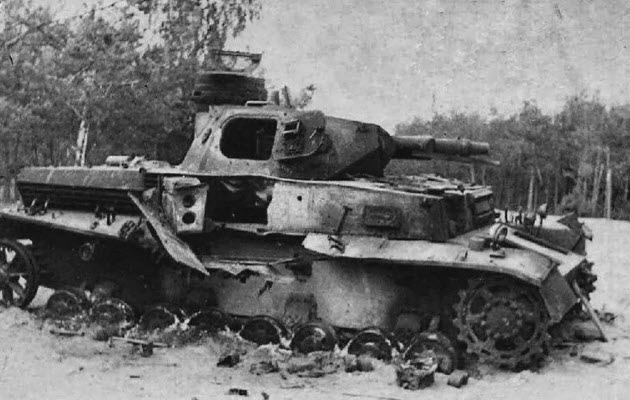
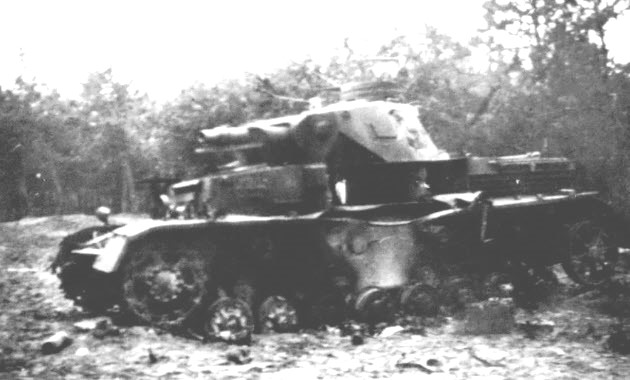
The next day, Orlik and his comrades took part in the fighting at the village Sieraków (Warsaw West County), part of the struggle to break out of the encirclement around Modlin northwest of Warsaw. During the night, the Germans were repelled by the Polish 9th Uhlan Regiment (cavalry) and the 7th Mounted Rifles Regiment. However, the Germans counter-attacked with several dozen panzers from Panzer-Regiment 11 and Panzer-Abteilung 65.
Polish units destroyed or damaged about 20 panzers in the counter-attack. Orlik was credited with hitting 7 of them. There is no precise information about this engagement, and it is not known how many of the 7 panzers were destroyed or damaged. The number is not entirely certain, as Polish artillery also fired at the panzers. It is only known for certain that Orlik captured two prisoners.
In the following days, Orlik and his comrades fought their way to Warsaw. Orlik led one of the only two armored vehicles that participated in the defense of the city (without destroying any panzers). He then, as ordered, destroyed his tankette and with his driver hid from the Germans. Orlik later joined the Polish armed resistance and served in the Home Army (Armia Krajowa) for the rest of the war.
For his wartime services, Orlik was promoted to Second Lieutenant in 1979 and was awarded the Virtuti Militari Cross, Class V. The Virtuti Militari is considered equivalent to the British Victoria Cross and the US Medal of Honor in terms of valor.
On 8 April 1982, Orlik died in an automobile collision in Opole (southern Poland) and was buried in Łódź.
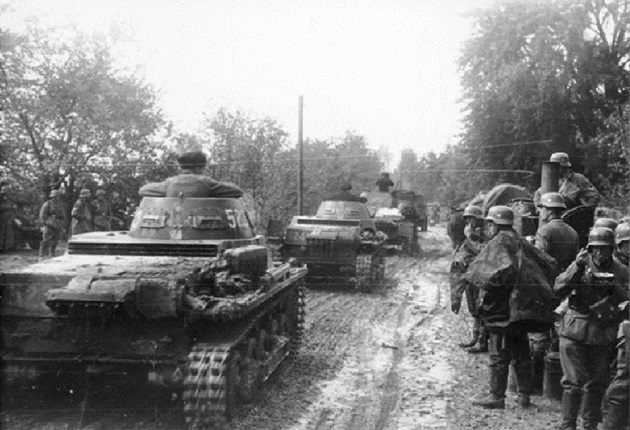
Two Pz.Kpfw.I Ausf.As numbers 523 and 524 following a Pz.Kpfw.II down a muddy road passing German troops. The large white crosses on the panzers were obscured with mud because they were targets for Polish gunners.
Abandoned Polish tanks on a road near Lwow on September 12th. On the left is a 7TP twin turret tank. Behind it in the ditch is a TK-3 tankette. The horses and German troops passing on the right are most likely of the German 1. Gebirgs-Division (1st Mountain Division).
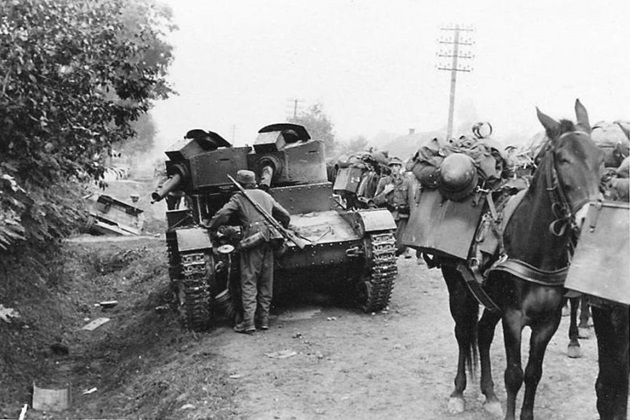
City name changes:
Lwów (Polish 1349–1939)
Lvov (Russian 1939–1941)
Lemberg (German 1941-1944)
Lvov (1944–1991 Soviet rule)
Lviv (today Ukrainian)
A knocked out Pz.Kpfw.II Ausf.C of the 5. Panzer-Division near Lwow. It was disabled by a large-caliber hit to the lower hull, probably a Polish 75mm field gun.
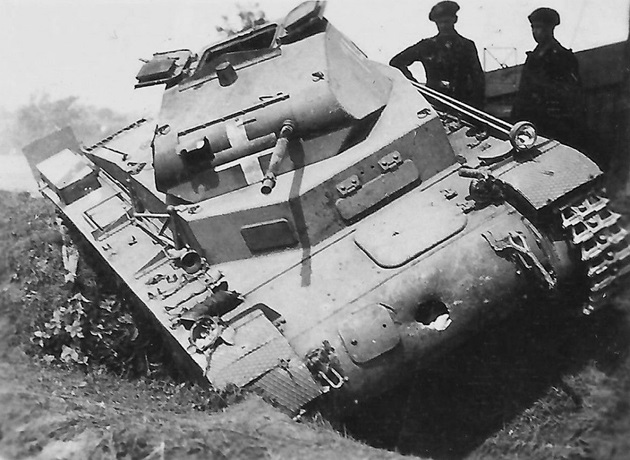
Przemyśl
The Battle of Przemyśl (west of Lwow) took place between 11 – 14 September 1939. The Polish Army garrison of the former Austrian fortress of Przemyśl (a series of fortifications around the city) managed to halt the advance of the Wehrmacht for three days.
The main Polish defensive actions took place on the outer perimeter and outer forts. The German forces primarily bombarded and pushed through the western and northern outskirts of the city to capture the strategic railway bridges rather than carpet bombing the civilian center. In the evening of September 14th, the Polish forces abandoned Przemyśl and marched eastward to Lwow blowing up bridges behind them. The next morning, the Germans entered Przemyśl.
Sd.kfz.232 8-Rad armed car with license plate number WH 126118 and motorcycle troops in a ruin section of Przemyśl on September 15th.
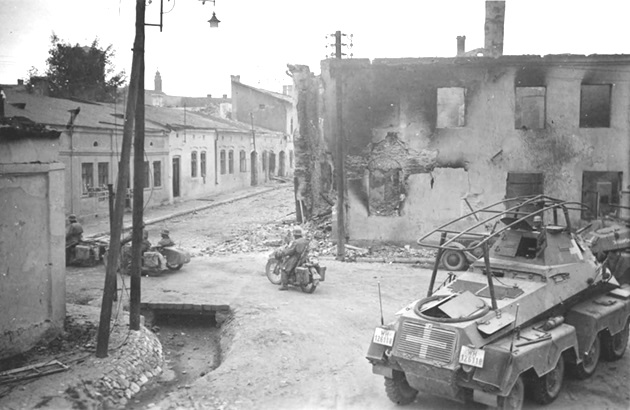
A Sd.kfz.232 8-Rad and a older Sd.Kfz.231 6-Rad (left) in the old Town Market Square of Przemyśl. In the background, German motorcycles are parked on the other side of the square. The two armored cars are from Aufklärungs-Abteilung 8 of the 5. Panzer-Division.
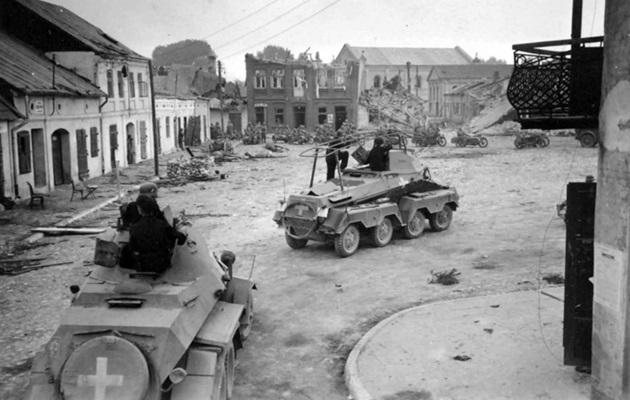
Pz.Kpfw.II Ausf.A2 number 45 of Panzer-Regiment 31, 5. Panzer-Division in the ruin outskirts of Przemyśl.
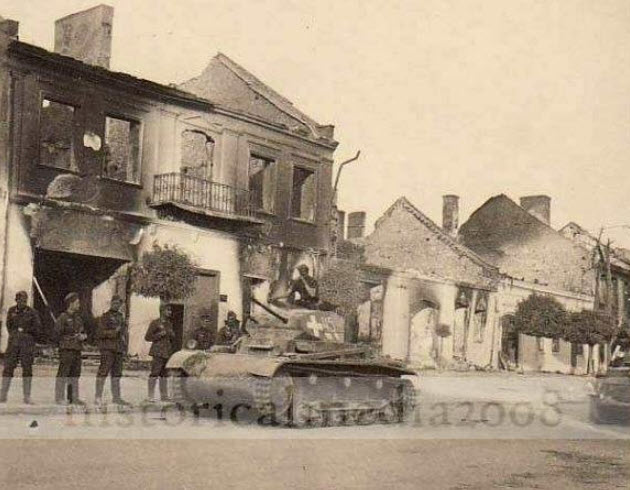
Pz.Kpfw.II Ausf.A2 number 45 at ulica Jagiellońska 5–7 (Jagiellońska Street) in Przemyśl. A motorcycle messenger (Kradmelder) is parked behind the panzer. This location is a short distance southeast of the banks and bridges of the San River which flows through the center of the city.
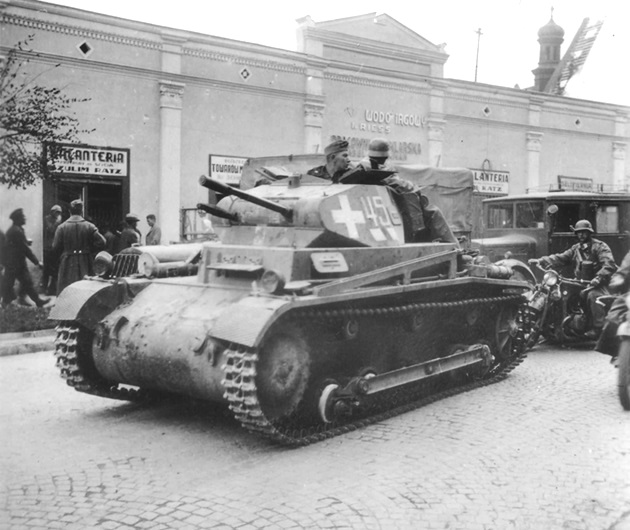
The sign of the shop on the far left is “GALANTERIA Szulim Katz” (Szulim Katz LEATHER GOODS) a retail business that sells products made from leather. Szulim Katz is the name of the Jewish shopkeeper.
The center upper façade partial text: “…WODO TRGOWY” (Trade Water) is a wholesale liquid or beverage distribution enterprise. RIESS is the surname of the proprietor.
Before WWII, carbonated water was heavily commercialized across Poland and often run by the city’s prominent Jewish merchant population. A typical inventory included: Soda Water, Seltzer (natural bubbly mineral water), Flavored Syrups (poured into the soda water at the counter) and pre-bottled Lemonades and Orangeades. These stores acted as neighborhood social hubs where the locals gathered.
A Pz.Kpfw.III Ausf.D in Poland 1939. On the rear are two captured Polish wz.31 steel helmets. Only a few numbers of this model were issued to: 1. Panzer-Division, 10th Army; 2. Panzer-Division, 14th Army; and 3. Panzer-Division, 4th Army.
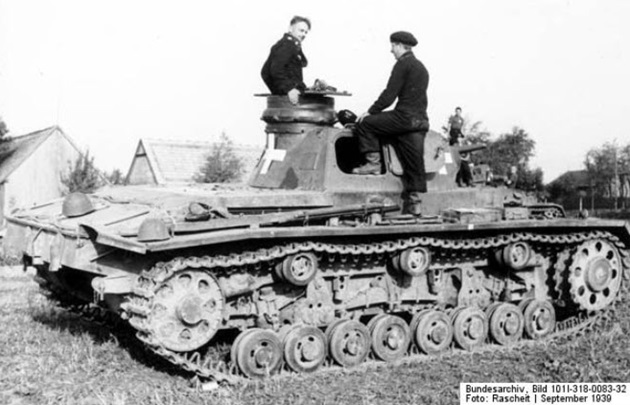
Bundesarchiv Bild 1011-318-0083-32
Soviet Invasion
The Polish high command knew the western front was lost. Commander-in-Chief Edward Rydz-Śmigły ordered a general withdrawal to the southeast corner of the country, known as the Romanian Bridgehead (near the borders of Romania and Hungary).
Polish forces intended to dig into the rugged, easily defensible terrain, using the Dniester and Stryi rivers as natural barriers. They planned to hold out there through the winter, waiting for a major French and British offensive in the west while receiving allied military supplies through friendly Romanian ports.
The Soviet invasion starting on 17 September 1939, delivered the final, fatal blow to Poland’s defense by permanently closing their only remaining escape route and shattering their strategic defense plan.
The front page of the New York Times late City Edition on Sunday, 17 September 1939.
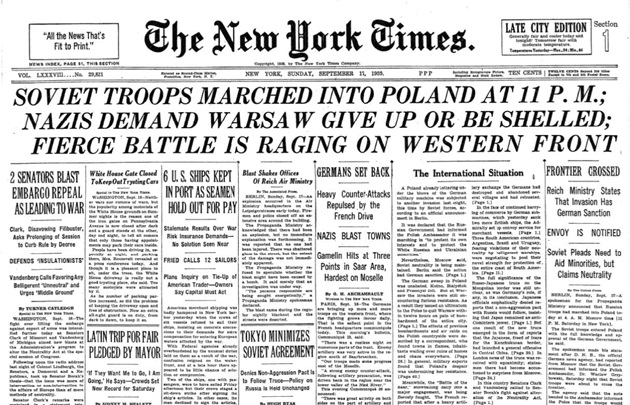
The Soviet Red Army invaded with over 450,000 troops along a massive front and struck the undefended rear of this bridgehead area. Soviet armies (the 4th, 5th, 6th and 12th Armies shown on the map above) moved rapidly westward and to the southern borders. This advance physically cut the roads and rail lines leading into Romania and Hungary. Polish units that were retreating south to reorganize suddenly found themselves sandwiched between the advancing Germans from the west and the fresh Soviet forces advancing from the east. As Soviet forces advanced towards the Molotov-Ribbebtrop Pact Line, German forces that were on the Soviet side of the line withdrew to their side.
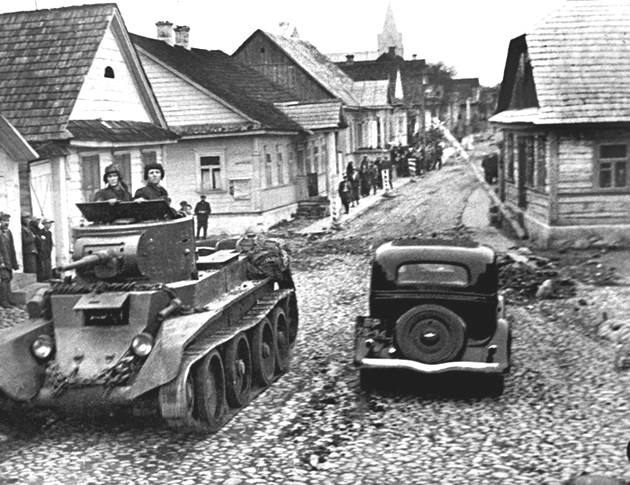
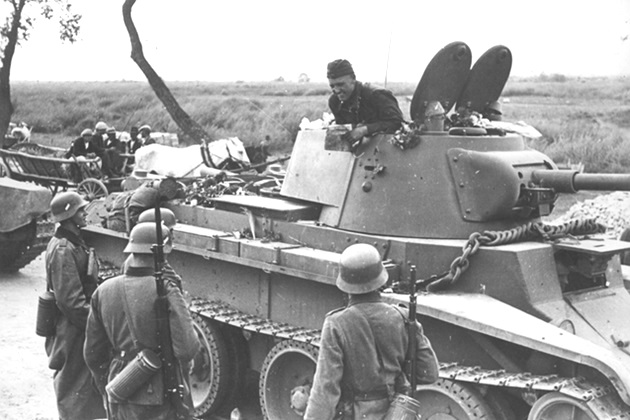
A Soviet BT-7 Model 1935 light tank of the Soviet 6th Light Tank Brigade, 11th Army, driving through the town of Rokov located on the Islach River 39 km (24.2 miles) west of Minsk, 17 September 1939. Today, the town is named Rakaw in the Minsk Region of Belarus.
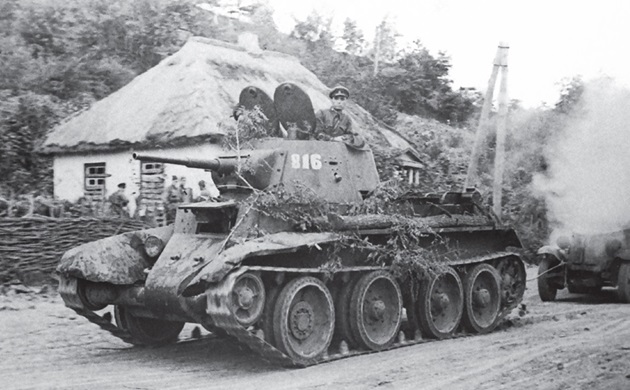
Soviet BT-7M tank number 816 of the 24th Light Tank Brigade (4th Army) in the village of Sopoćkinie (today Sapotskin in Belarus), northwest of Grodno. It appears to be towing an overheated Soviet BA-6 armored car.
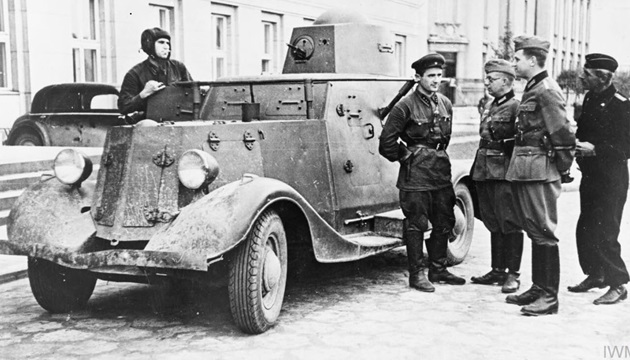
On 18 September 1939, the advancing units of the German Wehrmacht and the Soviet Red Army made initial tactical contact at Brest-Litovsk (today Brest, Belarus), establishing a temporary demarcation line and engaged in localized negotiations regarding their overlapping positions.
Soviet crew of a BA-20M armored car chatting with German troops in Brest-Litovsk.
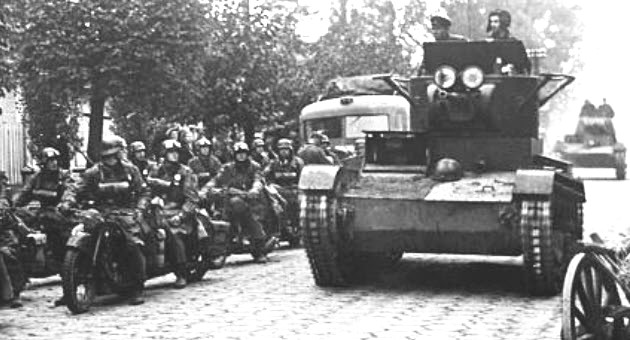
On 22 September 1939, the Germans and the Soviets held a joint military parade in Brest-Litovsk to celebrate their coordinated victory and formalize the handover of the territory from German to Soviet control.
A Soviet T-26 of the 29th Tank Brigade passing German motorcycle troops in the parade in Brest-Litovsk. The hand-rail antenna wrapped around the upper edge of the turret identifies it as a company commander’s radio tank. Note the twin searchlights mounted on top of the main gun mantlet. They look like a pair of eyes.
An encounter between German and Soviet forces in the Boryslav region (today in Ukraine) of Poland (southeast of Lwow) on 23 September 1939. A crewman of this Soviet BT-7 tank of the 23rd Light Tank Brigade is chatting with a group of Wehrmacht infantrymen of the 56th Infanterie-Division.
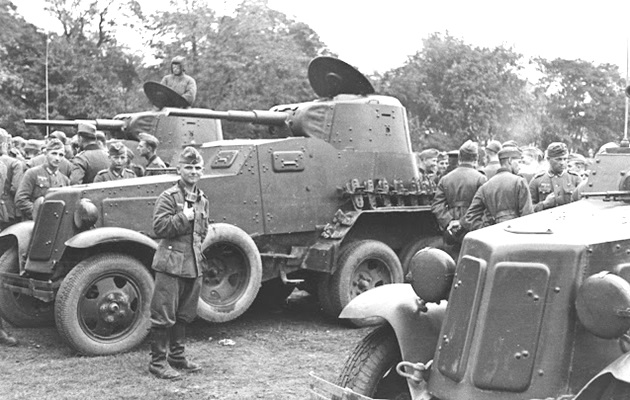
German troops inspecting Soviet BA-10 armored cars in Lublin, Poland, 3 October 1939. The BA-10 armored car was armed with a 45mm gun 20-K (49 rounds) and two 7.62mm DT machine guns (2079 rounds).
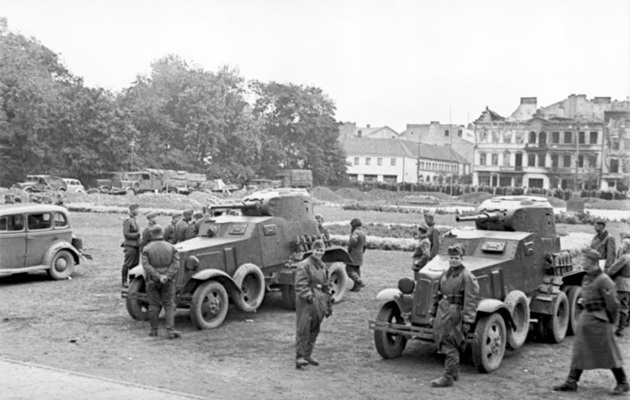
Bundesarchiv Bild 101I-013-0068-18A
Mounted on the rear fenders of the BA-10 armored car are removable auxiliary tracks (often referred to as “Overall” track chains). These tracks were designed to wrap around the rear dual tandem tires, effectively converting the armored car into a half-track for significantly improved traction and cross-country performance when driving over snow, mud, or soft terrain.
Captured Polish Tanks
After the collapse of the Polish Army, the leftover and abandoned equipment was taken over by the German and Soviet Armies. After the Polish campaign, the German Waffenamt (ordnance department) reported that about 111 Polish armored vehicles were captured. After repairs and/or modifications, many were impressed into German service. The TKS tankettes and 7TP Light tanks were redesignated leichter Panzerkampfwagen TKS(p) and Panzerkampfwagen 7TP 731(p) respectively.
They were scattered throughout the secondary, rear-area, and non-divisional units tasked with specialized support roles:
- Luftwaffe Airfield Security Units, towing planes
- Rear-Echelon & Anti-Partisan Formations (Police Battalions)
- Artillery and Anti-Tank Units as light tractors
Some 7TPs were reported to been used by the German 1. and 4. Panzer-Divisions. Some sources mention that the 7TPs were used in the French campaign of 1940, but it is unclear if this is true.
A very small number of 7TP tanks were captured by the Soviets during their invasion of Poland. The Soviet military was deeply curious about how the Polish modifications stacked up against their T-26 Light tank. At least one fully operational single-turret 7TP was sent to the NIIBT Proving Ground in Kubinka near Moscow for technical and mobility testing.
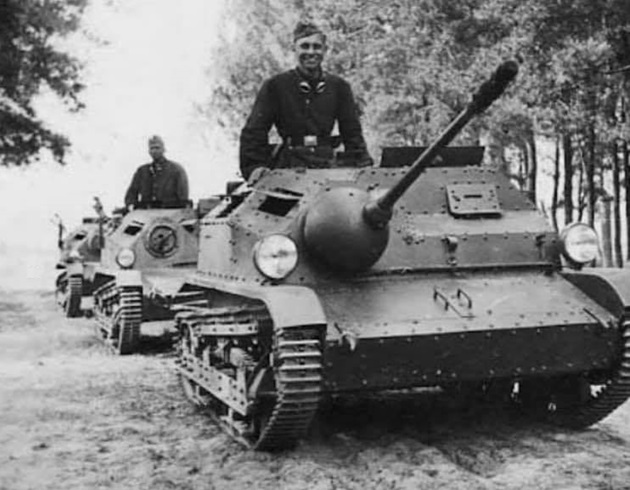
A column of three leichter Panzerkampfwagen TKS(p)s, the leading vehicle has a 20mm cannon. The Germans added the large headlights for night driving and a MG 34 or MG 15 machine gun. Note that they do not have any crosses painted on them.
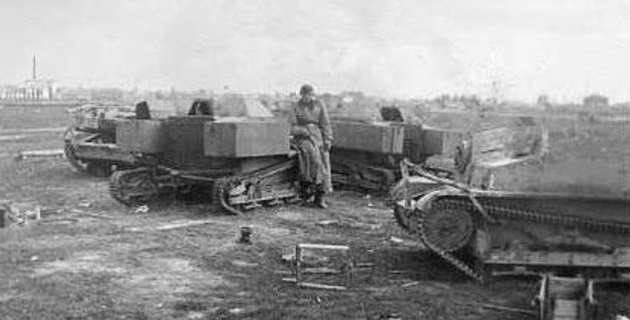
An ex-Polish TKS tankette (right) in Soviet service, captured by the Germans along with two Soviet T-27 tankettes (center). On the left in the background, there might be another TKS.
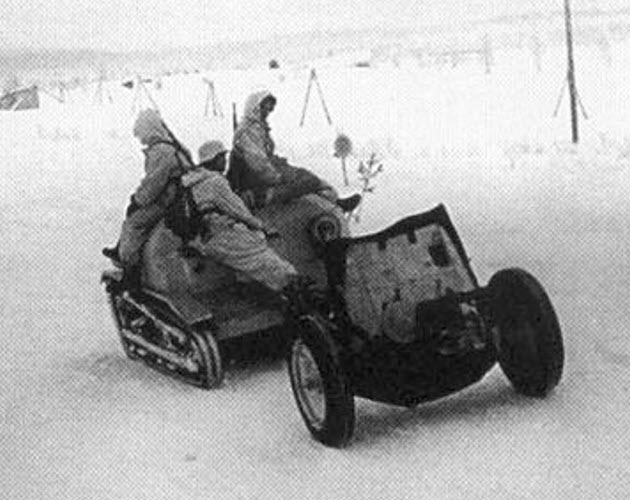
A winter camouflaged Panzerkampfwagen 7TP 731(p) towing a 37mm Pak-35/36 anti-tank gun in 1943/1944 Norway.
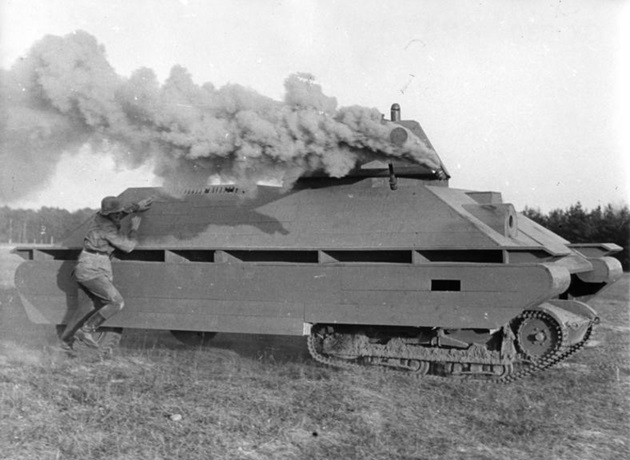
A German mock-up T-34 tank mounted on a chassis of a captured Polish tankette TKS for close-quarter tank combat training, 5 November 1943.
Bundesarchiv Bild 183-J08362
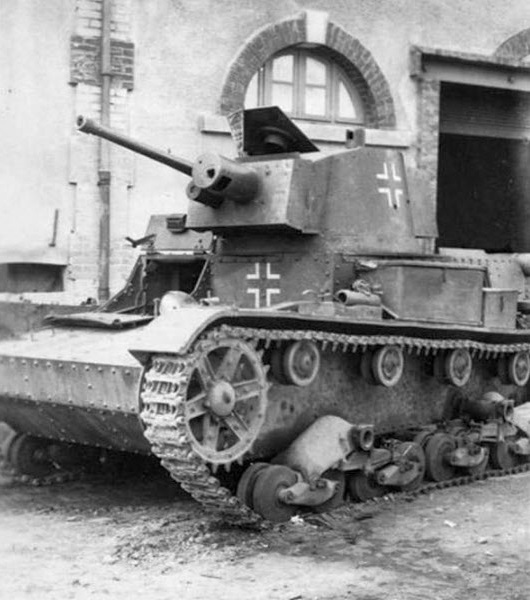
This Panzerkampfwagen 7TP 731(p) was used for police operations in German-occupied France, it was abandoned and captured by the Allies in 1944.
A US solider (probably of the 100th Infantry Division) examining an abandoned leichter Panzerkampfwagen TKS(p) near Bitsch (east of Metz) France, 17 March 1945. The tankette was apparently repainted overall dark yellow (Dunkelgelb).
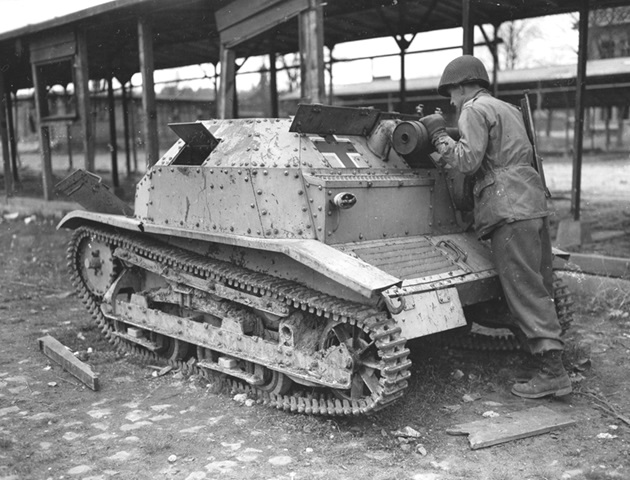
To the northeast of Bitsch, the village of Haspelschiedt was integrated into a military camp named “Camp de Bitche” and it served as a training ground with barracks for the German Army. Field Marshal Erwin Rommel trained in this camp before leaving for North Africa to take command of the Afrika Korps.
The buildings in the background of the above photo might been in Camp de Bitche.
Two Luftwaffe leichter Panzerkampfwagen TKS(p)s, license numbers WL-318 688 (Left) and WL-318 728 (Right). It is highly probable that these Luftwaffe tankettes saw operational use or were caught up in halting the massive Soviet Advance and the chaotic German retreat during the 1944–1945 Lapland War (between Germany and Finland).
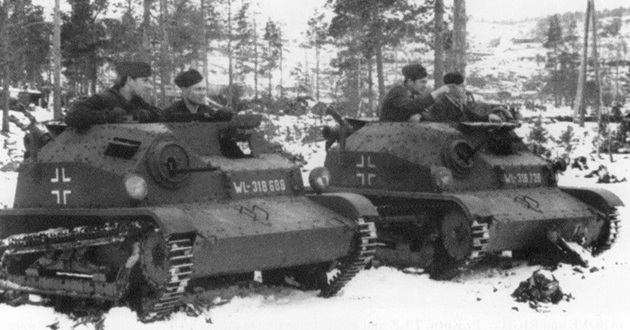
Due to a lack of spare parts and their age, the captured Polish vehicles did not last very long in German service.
Aftermath
Poland was divided between Germany and the Soviet Union. Slovakia gained back the territories taken by Poland in autumn 1938. Lithuania received the city of Vilnius on 28 October 1939 from the Soviet Union.
The invasion of Poland led Britain and France to declare war on Germany on 3 September 1939. However, that did little to affect the outcome of the Poland Campaign. No declaration of war was issued by Britain and France against the Soviet Union.
The 1940 German–Soviet Commercial Agreement was an economic arrangement between the Soviet Union and Germany signed on 11 February 1940. In it the Soviet Union agreed in the period from 11 February 1940 to 1941, in addition to the deliveries under the German–Soviet Commercial Agreement, signed on 19 August 1939 to deliver to Germany commodities (oil, raw materials, and grain) to the value of 420 to 430 million Reichsmarks.
Between January 1940 and 22 June 1941 (Operation Barbarossa), the USSR exported goods of a total estimated value of 597.9 million Reichsmarks to Germany. German deliveries amounted to 437.1 million Reichsmarks. The agreements continued German–Soviet economic relations and resulted in the delivery of large amounts of raw materials to Germany, including over 820,000 tons of oil, 1,500,000 tons of grain and 130,000 tons of manganese ore.
The Soviet Union received the incomplete Admiral Hipper-class naval cruiser Lützow, the plans to the battleship Bismarck, information on German naval testing, “complete machinery for a large destroyer”, heavy naval guns, other naval gear, and samples of 30 of Germany’s latest warplanes, including the Bf 109 and 110 fighters and Ju 88 and Do 215 bombers. The Soviet Union also received oil and electric equipment, locomotives, turbines, generators, diesel engines, ships, machine-tools, and samples of Germany artillery, tanks (including a complete Pz.Kpfw.III), explosives, chemical-warfare equipment, and other items.
The cruiser Lützow was still incomplete when it was delivered to the Soviet Union, with only half of her main battery of eight 20.3 cm (8 in) guns installed and much of the superstructure missing. In September 1940, she was renamed Petropavlovsk. Work on the ship was delayed by poor German-Soviet co-operation in crew training and provision of technical literature to enable completion of the ship, which was being carried out in the Leningrad shipyards.
Still unfinished when Germany invaded the Soviet Union on 22 June 1941, the Petropavlovsk briefly took part in the defense of Leningrad by providing artillery support to the Soviet defenders. She was heavily damaged by German artillery in September 1941, sunk in April 1942, and raised in September 1942. After repairs were done, she was renamed Tallinn and was used in the Soviet counter-offensive that relieved Leningrad in 1944. After the end of the war, she was renamed Dniepr and was used as a stationary training platform and as a floating barracks before being broken up for scrap sometime between 1953 and 1961.
The raw materials that Germany had obtained from the Soviets through the 1940 agreement supported the German war effort against the Soviet Union in 1941 and afterwards. In particular, the German stocks of rubber and grain would not have sufficed to support the invasion of the USSR if the Soviets had not already exported these commodities to Germany.
Today
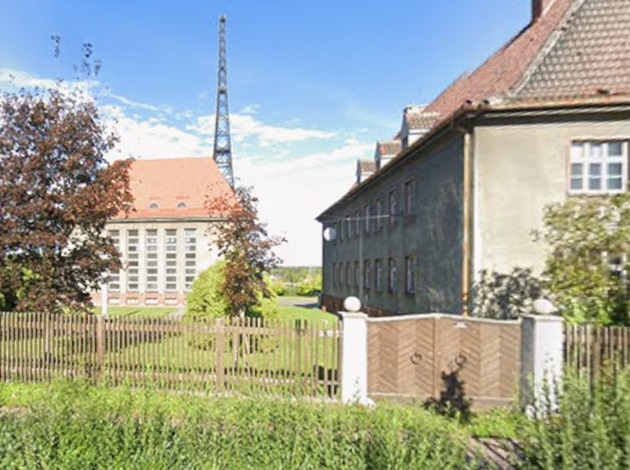
Today, the Gleiwitz Radio Station is a museum.
Today, the site of Edmund Roman Orlik’s victorious battle is commemorated by a boulder called the Orlik Stone. However, the plaque on it contains an error. It states the Polish tanker fought against a Pz.Kpfw.III, but the 1. Leichte Division had Pz.Kpfw.IVs and no Pz.Kpfw.IIIs.
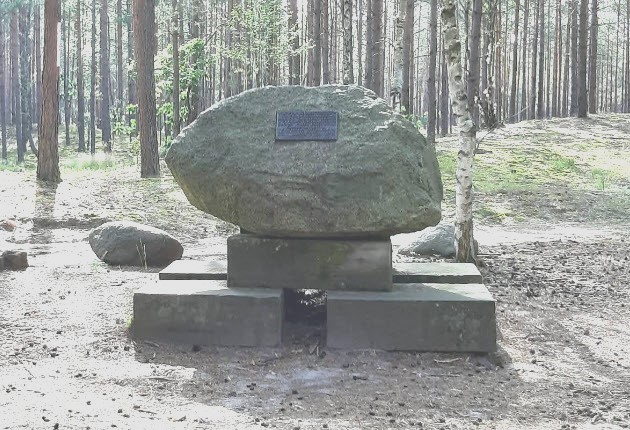
The Orlik Stone (Kamień Orlika) is located at the Miejsce Pamięci Palmiry (Palmyra Memorial Site) northwest of Pociecha, within the Kampinoski Park Narodowy (Kampinos National Park), west of Warsaw.
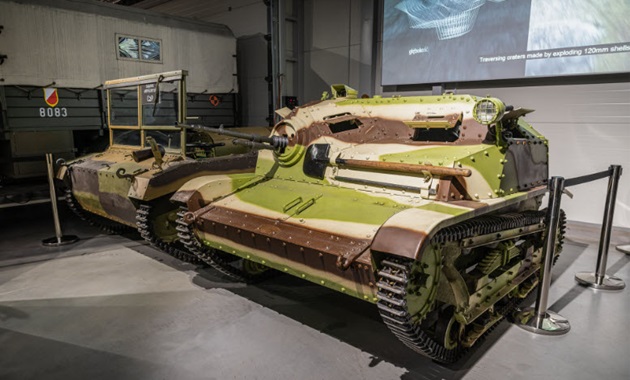
A TKS tankette is on display at the Poznań Armoured Weapons Museum in Poland.
Model Kits and 3D Print Files
1/16:
Landships Modeling LMD019 TKS Tankette (Solothurn 20mm) 3D Print Files – 2023
1/35:
Academy 13280 German Light Tank Pz.Kpfw. 35(t) – 2013
Airfix A1362 German Light Tank Pz.Kpfw.35(t) – 2019
Bronco CB35065 Pz.Kpfw.35(t) – 2014
Revell 03237 Pz.Kpfw.35(t) – 2013
MiniArt 35162 Pz.Kpfw.III Ausf.B – 2014
MiniArt 35166 Pz.Kpfw.III Ausf.C – 2015
MiniArt 35169 Pz.Kpfw.III Ausf.D – 2015
Cyber Hobby 6297 Pz.Kpfw.IV Ausf.B – 2006
Dragon 6747 Pz.Kpfw.IV Ausf.A – 2012
HobbyBoss 80131 German Panzerkampfwagen IV Ausf. B – 2015
Tristar 35021 German Panzerkampfwagen IV Ausf B – 2006
IBG Models 35045/E3504 TKS Polish Light Reconnaissance Tank – 2018
IBG Models 35046/E3503 TKS Polish Tankette with 20mm NKM wz.38 FK-A – 2018
Military Scales (IDAP Technology) PMI0599D TKS Tankette – 2025
Military Scales (IDAP Technology) PMI0600D TKS Tankette with 20mm Cannon – 2025
Tamiya 35299 Panzerkampfwagen II Ausf.C (Polish Campaign) – 2009
IBG Models 35083L Pz.Kpfw.II Ausf.a2 German Light Tank Limited Edition – 2023
1/48:
Combat Group Dynamix Polish TKS Tankette with Commander (Resin Kit) – 2019
EMP3d (EMP) 48011124 Tankette TKS with 7.92 wz.25 Hotchkiss MG – closed hatch – 2024
EMP3d (EMP) 48011125 Tankette TKS with 7.92 wz.25 Hotchkiss MG – open hatch – 2024
EMP3d (EMP) 48011126 Tankette TKS with 20mm gun FK-A Wz.38 – closed hatch – 2024
EMP3d (EMP) 48011127 Tankette TKS with 20mm gun FK-A Wz.38 – open hatch – 2024
Military Scales (IDAP Technology) PMI0599C TKS Tankette – 2025
Military Scales (IDAP Technology) PMI0600C TKS Tankette with 20mm Cannon – 2025
1/72:
Italeri 7084 Pz.Kpfw. 35(t) – 2021
UM (Uni Models) 540 Sd.Kfz. 161 Pz.Kpfw. IV Ausf. B – 2024
EMP3d (EMP) 72011124 Tankette TKS with 7.92 wz.25 Hotchkiss MG – closed hatch – 2024
EMP3d (EMP) 72011125 Tankette TKS with 7.92 wz.25 Hotchkiss MG – open hatch – 2024
EMP3d (EMP) 72011126 Tankette TKS with 20mm gun FK-A Wz.38 – closed hatch – 2024
EMP3d (EMP) 72011127 Tankette TKS with 20mm gun FK-A Wz.38 – open hatch – 2024
Military Scales (IDAP Technology) PMI0599B TKS Tankette – 2025
Military Scales (IDAP Technology) PMI0600B TKS Tankette with 20mm Cannon – 2025
Attack Hobby Kits 72870 PzKpfw II Ausf.C WWII German Wehrmacht Light Tank – 2012